 Tiếng anh
 Vietnam

Which AED Should You Buy? 7 Essential Factors to Check Before Purchasing
Purchasing an Automated External Defibrillator (AED) should not be based solely on brand reputation or price. Buyers should carefully evaluate seven essential criteria: valid medical device registration in Vietnam, the seller’s legal authorization, electrode pad and battery expiration dates, warranty policies, user training, documentation verifying the product’s origin and authenticity, and after-sales support.
These factors are critical to ensuring that the AED remains reliable, fully functional, and ready for use when an emergency occurs.
1. Why Is It Important to Carefully Check an AED Before Purchasing?
An Automated External Defibrillator (AED) is a high-risk medical device, unlike consumer electronics such as computers or televisions. Errors in manufacturing, storage, or distribution can directly affect a patient's life during an emergency.
According to Vietnam's Decree No. 98/2021/ND-CP on medical device management, defibrillators, including AEDs, are among six categories of medical devices subject to safety and technical performance inspections before being put into use, as required by applicable regulations. In addition, businesses trading Class B, C, and D medical devices must meet specific requirements regarding qualified personnel and storage facilities.
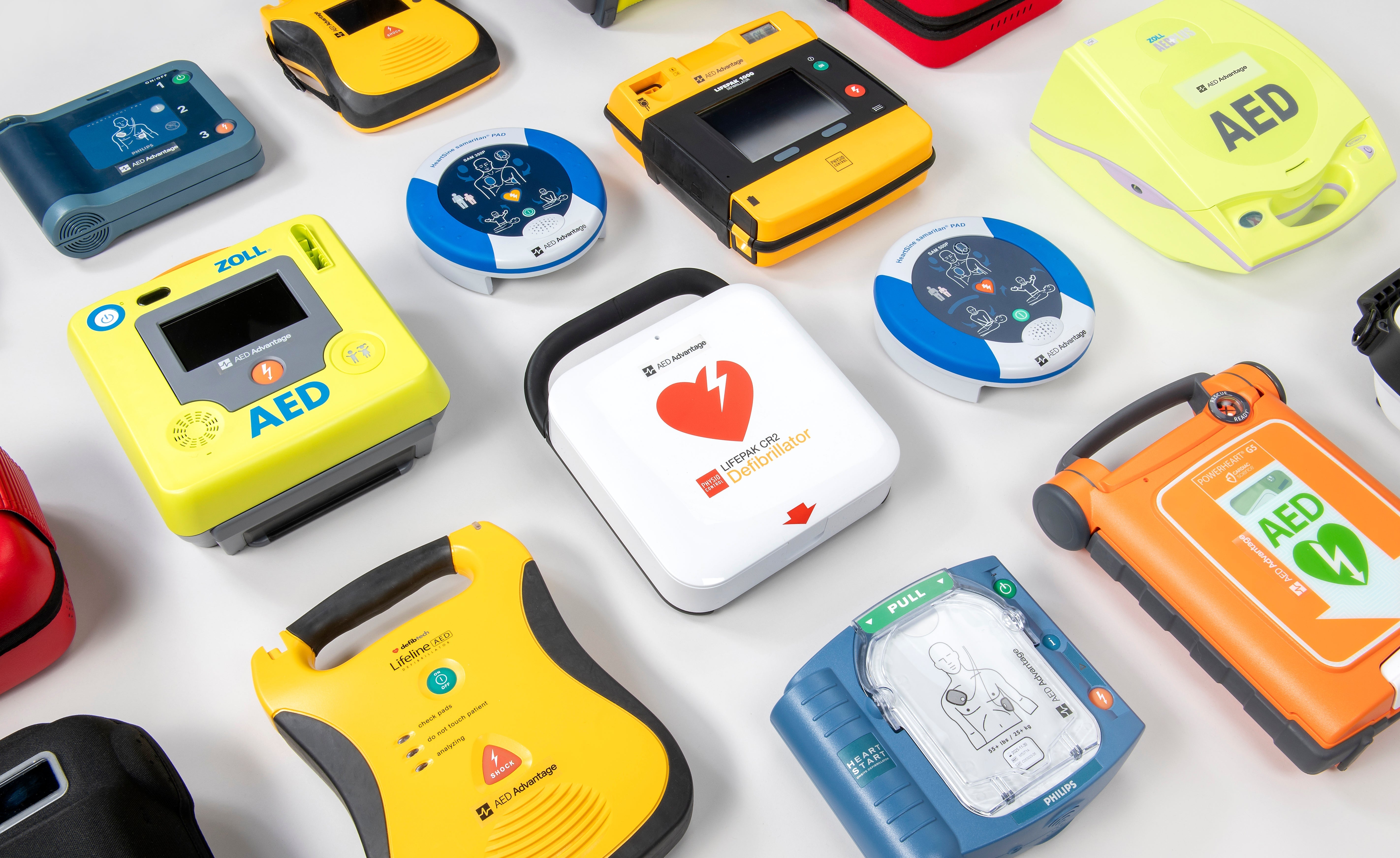
Why should you carefully check an AED before purchasing?
Therefore, when purchasing an AED, businesses should consider more than just price or brand reputation. Verifying regulatory documentation, product origin, device condition, and the supplier's qualifications is essential to ensuring that the AED can operate safely and reliably when needed.
2. Does the AED Have Valid Medical Device Registration in Vietnam?
Checking the medical device registration number is an important step before purchasing an AED. Businesses should request a valid registration number or import license issued by the competent authority under Vietnam's Ministry of Health.
Buyers can verify the registration number through the Ministry of Health's online medical device management portal rather than relying solely on documents provided by the seller.
An AED without valid registration may pose risks related to product origin, legal compliance, and adherence to medical device management requirements. Therefore, this information should be verified before making a purchasing decision.
3. Is the AED Supplier Legally Qualified to Trade Medical Devices?
AED quality depends not only on the manufacturer but also on how the device is stored and distributed before reaching the end user.
According to Article 40 of Decree No. 98/2021/ND-CP, businesses trading Class B, C, and D medical devices must meet specific requirements regarding personnel, storage facilities, and transportation conditions appropriate for the devices.
A medical device trading establishment must have at least one technical employee holding a college-level qualification or higher in a relevant field, such as engineering, medicine, pharmacy, chemistry, biology, or medical equipment technology.
The establishment must also meet applicable storage requirements and complete the required declaration of eligibility to trade medical devices.
Businesses should verify these conditions before purchasing, particularly when dealing with individual resellers or online stores without clearly identifiable legal entities. Improper storage conditions, including unsuitable temperature and humidity, may affect critical components such as AED batteries and electrode pads.
4. How Much Remaining Shelf Life Should AED Pads and Batteries Have When Purchasing an AED?
Buyers should not focus solely on the AED's manufacturing date. AED electrode pads and batteries have separate expiration dates, and part of their usable lifespan may already have elapsed if the device has been stored for an extended period.
Electrode pads typically have a shelf life of approximately two years, while AED batteries may last around two to five years, depending on the manufacturer and model. These are general reference ranges, and businesses should always verify the exact specifications provided by the manufacturer.
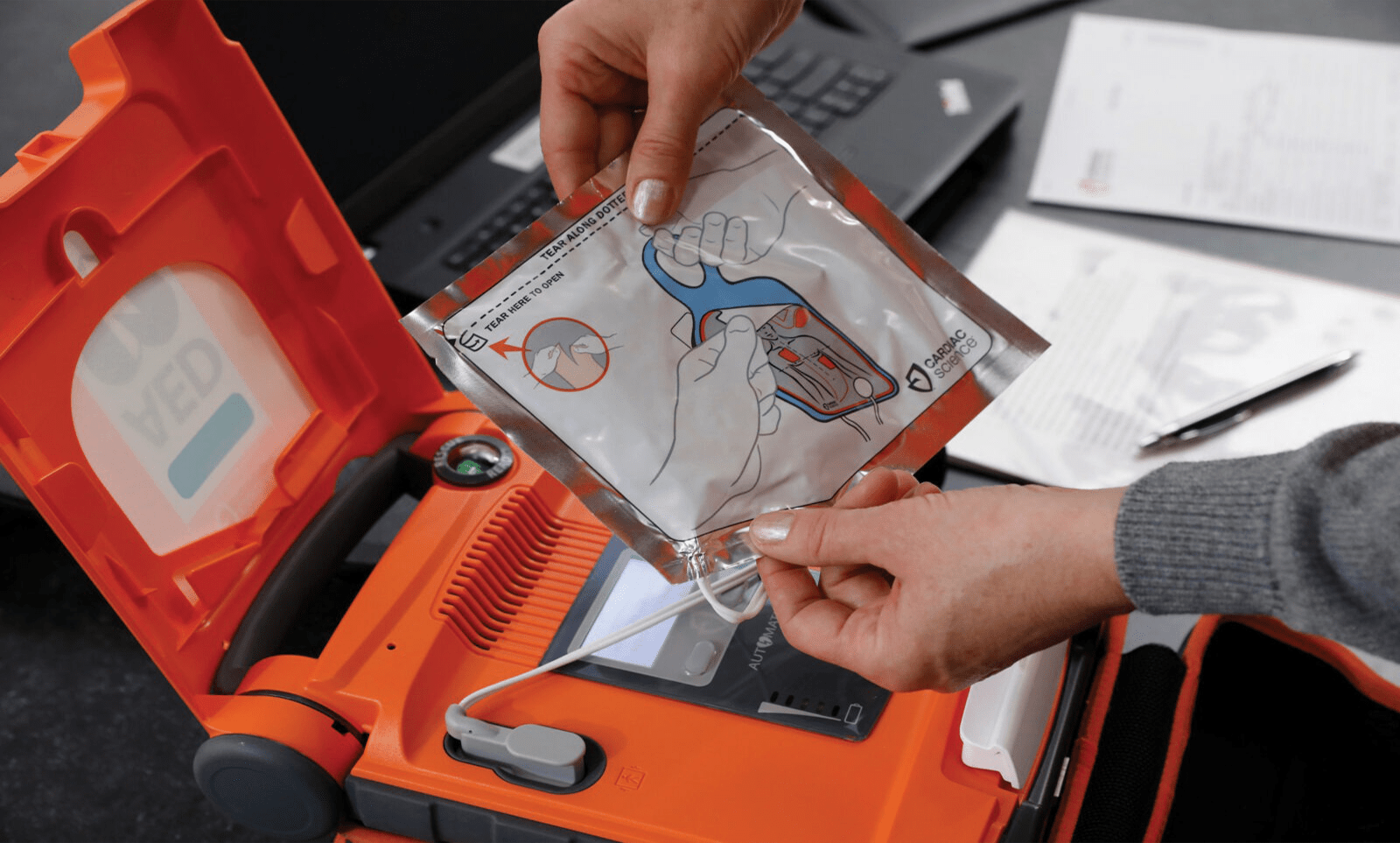
How much remaining shelf life should AED pads and batteries have when purchasing an AED?
Therefore, buyers should ask the supplier to provide the manufacturing and expiration dates printed directly on the actual electrode pad and battery packaging.
5. What Warranty and Technical Support Policies Does the AED Include?
Businesses should clarify the warranty periods for the AED unit, batteries, and electrode pads, as each component may have different warranty terms.
It is also important to determine whether the warranty covers hardware defects, software issues, or other components, and whether the responsible service provider has a technical support center in Vietnam or requires the device to be shipped overseas.
For a life-saving emergency device such as an AED, prolonged repair time may leave a facility without a functioning defibrillator for an extended period. Therefore, buyers should ask whether the supplier can provide a temporary replacement AED during the warranty or repair period.
6. Does the AED Purchase Include User Training?
Even an AED that meets technical standards may not be used effectively during an emergency if staff members do not know how to operate it correctly.
Businesses should prioritize suppliers that provide basic CPR/AED training when handing over the equipment. If in-person training is unavailable, the supplier should at least provide Vietnamese-language instructions or instructional videos.

Wellbeing specializes in supplying AEDs and providing guidance and training to help staff operate the equipment correctly.
Under Circular No. 19/2016/TT-BYT, workplace first aid and emergency response personnel must receive training in accordance with applicable regulations. Suppliers that provide training from the beginning can help businesses organize their workplace first aid teams and meet relevant training requirements more effectively.
7. Does the AED Come With Complete Documentation of Its Origin?
Businesses should request all relevant supporting documents, including value-added tax (VAT) invoices, Certificates of Origin (C/O), Certificates of Quality (C/Q), or equivalent documentation issued by the manufacturer.
Depending on the device and its intended market, the documentation may also include regulatory approvals or certifications such as U.S. FDA approval or European CE marking. However, these certifications do not replace the legal requirements applicable to medical devices in Vietnam.
Officially imported AEDs generally come with relatively complete documentation regarding product origin. In contrast, hand-carried or unofficially imported AEDs may lack essential documentation, making it difficult to verify their origin, resolve quality complaints, or respond to regulatory inquiries.
8. What Are the Supplier's Return, Replacement, and Technical Support Policies?
Before signing a purchase agreement, businesses should carefully review the supplier's return, replacement, warranty, and technical support terms.
Several specific situations should be clarified: Can the AED be replaced with a new unit if a defect is discovered immediately after delivery? How quickly will the supplier respond to a reported technical problem? Who is responsible for diagnosing and resolving equipment failures?
When purchasing an AED, businesses should prioritize suppliers with clearly established technical support channels, particularly in cases where the device malfunctions or replacement consumables are required.
9. Checklist: 7 Essential Criteria Before Purchasing an AED
|
No. |
Criteria |
What to Check |
|---|---|---|
|
1 |
Medical Device Registration |
Verify the registration number through the Ministry of Health's online medical device management portal. |
|
2 |
Supplier's Legal Qualifications |
Confirm whether the supplier has declared its eligibility to trade Class B, C, and D medical devices with the Department of Health. |
|
3 |
Electrode Pad and Battery Expiration Dates |
Check the manufacturing and expiration dates printed on the actual packaging. |
|
4 |
Warranty |
Verify warranty periods for each component and whether a temporary replacement device is available. |
|
5 |
Training Included |
Confirm whether user training sessions and Vietnamese-language instructional materials are provided. |
|
6 |
Product Origin Documentation |
Verify the availability of invoices, Certificates of Origin (C/O), and Certificates of Quality (C/Q). |
|
7 |
Return and Technical Support Policies |
Check technical support response times and the availability of a dedicated support hotline. |
10. Frequently Asked Questions (FAQ)
1. How can I verify whether an AED's medical device registration number is valid?
You can verify the registration number through the Ministry of Health's online medical device management portal. Enter the product name or registration number provided by the supplier and compare it with the publicly available information.
2. Are there any risks associated with purchasing an AED from an individual seller on social media?
Yes. Purchasing an AED from an individual seller may involve greater risks than buying from a legally qualified medical device supplier. It can be difficult to verify the device's origin, the expiration dates of consumable components, and the seller's legal accountability if the equipment malfunctions.
3. Should I ask the supplier to provide proof of eligibility to trade medical devices?
Yes, particularly for high-value purchases or bulk orders for businesses and factories. Requesting this documentation helps protect the buyer's legitimate interests and provides an important legal basis if disputes arise after the purchase.
4. Can I check the expiration dates of AED pads and batteries before paying for an online purchase?
Yes. Buyers should ask the seller to provide actual photographs showing the manufacturing and expiration dates printed on the electrode pad and battery packaging before making payment, rather than relying solely on the product description on the seller's website.
5. What should I do if an AED I purchased does not have a valid medical device registration number?
You should contact the seller immediately to request the necessary documentation or arrange a return or replacement. If the seller refuses to cooperate, you may report the matter to the local Department of Health, as selling medical devices without the required authorization may violate applicable medical device regulations.
6. Do I need to inspect each AED individually when purchasing multiple units for different branches?
Yes. Even when purchasing AEDs from the same supplier and shipment, you should check the expiration dates of the electrode pads and batteries for each device. Consumable components within the same shipment may have different manufacturing dates depending on when they were packaged.
If your business is looking for an AED that meets its budget and operational requirements, Wellbeing can provide consultation on device selection, feature comparisons, consumable costs, and implementation plans tailored to different types of facilities.
Businesses can also receive guidance on AED placement, CPR training, and device operation to improve their preparedness for emergency situations.
Investing in an AED is not simply about purchasing a medical device. It is also about developing an appropriate emergency response plan.
Choosing the right AED, planning for all associated costs, and implementing the equipment correctly can help businesses use AEDs effectively and maintain readiness when emergencies occur.
Comments:
There are no comment for this news.

.png)
.png)