 Tiếng anh
 Vietnam
Key Criteria for Selecting an AED (Automated External Defibrillator) | Wellbeing
An Automated External Defibrillator (AED) is designed to analyze a victim's heart rhythm, deliver a shock (defibrillation) when necessary to help the heart restore an effective rhythm, and guide the user through Cardiopulmonary Resuscitation (CPR) via voice prompts and visual cues on an LCD screen. With at least 7 manufacturers and over 20 different AED models available globally, how do you choose a device that is both high-quality and suitable for your needs?
Ngo Thi Sáng | First Aid Project Trainer - "Fast First Aid - Saving Lives" Project Wellbeing Health Education Organization
An Automated External Defibrillator (AED) functions by analyzing the victim's heart rhythm. When necessary, it delivers a shock to terminate the arrhythmia and assist the heart in re-establishing an effective beat. Furthermore, the device guides the rescuer in performing Cardiopulmonary Resuscitation (CPR) through voice commands and visual signals displayed on the unit's LCD screen. With a wide variety of manufacturers and models on the market, selecting the right high-quality defibrillator is a critical decision.
1. What is the function of an Automated External Defibrillator (AED)?
In a healthy human heart, an effective beat occurs when the atria and ventricles contract to pump blood out of the heart chambers. However, in the event of a sudden cardiac arrest, various factors can cause the heart to beat ineffectively—where the heart muscles contract (quiver) but fail to pump blood from the chambers. This phenomenon is known as fibrillation.
A victim’s chance of survival is approximately 90% if defibrillation is performed immediately, but this probability decreases by 10% for every minute that passes without defibrillation.
The AED’s primary role is to analyze the heart rhythm and, if a shockable rhythm is detected, deliver a shock to help the heart restore an effective rhythm. Additionally, the AED serves as a coach, guiding the user through CPR skills via audio prompts and visual instructions on its screen. Since most cardiac arrest victims require high-quality CPR, an AED significantly enhances the efficiency of the rescue process, thereby increasing the victim's chances of survival.
2. What are the criteria for choosing a suitable AED?
An AED is a specialized medical device, not a common commodity, and represents a significant investment. Therefore, equipping a family, organization, business, or public space with the right AED requires careful consideration. Below are 5 essential criteria to help ensure you select the product that best meets the specific requirements of your facility.
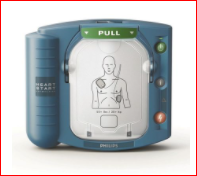
2.1. Pricing and Budget
You must evaluate the budget your organization or business can allocate for this purchase. Prices for AED models vary significantly. A standard AED supplied by major providers in the European market can range from €1,000 to €2,500, depending on the brand.
Before making a selection, calculate your organization's budget. However, it is crucial to note that cheaper is not always better regarding life-saving equipment. Establishing a clear budget range before soliciting quotes is a necessary first step.
2.2. Ease of Use (Usability)
Understanding how different AED models operate is vital. Operational protocols vary between devices, and this directly impacts how easily a layperson can perform first aid under stress.
You should prioritize an AED that is intuitive and easy to manipulate. Notably, some AED models offer Vietnamese language support, which is a significant advantage for ensuring local responders can follow instructions accurately and confidently.
2.3. Shock Efficacy and Technology
The energy level (Joules) and current intensity of the AED's shock are critical technical factors. Multiple studies suggest that escalating energy levels in subsequent shocks can improve survival rates.
According to the updated 2015 Guidelines for CPR and ECC by the American Heart Association (AHA) and the 2015 Resuscitation Guidelines by the European Resuscitation Council (ERC), higher energy settings for subsequent shocks are recommended to increase the success rate of terminating fibrillation.
2.4. Maintenance Costs (Total Cost of Ownership)
Do not overlook the long-term costs associated with maintaining the AED. The initial purchase price is not the only financial factor; utilizing the device involves recurring costs for replacing consumables.
Consider the cost and availability of spare parts such as batteries and electrode pads. Different models utilize different proprietary batteries, each with its own price point and lifespan. Calculating these future costs gives you a better view of the true value of the device.
2.5. Target Patient Demographics
Finally, consider whom the device is intended to protect. Shock intensity requirements differ significantly between adults and pediatric patients (children).
If your organization (e.g., a school or kindergarten) primarily serves young children, it is mandatory to ensure the AED is suitable for pediatric use. Conversely, a pediatric-only setting might be ineffective for an adult victim. In mixed environments, an AED featuring dual-mode capability (Adult/Pediatric switch) is the superior choice for versatility and safety.
Comments:
There are no comment for this news.

.png)
.png)