 Tiếng anh
 Vietnam
How is an AED (Automated External Defibrillator) Used? | Wellbeing
When a person suffers from cardiac arrest, the victim's survival rate decreases by 10% with every passing minute. An Automated External Defibrillator (AED) can assist in restoring cardiac function, helping the heart re-establish an effective rhythm during critical emergencies. However, knowing when to use and when not to use a defibrillator is crucial.
Ngo Thi Sang | First Aid Project Trainer – "Winning Back Life" Wellbeing Health Education Organization
In the event of a cardiac arrest, for every minute that passes, the victim's chance of survival drops by 10%. An Automated External Defibrillator (AED) is a vital tool for restoring cardiac function and helping the heart re-establish an effective rhythm in emergency situations. Nevertheless, it is essential to understand the correct indications and contraindications for using a defibrillator.
1. What is the function of an AED?
In a healthy heart, an "effective rhythm" occurs when the atria and ventricles contract to pump blood out of the heart chambers. However, in certain dangerous situations, various factors can compromise the heart, resulting in an ineffective rhythm. In this state, the heart muscle may contract rapidly or twitch, but it fails to pump blood out of the chambers. This phenomenon is known as fibrillation.
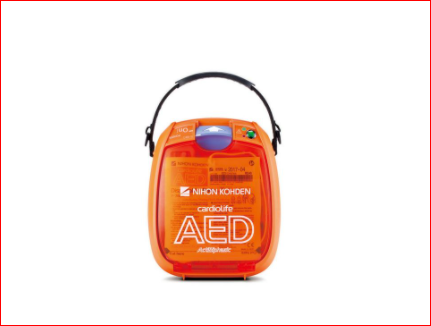
A victim has a 90% chance of survival if defibrillation is performed within the first few minutes after losing consciousness. This chance decreases by 10% for every minute defibrillation is delayed.
The Automated External Defibrillator (AED) functions by analyzing the victim's heart rhythm. When necessary, it delivers a shock (defibrillation) to help the heart re-establish an effective rhythm. Furthermore, the AED guides the user through Cardiopulmonary Resuscitation (CPR) via voice prompts and visual signals on its LCD screen. Since most cardiac arrest victims require CPR, the AED assists you in performing this procedure more effectively, thereby increasing the victim's likelihood of survival.
2. When should an AED be used?
AEDs are typically installed in schools, hotels, businesses, organizations, and public spaces—locations where Sudden Cardiac Arrest (SCA) may occur. It is undeniable that Automated External Defibrillators are highly effective in saving lives.
The majority of sudden cardiac arrest cases are caused by Ventricular Fibrillation (VF). This is a condition where the heart muscle contracts asynchronously and erratically, failing to generate a pulse. In this scenario, the only effective course of action is to deliver an electric shock to the heart to terminate the fibrillation, allowing the heart to reset to an effective rhythm, combined with performing CPR.
The critical question is: How do we identify a cardiac arrest victim who requires an AED?
An AED should be used when a victim shows clear signs of circulatory arrest, identified through the following symptoms:
-
Unconsciousness: Check by firmly tapping the victim's shoulders and shouting loudly: "Sir/Madam! Are you okay?"
-
No Breathing: Check by placing your ear near the victim's nose and mouth while looking toward their chest to observe for any rise and fall.
-
Agonal Breathing (Gasping): This is considered the final effort to breathe before complete respiratory arrest. It is characterized by slow, intermittent, and irregular gasps.
-
No Pulse: Check by placing two fingers on the carotid artery (neck) or just below the angle of the jaw.
3. When should an AED NOT be used?
There are no absolute contraindications for using an AED on a victim in cardiac arrest. We can use an AED on young children, pregnant women, and individuals with artificial pacemakers. However, there are specific circumstances where AED usage requires caution or is not recommended.
Situations where an AED should not be used or requires special attention include:
-
Analysis Failure: When the AED cannot accurately analyze the victim's condition prior to use.
-
Safety Hazards: Situations where AED use may pose a safety risk to the victim or bystanders, such as bystanders touching the victim while the machine is analyzing.
-
Wet Environments: When the victim is lying in a pool of water or if the victim’s chest is wet (the chest must be dried before applying pads).
-
Pediatric Limitations (Children under 8): If the AED battery is low or if the victim is a child under 8 years old but only adult electrode pads are available. In such cases, the AED may not effectively analyze the child's heart rhythm or deliver an accurate shock energy, potentially causing injury to the victim.
-
Infants (Under 1 year): It is recommended not to use an AED on infants under 1 year of age in any circumstance. You should only perform CPR until professional medical assistance arrives.
Comments:
There are no comment for this news.

.png)
.png)