 Tiếng anh
 Vietnam
The Critical Importance of Automated External Defibrillators (AEDs) | Wellbeing
Sudden cardiac arrest is currently the leading cause of death globally. According to 2017 statistics from the World Health Organization, in Vietnam alone, the total number of fatalities caused by cardiac arrest exceeds the combined death toll of lung cancer and traffic accidents. In these critical situations, the use of an Automated External Defibrillator (AED) is the singular solution capable of resetting a chaotic heart rhythm back to a normal state.
Sudden cardiac arrest is currently the leading cause of death globally. According to 2017 statistics from the World Health Organization, in Vietnam alone, the total number of fatalities caused by cardiac arrest exceeds the combined death toll of lung cancer and traffic accidents. In these critical situations, the use of an Automated External Defibrillator (AED) is the singular solution capable of resetting a chaotic heart rhythm back to a normal state.

1. Cardiac Arrest Can Strike Anyone
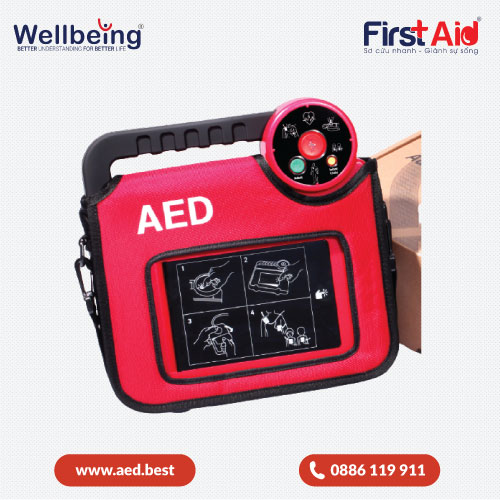
Cardiac arrest does not discriminate; it can occur in otherwise healthy individuals with no prior medical history, at any time and in any location. In such emergencies, the immediate deployment of an AED helps restore cardiac function and re-establish an effective heart rhythm. Designed as a remarkably compact medical device, the AED empowers individuals with absolutely no medical background or experience to significantly increase a victim's chance of survival through the delivery of a life-saving shock.
2. The Race Against Time
A victim of cardiac arrest has a survival window of less than 10 minutes. If a shock is delivered within the first 3 minutes, the chance of survival skyrockets to 80%. Beyond this "golden 3-minute" mark, even if the patient survives, the risk of entering a persistent vegetative state is extremely high, as the human brain ceases to function after just four minutes without oxygenated blood circulation.
AEDs are essential when the heart's electrical system malfunctions, preventing it from pumping blood to the brain and vital organs. While there are over 100 causes of cardiac arrest—ranging from electric shock, stroke, drowning, and suffocation to drug overdose or underlying cardiovascular disease—the urgency remains constant. In Vietnam, the average ambulance response time ranges from 20 to 30 minutes. However, for a cardiac arrest victim, the first 10 minutes are the line between life and death; for every minute that passes without intervention, the probability of survival plummets by 7% to 10%.
The AED was created with a mission to serve as an on-scene "electronic doctor." Through clear voice prompts, it guides the user step-by-step through the rescue process. The device is compact and so user-friendly that laypeople can operate it effectively. After automatically analyzing the patient's condition, the machine determines whether a shock is necessary and allows for timely intervention. According to the American Heart Association (AHA), cardiac arrest is identified by three simultaneous signs: the victim is unconscious, not breathing (or gasping), and has no pulse. Without immediate aid within minutes, death is imminent.
Comments:
There are no comment for this news.

.png)
.png)