 Tiếng anh
 Vietnam
WHAT IS AN AED? THINGS YOU MUST KNOW ABOUT AEDs | WELLBEING
AED stands for "Automated External Defibrillator". It is a medical device used to save lives in cases of Sudden Cardiac Arrest (SCA) or cardiac arrhythmia (fibrillation).
1. What is an AED?
AED stands for "Automated External Defibrillator". It is a portable, compact, and user-friendly medical device designed to be used by non-medical personnel (lay rescuers).
The AED operates by automatically analyzing the heart rhythm of a cardiac arrest victim and delivering an electronic impulse (known as a "shock") to the heart to stop the fibrillation and restore a normal heart rhythm. Additionally, the AED provides detailed audio and visual prompts to guide the user on how to operate the device and perform necessary CPR (Cardiopulmonary Resuscitation) steps before and after delivering the shock.
The strength of the AED lies in its ease of use and ability to deliver a shock rapidly in emergency situations. Thanks to its automated analysis and clear instructions, anyone can effectively use an AED to save a victim of cardiac arrest. Consequently, AEDs are often installed in medical facilities, public spaces, government offices, schools, and crowded areas to ensure readiness and rescue capabilities when needed.
2. Structure of an AED
An AED is composed of the following main components:
-
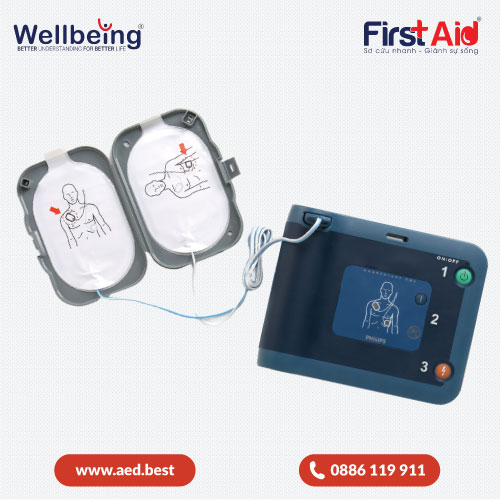
Main Unit: The exterior casing of the AED, typically made of hard, lightweight, and durable plastic. It features a compact design, making it easy to hold and carry for rapid deployment in emergencies.
-
Display Screen: The AED is equipped with an LCD or LED screen that displays instructions and vital information. It provides data on the heart rhythm, guides for CPR steps, and instructions for shock delivery when necessary.
-
Control Buttons: Located on the device's surface, allowing the user to perform basic functions. These include the Power button (On/Off), the Shock button (to deliver electricity), and buttons to confirm prompts.
-
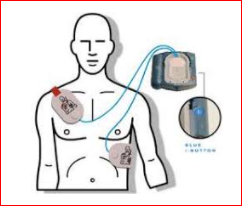
Electrode Pads: The AED comes with two self-adhesive electrode pads. These pads are placed on the victim's bare chest. They collect heart rhythm data and send signals to the machine to analyze the heart's condition and adjust the shock delivery process accordingly.
-
Battery: The AED uses a lithium battery (often a long-life reserve battery) to power its functions. These batteries typically have a long shelf life and are replaceable.
-
Speaker: The device features an integrated speaker to emit loud and clear audio prompts, guiding the user through CPR procedures and shock delivery instructions.
3. How Does an AED Work? (Mechanism of Action)
The AED operates based on the following fundamental principles:
-
Automated Analysis: Once activated, the device automatically analyzes the victim's heart rhythm to determine if a shock is required for defibrillation. The electrode pads are used to collect this data.
-
User Guidance: Based on the analysis, the AED provides detailed audio and visual instructions. This includes how to position the pads, how to perform CPR, and when to prepare for a shock.
-
Shock Delivery: If the AED determines the patient has a "shockable rhythm" (ventricular fibrillation), it will instruct the user to stand clear of the patient and deliver an electrical shock through the electrodes to defibrillate the heart.
-
Post-Shock Protocol: After the shock, the AED continues to monitor the heart rhythm to see if it has returned to normal. If necessary, it will guide the user to resume CPR and repeat the shock process if the arrhythmia persists.
The AED's mechanism is designed to be automated, rapid, and effective. Clear guidance ensures that even untrained individuals can perform rescue operations safely and efficiently.
4. Important Considerations When Using an AED
-
Training: Before using an AED, ensure you have received basic training. Participating in a Basic First Aid and AED usage course is highly recommended to understand the steps and stay updated.
-
Call for Help: In an emergency, immediately call Emergency Services (115) or ensure someone else has done so before using the AED. State your location clearly and request medical assistance.
-
Follow Instructions: Strictly adhere to the AED's voice and visual prompts. Act precisely and quickly according to the device's guidance.
-
Ensure Dry Skin: Before attaching pads, ensure the victim's chest skin is dry. If necessary, wipe off sweat or water with a non-adhesive cloth/towel.
-
Remove Metal/Objects: Avoid contact with metal objects, necklaces, jewelry, or conductive materials on the patient's body during operation to ensure safety for both the user and the victim.
-
Monitor the Patient: Continuously observe the victim's condition and follow the AED's loop of instructions. If needed, continue CPR until professional medical teams arrive.
Comments:
There are no comment for this news.

.png)
.png)