 Tiếng anh
 Vietnam
Accurate Guide to AED Pad Placement
Most sudden cardiac arrests occur in public places. Studies have shown that using an automated external defibrillator (AED) together with cardiopulmonary resuscitation (CPR) is one of the most effective ways to improve a victim’s chance of survival.
Every minute that passes without defibrillation can reduce a cardiac arrest victim’s chance of survival by approximately 7% to 10%. Conversely, when an AED is used promptly, survival rates may increase to around 41%–74%. However, for defibrillation to be effective, correct placement of the electrode pads is essential.
Below is a practical guide to proper AED pad placement for different groups of patients:
1. Standard AED pad placement for adults
For adults, AED electrode pads are designed to be applied directly to the bare chest. Most modern AEDs are programmed to deliver an appropriate level of energy to terminate ventricular fibrillation. Some manufacturers, such as Mindray, also provide a wider energy range to accommodate different patient conditions.
Steps to follow:
- Expose the chest: Remove the patient’s clothing. If the patient has collapsed in a wet area, move them to a dry location as quickly as possible.
- Turn on the AED and follow the voice prompts.
- Apply the electrode pads: Peel off the protective backing.
First pad: Place it on the upper right side of the chest, just below the collarbone.
Second pad: Place it on the left side of the chest, along the lateral rib area.
- Deliver the shock: If the AED advises a shock, make sure everyone stands clear. Press the shock button if using a semi-automatic AED, or allow the device to deliver the shock automatically if using a fully automatic model. A second shock or a higher energy level may be recommended if the heart rhythm remains unstable, depending on the AED model, such as certain BeneHeart C Series devices.
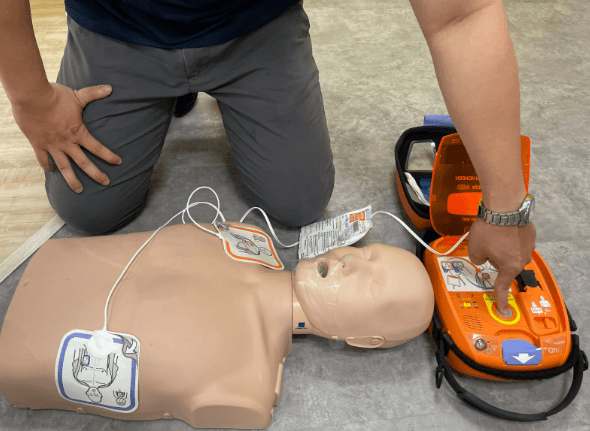
Guide to AED electrode pad placement in adults
2. Special considerations for women and children
- For women: According to the latest AHA and ILCOR recommendations in 2025, rescuers do not necessarily need to remove a woman’s bra when applying AED pads, as doing so may increase hesitation or discomfort during CPR.
- For children under 8 years old or weighing less than 25 kg: Because of the smaller chest size, placing both pads on the front of the chest may cause the pads to touch, which should be avoided.
Recommended solution: Use pediatric pads whenever available, or use integrated adult/pediatric pads designed for both age groups, such as certain Mindray pad systems.
Pad placement: Place one pad in the center of the chest and the other in the center of the back, between the shoulder blades. The edges of the two pads must not touch.
Continue CPR and AED use until the child shows signs of recovery or professional emergency medical personnel arrive. If a child has a known heart condition, parents and caregivers are encouraged to receive AED and CPR training through recognized organizations such as the Red Cross or healthcare training providers.
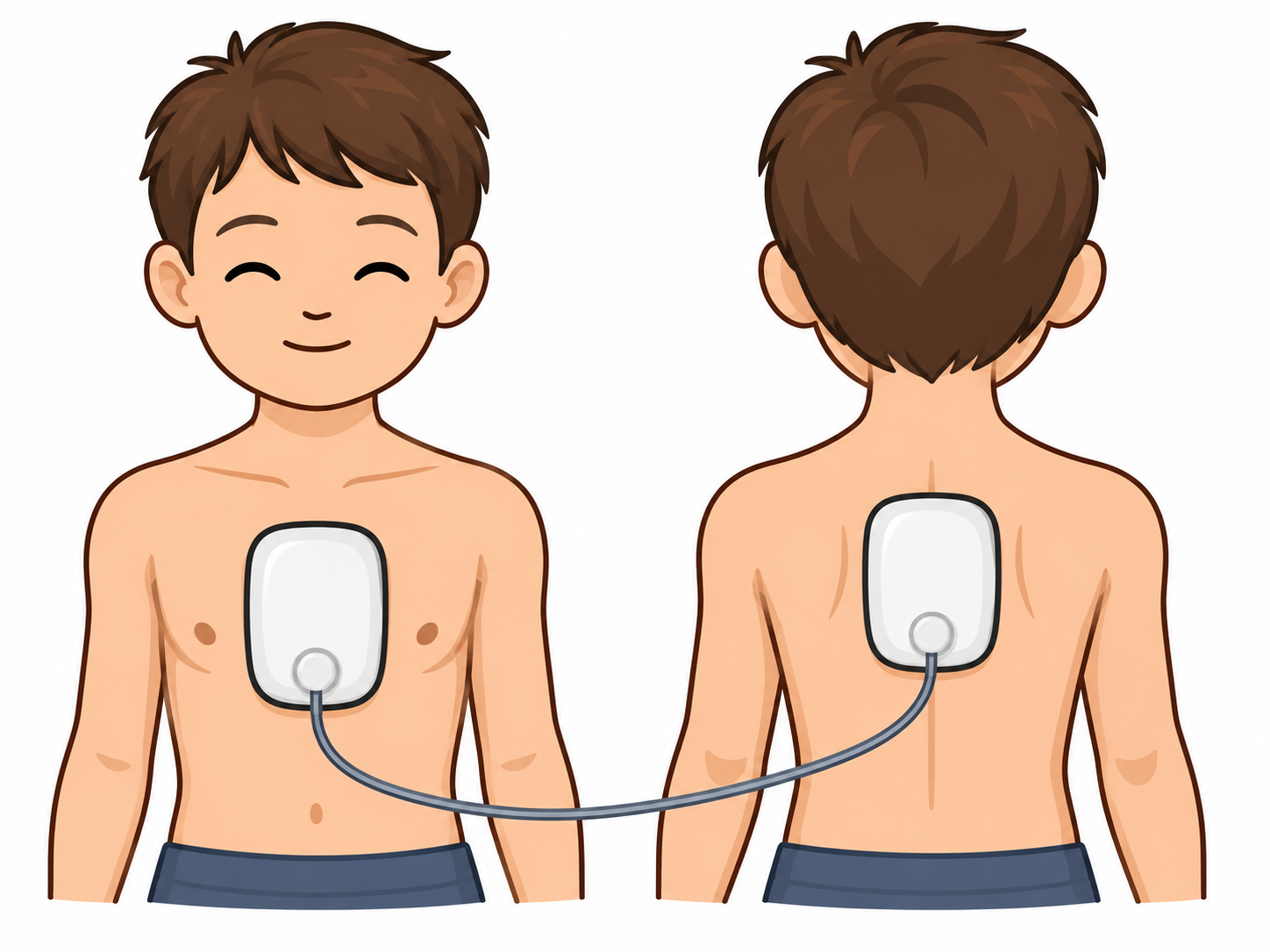
AED electrode pad placement for children
3. What to do if the patient has an implanted cardiac device
Some patients may have an implanted cardiac device beneath the skin.
- Pacemaker: Usually implanted in the upper left chest, near the heart.
- Implantable cardioverter-defibrillator (ICD): Slightly larger and may be located beneath the left collarbone or along the left side of the chest. These devices may appear as a firm raised area under the skin or may be associated with a visible surgical scar.
Key rule: Never place an AED pad directly over an implanted device. Position the pad at least 2–3 cm away from the device so that the electrical current can pass effectively through the heart.
4. AED pad storage and replacement
AED electrode pads use a water-based conductive gel to safely transmit electrical energy through the skin.
- Risk of gel drying out: Once the pads expire, the gel may dry out, reducing conductivity and potentially increasing the risk of skin burns. AEDs may emit an audible warning or status alert when the pads have a problem or are approaching expiration.
- Replacement interval: AED pads generally need to be replaced every 2–3 years. Some longer-life models, such as certain BeneHeart C Series pads, may have a shelf life of up to 5 years.
When purchasing replacement pads, make sure they are the correct brand and model for the AED being used. Battery status should also be checked at the same time, and replacement dates should be recorded as part of the device maintenance history.
In a cardiac arrest emergency, a properly maintained AED with compatible, in-date electrode pads can make a critical difference in giving the patient the best possible chance of survival.
Comments:
There are no comment for this news.

.png)
.png)