
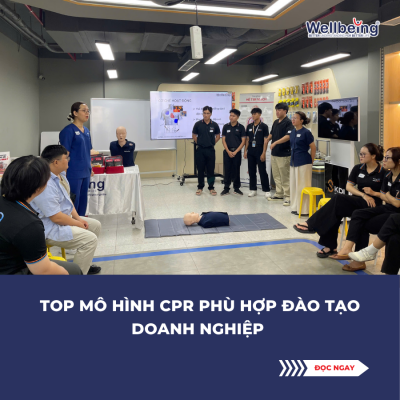
To meet the requirements of Basic Life Support (BLS) training, CPR manikins should support chest compression practice, rescue breathing, and the coordinated use of an automated external defibrillator (AED). In particular, manikins equipped with feedback systems that monitor compression rate, compression depth, and chest recoil help trainees identify errors, adjust their techniques, and improve the quality of their practical training.
Choosing the right CPR manikin helps employees become familiar with cardiopulmonary resuscitation (CPR) techniques and develop their ability to respond to cardiac arrest emergencies. However, not all CPR manikins are suitable for corporate training environments. In this article, Wellbeing introduces CPR manikin models worth considering and analyzes the criteria that help businesses select equipment suitable for their first aid training programs.
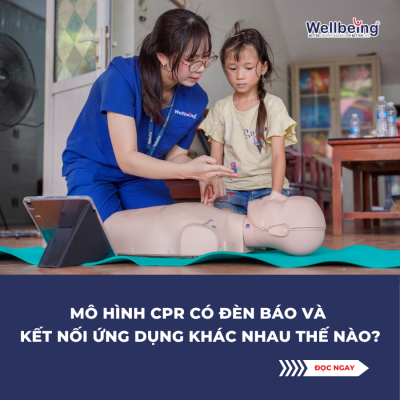
CPR manikins with LED indicators and app connectivity differ mainly in how they provide feedback and the level of detail used to monitor chest compression techniques. Manikins with LED indicators use light signals to help trainees adjust their compression rate during practice. Meanwhile, app-connected manikins can display more detailed data on compression rate, compression depth, and other parameters, depending on the product.
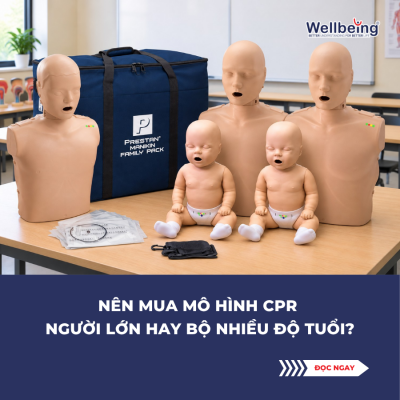
Choosing between an adult CPR manikin and a multi-age CPR manikin set depends on each organization's target trainees, training objectives, and budget. Adult CPR manikins are suitable for basic training programs, while multi-age CPR manikin sets allow trainees to practice chest compression and rescue breathing techniques appropriate for the characteristics of each age group.
Mô hình CPR có đèn báo và kết nối ứng dụng khác nhau chủ yếu ở cách cung cấp phản hồi và mức độ theo dõi kỹ thuật ép tim. Mô hình có đèn báo sử dụng tín hiệu ánh sáng để giúp học viên điều chỉnh tốc độ ép tim ngay trong quá trình thực hành. Trong khi đó, mô hình kết nối ứng dụng có thể hiển thị dữ liệu chi tiết hơn về tốc độ, độ sâu ép tim và các thông số khác.
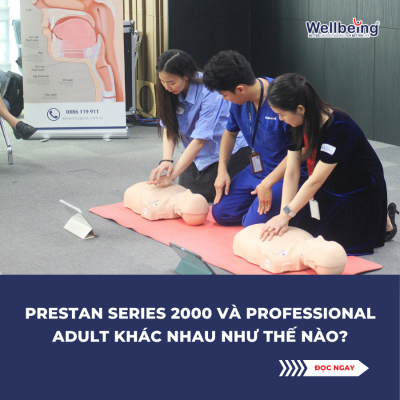
PRESTAN Series 2000 and PRESTAN Professional Adult are both adult cardiopulmonary resuscitation (CPR) training manikins used in first aid and resuscitation training programs. Both models allow trainees to practice chest compressions, ventilation, and receive feedback during practice. However, the most notable differences lie in their CPR feedback technology, application connectivity, and methods of assessing trainee performance.
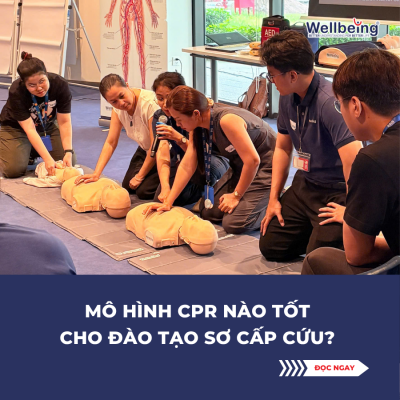
CPR manikins with feedback systems, designs suitable for different trainee groups, and long-term usability are worth considering for first aid training programs. Join Wellbeing to explore cardiopulmonary resuscitation (CPR) training manikins that meet the training needs of businesses, schools, first aid training centers, and healthcare facilities.
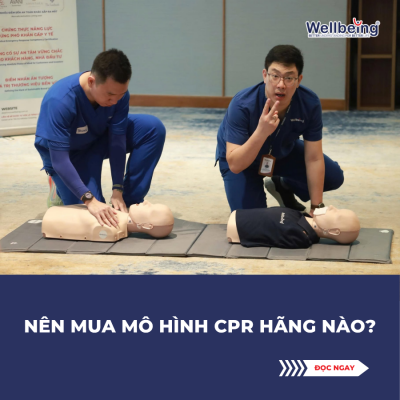
Before investing in CPR manikins, businesses, first aid training centers, and healthcare facilities need to consider several factors, including the target age groups (adults, children, or infants), chest compression feedback capabilities, ease of use, and long-term operating costs. Each brand has its own advantages in terms of technology, product configurations, and suitability for different training programs.
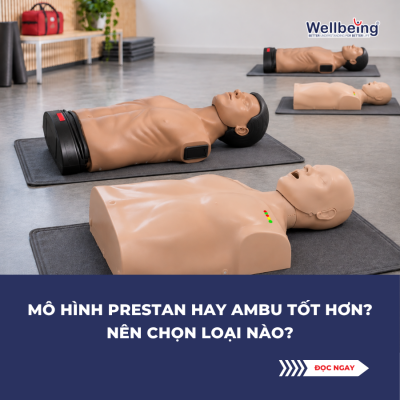
PRESTAN stands out for its lightweight, portable design, LED indicators, and audible feedback on chest compression techniques, making it suitable for CPR training in schools, businesses, and communities. Meanwhile, AMBU offers advantages in its hygiene system, which helps reduce cross-contamination, airway simulation, and performance monitoring features available in certain advanced models, making it suitable for hospitals and medical training facilities. This article compares the features, durability, hygiene, and costs of both brands and provides recommendations for choosing CPR manikins based on training needs.
PRESTAN nổi bật với thiết kế gọn nhẹ, dễ di chuyển, hệ thống đèn LED và âm thanh phản hồi kỹ thuật ép tim, phù hợp đào tạo CPR tại trường học, doanh nghiệp và cộng đồng. Trong khi đó, AMBU có ưu thế về hệ thống vệ sinh hạn chế lây nhiễm chéo, mô phỏng đường thở và các tính năng theo dõi thực hành trên một số dòng chuyên sâu, phù hợp với bệnh viện và cơ sở đào tạo y tế. Bài viết so sánh tính năng, độ bền, vệ sinh, chi phí và gợi ý lựa chọn mô hình CPR theo nhu cầu đào tạo.
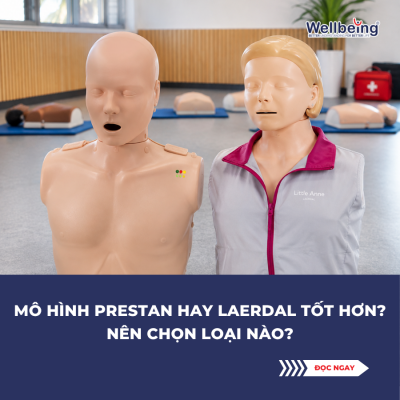
PRESTAN and Laerdal are two popular brands of cardiopulmonary resuscitation (CPR) training manikins commonly used in first aid and resuscitation training programs. Each brand differs in design, feedback technology, skill assessment capabilities, and operating costs. Businesses, schools, first aid training centers, and healthcare facilities need to select equipment that suits their training objectives and investment budgets.
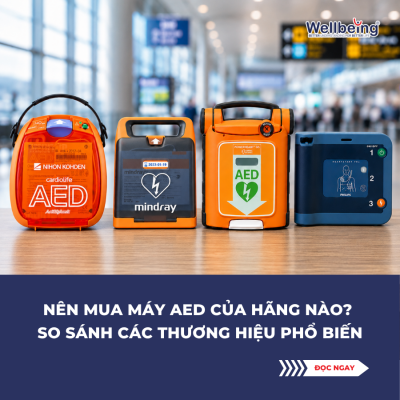
Each AED brand has its own strengths. When considering which AED brand is best, buyers may look at Nanoomtech for its simplicity and ease of use; Mindray for its ability to deliver the first defibrillation shock in the shortest possible time; and ZOLL for its technology that provides real-time CPR quality guidance and feedback. AED prices also vary depending on features, integrated technologies, and associated operating costs, rather than brand alone. Therefore, businesses should choose an AED based on their intended operating environment, required features, and long-term budget.
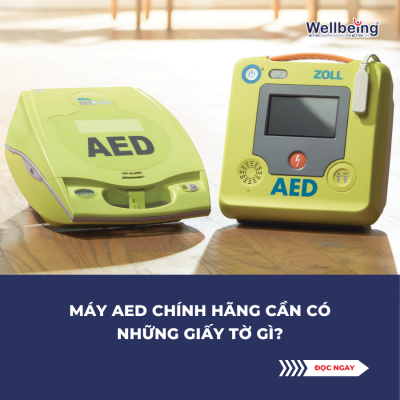
A genuine Automated External Defibrillator (AED) must have a valid medical device registration number, an original label and a supplementary label in Vietnamese, a warranty certificate with a serial number matching the device, a VAT invoice, and a Certificate of Origin (C/O) and Certificate of Quality (C/Q) issued by the manufacturer. Among these, the labels provide information that can be checked directly on the device to verify its origin and the mandatory information required by regulations. Thoroughly checking all documentation helps buyers minimize the risk of purchasing devices of unknown origin and makes it easier to obtain warranty services, conduct inspections, or verify the device's quality when necessary.
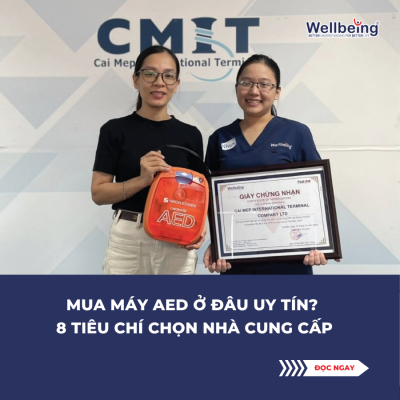
Buyers of Automated External Defibrillators (AEDs) should prioritize suppliers officially authorized by medical device manufacturers, with documented eligibility to provide manufacturer-backed warranty services and compliance with applicable price disclosure regulations. In addition, buyers should verify the supplier’s business registration, technical support network, qualified advisory team, and contractually guaranteed response times for technical issues. These eight essential criteria help businesses evaluate AED suppliers before making a purchasing decision while minimizing risks related to product authenticity, after-sales service, and technical support.
 Tiếng anh
 Vietnam

.png)
.png)