 Tiếng anh
 Vietnam
AED Cabinets in the AED Installation System
During the AED installation process in schools, many organizations often focus on the device without properly evaluating the role of the cabinet. In reality, the AED cabinet is an integral component of the emergency system, directly affecting accessibility, device durability, and operational efficiency. An AED machine can analyze heart rhythms, guide CPR, and deliver accurate electrical shocks, but if it is placed in a cabinet that is hard to open, difficult to identify, or unsuitable for the environment, the entire emergency procedure can be delayed. Therefore, selecting a cabinet should be considered a technical decision in the AED installation strategy, not just an accompanying accessory.
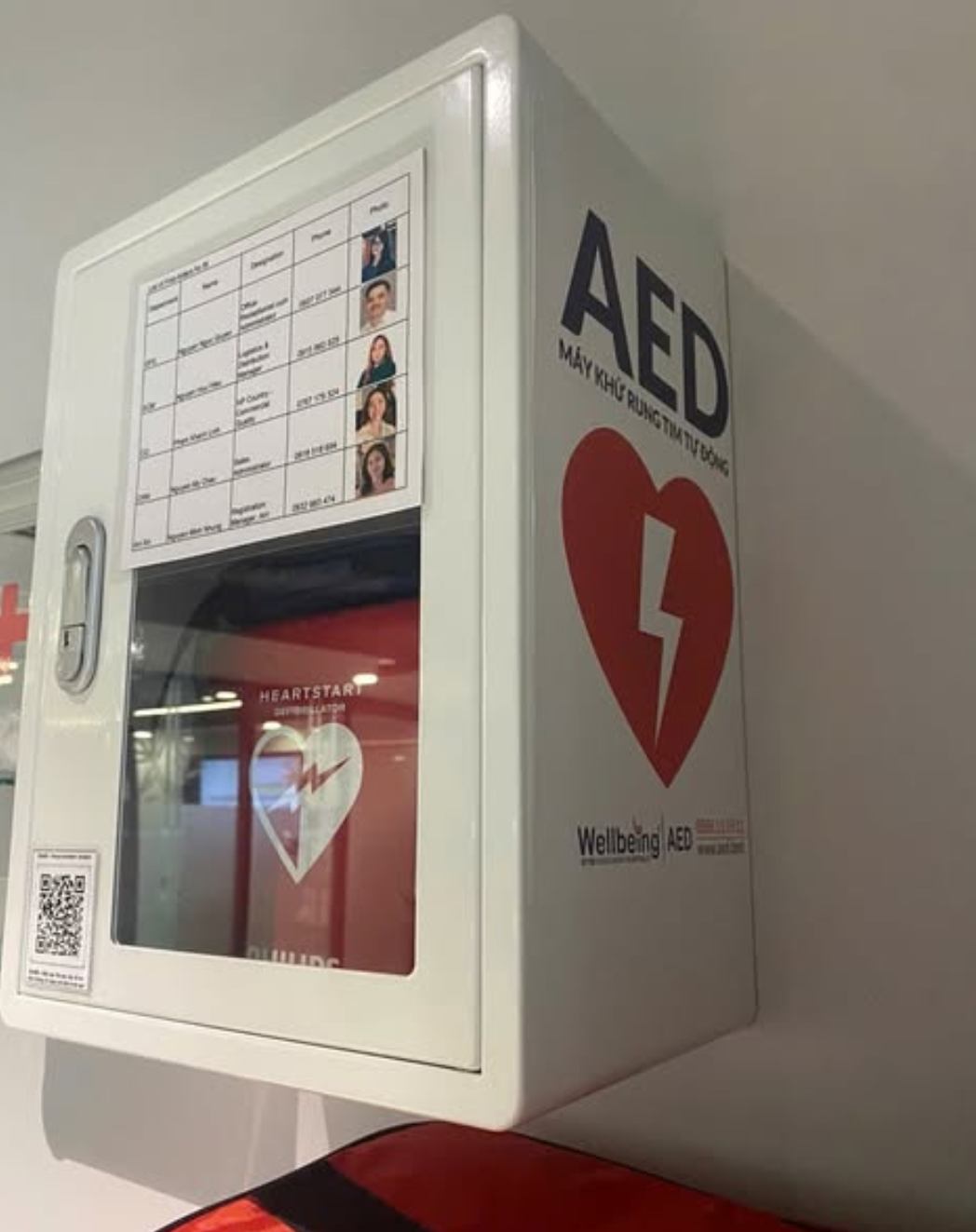
An AED cabinet is a small element but has a massive impact on the entire AED installation system in schools.
1. Rapid Accessibility: The Core Factor When Installing an AED
In sudden cardiac arrest situations, time is a matter of life and death. Every minute of delay can reduce the victim's chance of survival by 7-10%, so the most important principle when installing an AED is ensuring the device can be accessed within 3–5 minutes. The AED cabinet needs to be placed in a central, highly visible location such as a corridor, lobby, or common area, rather than in closed rooms or low-traffic areas.
Not stopping at the location, the cabinet design must also support rapid operation: unlocked or featuring an emergency opening mechanism, with clear identification signs that are easy to understand even for those without medical expertise. In a school environment, where users might be teachers or students, simplifying the cabinet opening operation is the way to shorten response time—the core factor in an effective AED installation system.
2. Proper Equipment Storage: Conditions for Maintaining AED Performance
A sustainable AED installation system cannot lack the element of equipment storage. An AED machine contains sensitive components like batteries and electrode pads, which can be affected by temperature, humidity, and dust. If the cabinet is not properly sealed, lacks impact resistance, or is unsuitable for the usage environment, the device can degrade without being detected in time.
In the context of schools, especially in semi-outdoor areas or near playgrounds, the cabinet needs to have durable materials and good dust and moisture resistance. In some cases, temperature-controlled cabinets are even required to ensure the device always remains within the safe operating threshold recommended by the manufacturer. This is a technical factor but directly impacts the long-term effectiveness of the AED installation.
3. Installation Standards and User-Friendliness
A common mistake in AED installation is focusing solely on the location while ignoring the height and user accessibility. The AED cabinet needs to be installed at a reasonable height (usually around 1.2 - 1.5m), ensuring both adults and older students can easily use it. At the same time, the cabinet design must not obstruct walkways or violate school safety standards.
User-friendliness is also reflected in the fact that the cabinet must be easy to open, easy to observe, and not require complex operations. In an emergency, the user often does not have much time to think, so every detail in the AED installation system needs to aim for simplicity and intuitiveness.
4. Supporting Inspection and Maintenance: Ensuring the AED is Always Ready
One of the crucial requirements of AED installation is maintaining the device's ready-to-operate status. An AED machine can self-test and display its status via indicator lights, but periodic visual inspections are still very necessary. The cabinet needs to be designed so that managers can easily open it to inspect, observe the indicator lights, and replace supplies when needed.
Additionally, the cabinet should have enough space to store accessories such as gloves, scissors, and CPR masks—important support items during the first aid process. An effective AED installation system does not just stop at the main device but includes the entire accompanying ecosystem.
5. Choosing a Provider: The Deciding Factor for AED Installation Effectiveness
Choosing a suitable cabinet will be difficult to achieve optimally without consultation from a specialized unit. In reality, installing an AED is a comprehensive process, including spatial surveying, equipment selection, location layout, usage training, and periodic maintenance.
To optimize AED installation effectiveness in schools, choosing a provider with comprehensive implementation capabilities is key. Wellbeing provides genuine AED models from reputable brands and accompanies schools throughout the entire system-building process.
Notably, Wellbeing currently provides the NT-381C AED model, a device highly rated for its suitability in the school environment, where there are diverse users and rapid response requirements. The machine integrates a clear voice guidance system (multilingual), helping teachers, staff, or even older students to follow step-by-step even without much practical experience. This is an important factor in the context where real-life emergencies are often accompanied by high psychological pressure.
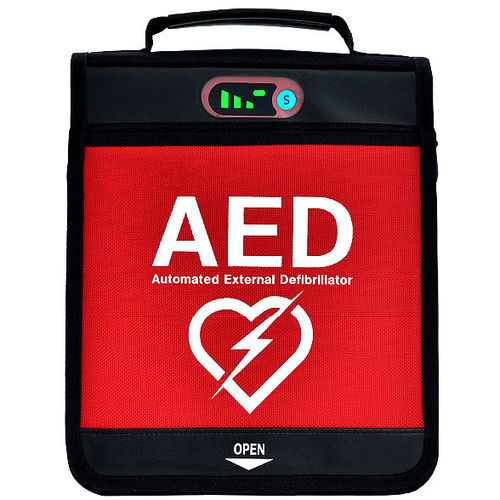
The NT-381C features a self-test system, helping monitor battery and electrode status and providing timely error warnings, ensuring the device is always ready after the AED installation.
Not stopping at the equipment, Wellbeing also supports consultation on optimal installation locations, AED usage training, and building emergency response procedures tailored to each school. Specifically, Wellbeing provides consultation services for installation locations, selecting AED cabinets suitable for the space and usage density, ensuring the device is always in the most accessible state. Besides, the unit also supports periodic inspections, reminds about battery and electrode replacement schedules, and ensures the device is always ready to operate.
Simultaneously, the unit implements first aid and AED usage training programs, helping teachers and students respond effectively in emergencies. This approach ensures the AED installation system is not only technically complete but also operates effectively in reality.
Comments:
There are no comment for this news.

.png)
.png)