 Tiếng anh
 Vietnam
Are AED Machines Safe for Students?
AED machines are drawing interest from many schools as a crucial emergency device in sudden cardiac arrest situations. However, a common question is whether AED machines are safe for students, especially since they emit electrical shocks. In reality, AEDs are not only safe but are also designed for non-professionals to use, including in a school environment.
1. AED Machines and Their Emergency Role in the School Environment
An AED is an automated external defibrillator used in cases of cardiac arrest or dangerous arrhythmias like ventricular fibrillation. When this occurs, the heart can no longer pump blood effectively to the brain and vital organs, causing the victim to lose consciousness within seconds and potentially die if not intervened promptly.
An important point to understand is that sudden cardiac arrest does not only happen to the elderly or those with underlying conditions. In a school environment, students still face the risk of this condition due to undetected congenital heart defects, electrical heart disorders, or exertion during physical activities. Some cases of fainting during exercise are actually early signs of severe arrhythmias.
The AED machine is designed to accurately handle this exact situation. The device can analyze the victim's heart rhythm via electrode pads placed on the chest. If it detects a shockable rhythm, the machine will instruct the user to deliver a shock to return the heart to its normal operating state. If no shock is needed, the machine will not activate, ensuring no incorrect intervention occurs.
A key feature of the AED machine is its high degree of automation. The user does not need to diagnose or make medical decisions. The entire process, from analyzing the heart rhythm to guiding the operation, is handled by the device. The machine issues step-by-step voice prompts, from how to attach the electrodes and maintain a safe distance, to when to deliver a shock or continue external chest compressions.
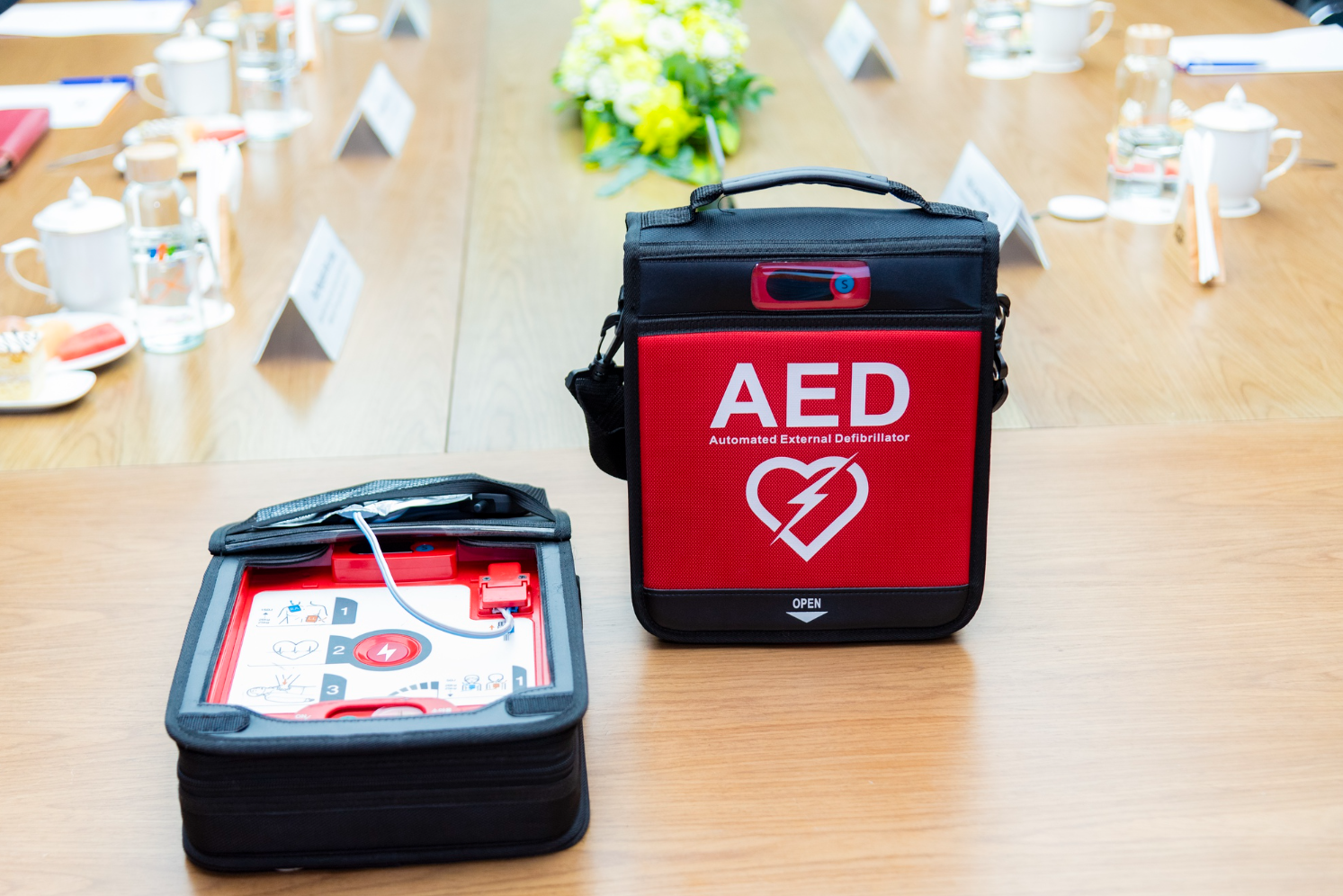
(AED machines are drawing interest from many schools as a crucial emergency device in sudden cardiac arrest situations.)
In a school context, time is the deciding factor. When cardiac arrest occurs, every passing minute without intervention significantly reduces the chance of survival. Waiting for professional medical forces to arrive is often not fast enough to ensure a chance of saving the life. This is why the AED has become a necessary device, enabling on-site intervention in the first few minutes.
Furthermore, AEDs for students have design advantages suited for public environments. The devices are compact and easy to place in locations such as corridors, sports fields, or medical rooms. The clear warning and instruction system allows anyone to access and use them when needed.
Another important factor is standardization. Current AED machines are manufactured according to strict medical safety standards. Parameters regarding shock energy, heart rhythm analysis capability, and accuracy have all been verified. This ensures the device operates stably and safely when deployed in a school environment.
From a risk prevention perspective, equipping AED machines is not just about handling incidents but also demonstrates the school's level of readiness for emergencies. In the criteria for building a safe school environment, the presence of emergency equipment like AEDs is increasingly considered essential.
2. The Safety Level of AED Machines and Their Application in Schools
The question of whether AED machines are safe for students often stems from concerns about the device using electricity. However, in reality, AEDs are designed with multiple layers of control to ensure maximum safety for both the user and the victim.
First and foremost, the AED's operating mechanism is selective. The device only emits an electrical shock when it detects the exact type of arrhythmia that requires one. This eliminates the risk of misuse affecting students. If a student faints due to a drop in blood pressure, exhaustion, or other non-cardiac reasons, the machine will not trigger a shock. This is the core factor that answers concerns about whether an AED is dangerous.
Additionally, the energy level of the AED machine has been calculated to suit the human body, including children when using the correct type of electrode pads. The electrical shock is delivered over a very short duration, enough to re-establish the heart rhythm but without causing prolonged damage. Current AED models for students also feature a mode to adjust to lower energy when used on young children.
Another crucial point is the instruction system. The AED provides clear, specific, step-by-step voice prompts. The user simply needs to follow along, requiring no specialized knowledge. This significantly reduces errors during operation, especially in a school environment where users are often teachers or staff.
The role of using an AED in schools goes beyond technical factors; it relates to rapid response capabilities. In cardiac arrest situations, intervention within the first few minutes can determine life or death. The AED helps shorten the waiting time and facilitates immediate on-site handling.
Schools are crowded environments, including students of various ages, teachers, and staff. Physical activities, extracurriculars, and sports competitions all harbor certain risks. Having AEDs available for students increases overall safety levels and minimizes consequences during unexpected situations.
Moreover, deploying AEDs in schools contributes to raising awareness about first aid. When the device is placed in visible locations, accompanied by usage instructions, students and teachers have the opportunity to access basic cardiovascular emergency knowledge. This is an important factor in building a safe and proactive school environment.
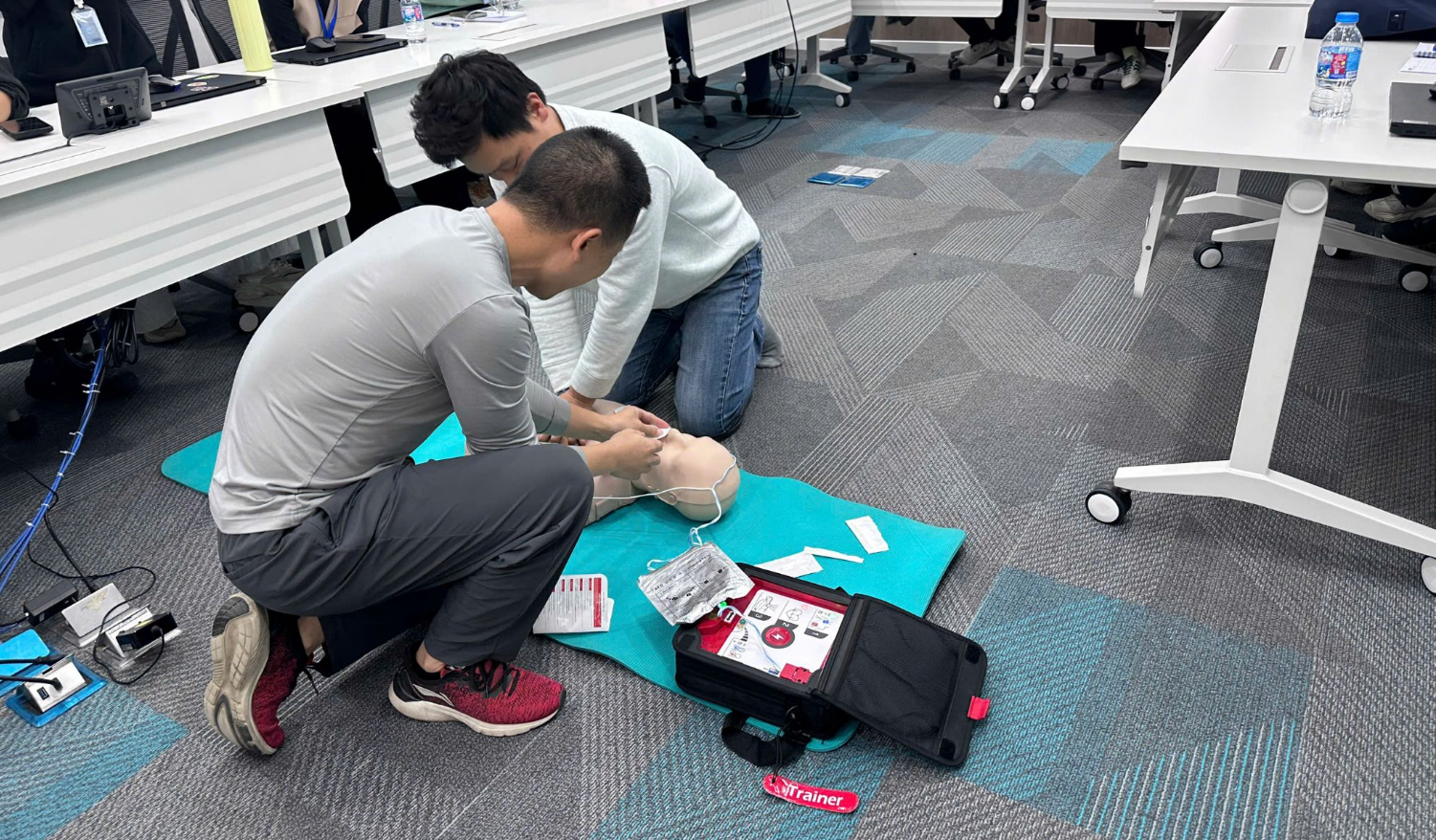
(The energy level of the AED machine is calculated to suit the human body, including children when using the correct type of electrode pads.)
3. Conditions to Ensure Safe AED Usage in Schools
Concerns about whether an AED is dangerous usually stem from an incomplete understanding of how the device works. In reality, the AED is one of the medical devices with the highest level of safety when used according to instructions.
The biggest risk lies not in using the AED, but in failing to use it promptly when necessary. If a student falls into cardiac arrest and receives no early intervention, the consequences can be far more severe than any risk associated with the device.
However, to ensure effective and safe AED usage in schools, several basic conditions must be met:
3.1. First aid skills training for teachers: Teachers and school staff need to be trained in basic first aid skills, including recognizing signs of cardiac arrest and how to use an AED. In-depth training isn't required, but the ability to handle the situation quickly and without confusion during an incident must be ensured.
3.2. Placing the AED in easily accessible locations: The AED should be placed in highly visible areas with clear signage. Suitable locations include sports fields, multi-purpose halls, and corridors. The faster the device can be accessed, the higher the emergency effectiveness.
3.3. Periodic inspection and maintenance: The school needs to regularly check the machine's operating condition. Batteries and electrode pads must be replaced as recommended to ensure the device is always ready for use.
3.4. Complying with safety principles during use: When operating an AED, it is important to note:
- Do not touch the victim while the machine is analyzing or delivering a shock.
- Ensure the skin area where the electrodes are placed is dry and free of obstructions.
- Though simple, these principles play a vital role in ensuring safety and emergency effectiveness.
Overall, when the above conditions are fully met, using an AED in schools is not only safe but also a necessary solution to protect the health and lives of students.
The AED machine is an emergency device designed with high safety, suitable for use in the school environment. The automated mechanisms, accurate heart rhythm analysis capabilities, and clear instruction system help minimize risks during use. Equipping AED machines for students does not increase risk; on the contrary, it helps enhance the ability to respond to sudden cardiac arrest situations.
Wellbeing is a leading organization in Vietnam specializing in providing comprehensive safety solutions, including the genuine distribution of AED machines (automated external defibrillators) from major brands like Philips (UK), Zoll (US), and Nihon Kohden (Japan), as well as organizing professional first aid training. They are the AED equipment provider for many organizations, schools, and 21 airports nationwide.
Comments:
There are no comment for this news.

.png)
.png)