 Tiếng anh
 Vietnam
Common Maritime Accidents and Prevention Methods
Maritime safety is a mandatory requirement in maritime transport, vessel operation, and offshore activities. Ensuring maritime safety does not only stop at complying with legal regulations but requires building a comprehensive risk management system. Most common maritime accidents can be prevented if shipping companies, captains, and crew members strictly implement preventive measures from the beginning. Being prepared with maritime incident response plans plays a decisive role in minimizing damage when risks occur.
1. Common Maritime Accidents
According to data from the International Maritime Organization (IMO) and international marine insurance reports, numerous accidents involving sea vessels occur globally every year, ranging from collisions, groundings, and fires/explosions to occupational accidents on deck. Despite increasingly modern technical systems, common maritime accidents still primarily stem from human error, complex weather conditions, and full non-compliance with maritime safety regulations.
Ship Collisions
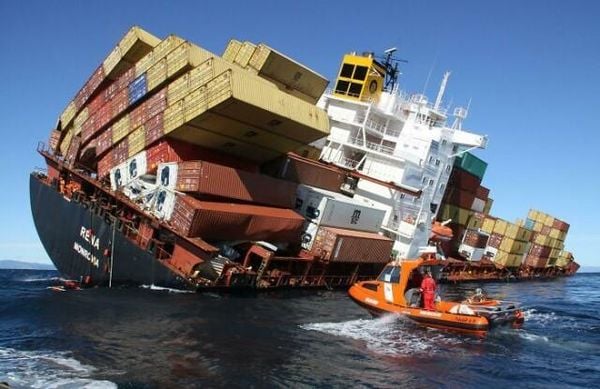
Collisions are among the most frequent maritime accidents. These incidents can occur between two vessels or between a vessel and a wharf or coastal structure. Causes usually involve the captain and deck officers failing to maintain a proper lookout, maneuvering contrary to collision avoidance rules, or misjudging the speed and heading of other vessels. In busy maritime lanes, the risk of collision increases if strict watchkeeping and coordination between departments are not maintained.
Grounding
Grounding is also a common occurrence, particularly in river mouths, narrow channels, or shallow waters. When a vessel fails to update depth and tide information or fails to calculate the draft accurately, the possibility of grounding is very high. The consequences include not only hull damage but also the risk of oil spills, causing marine environmental pollution and affecting maritime traffic.
Ship Fires and Explosions
Fires and explosions on board are serious accidents. Many fires originate in cargo holds, engine rooms, or fuel storage areas. Causes may include electrical short circuits, fuel leaks, or improper storage of dangerous goods. In offshore activities, the risk of fire and explosion is even higher due to the involvement of gas and oil. If detection and firefighting systems are not periodically inspected, the damage can be catastrophic.
Occupational Accidents on Board
Occupational accidents on ships and offshore structures also occur frequently. Workers may slip and fall due to wet decks, get limbs caught in mooring equipment, or encounter incidents while operating cranes. These common maritime accidents are mainly caused by non-compliance with maritime safety procedures or a lack of supervision during work operations.
2. Causes and Risk Factors of Maritime Accidents
Most common maritime accidents involve the human element. Working excessive hours, lack of rest, and schedule pressure cause seafarers to lose focus. Unclear communication between the captain and the officer of the watch also increases the risk of maneuvering errors.
Additionally, inadequate technical maintenance is a significant cause. Engines, steering systems, and life-saving appliances (LSA) pose safety risks if not periodically inspected. Some older vessels that are not upgraded according to regulations increase the likelihood of incidents.
Bad weather is an objective factor but is predictable. If a vessel fails to update meteorological information in time or adjust its course appropriately, the risk of maritime accidents such as capsizing or structural damage increases. For offshore activities, large waves and strong winds directly affect the safety of drilling rigs and service vessels.
3. Maritime Accident Prevention Measures
3.1. Maritime Accident Prevention
-
Compliance with technical and legal regulations: Prevention must start with management and compliance with safety regulations under the International Convention for the Safety of Life at Sea (SOLAS) and the Vietnam Maritime Law. Before operation, vessels must be registered, undergo technical inspections, and be issued full safety certificates. Equipment such as life-saving, firefighting, navigation, and communication systems must operate stably and undergo periodic maintenance.
-
Personnel management in vessel operation: Humans are one of the most important factors in enhancing maritime safety. Many common accidents stem from crew errors such as loss of concentration, misjudgment of situations, or non-compliance with collision regulations. Therefore, shipping companies must organize regular training on ship maneuvering, collision avoidance rules (COLREGs), emergency handling skills, and medical first aid. Crew members must be assigned reasonable working and rest hours to avoid prolonged fatigue, which indirectly reduces judgment capacity.
-
Preventing collisions and groundings on maritime routes: To prevent collisions and groundings, vessels must maintain strict watchkeeping, update hydro-meteorological information, and closely monitor channel depths. When operating in high-traffic areas, the captain must reduce speed appropriately, increase observation, and exchange information with surrounding vessels. Proactively adjusting the voyage plan when bad weather is forecasted is a critical solution to ensure maritime safety.
-
Controlling fire and explosion risks: Preventing fires and explosions on ships and offshore structures requires strict control of heat sources, electrical systems, and fuel. Dangerous goods must be fully declared and arranged according to technical regulations. Fuel compartments must be regularly checked for leaks. For offshore operations, fire and explosion risks related to gas and oil are higher, thus requiring even stricter safety controls.
-
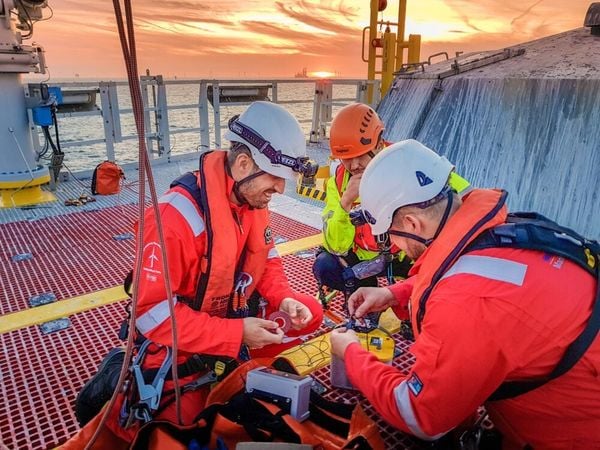
Ensuring occupational safety on board and offshore: In ship and offshore environments, occupational accidents are a noteworthy issue. To ensure maritime safety, workers must be equipped with full personal protective equipment (PPE) and adhere to safe working procedures. Decks must be kept dry, and lifting equipment must be inspected before use. Establishing clear danger zones and warning signs helps reduce common accidents related to slips, falls, or impacts.
3.2. Maritime Incident Response
-
Establishing situational response procedures: Every vessel needs a detailed response plan for situations such as fires, collisions, groundings, flooding, main engine failure, or oil spills. The plan must clearly define the responsibilities of the captain, deck officers, chief engineer, and every crew member. Clear role assignment during an accident helps avoid overlap and reduces handling time. These plans must be based on international standards and Vietnamese maritime safety laws and fully disseminated to the crew before departure.
-
Responding to fire and explosion accidents: Fire is a high-risk common maritime accident. Upon detecting a fire, the first principle is to sound the general alarm, locate the fire, and quickly isolate the area. Cutting off power, closing fuel valves, and using the correct type of fire extinguisher are mandatory. Incorrect methods can cause the fire to spread rapidly, especially in the engine room or fuel areas. If uncontrollable, the captain must signal an emergency and prepare for the abandon-ship protocol.
-
Responding to collisions and groundings: When a collision or grounding occurs, the first step is to assess hull damage, check for flooding, and evaluate stability. The captain must quickly adjust the vessel's position to avoid further damage. Simultaneously, maritime management authorities and search and rescue (SAR) forces must be notified according to regulations. If there is a risk of an oil spill, containment measures such as oil booms or specialized sorbent materials must be deployed immediately.
-
Responding to offshore incidents: For offshore structures, incidents may involve gas fires, oil leaks, drilling equipment failure, or hazardous weather. Due to the distance from the mainland, offshore response requires clear evacuation plans and stable communication systems. During weather warnings or fire risks, workers must be guided to safe areas according to trained routes. Service vessels and rescue means must always be in a state of readiness.
-
Post-accident investigation: After every incident, the company must organize an investigation into the specific causes, including technical, human, and management factors. Full analysis helps identify loopholes in the maritime safety system and adjust operating procedures. Investigations should be used to update internal regulations, enhance training, and upgrade equipment as necessary to prevent recurrence.
Maritime safety is a mandatory condition to ensure the stable operation of vessels and offshore structures. Common accidents such as collisions, groundings, fires, or occupational injuries can cause serious damage if not well-controlled. Prevention requires strict compliance with legal regulations, investment in adequate equipment, and systematic human resource training. By combining tight management, periodic technical inspections, and increased worker awareness, maritime safety will be significantly improved, contributing to the protection of people, property, and the marine environment.
Comments:
There are no comment for this news.

.png)
.png)