 Tiếng anh
 Vietnam
Guide to Using PPE Correctly According to HSE Standards
In any high-risk work environment, necessary Personal Protective Equipment (PPE) is the final line of defense between the worker and an accident. However, many incidents still occur despite workers being issued protective gear, due to incorrect usage, using the wrong type, or a lack of understanding regarding the protective purpose of each device. This article provides an analysis based on HSE standards to help businesses and workers understand, use, and manage PPE effectively.
1. Overview of PPE
PPE stands for Personal Protective Equipment. In HSE (Health, Safety, and Environment) terminology, it refers to a set of devices and tools specifically designed for workers to wear or carry to create a physical barrier separating the body from harmful agents in the workplace. These agents are diverse, including physical factors (falling objects, flying debris, noise, radiation, etc.), chemical factors (toxic vapors, corrosive solvents, etc.), biological factors (bacteria, viruses, etc.), or extreme temperature factors.
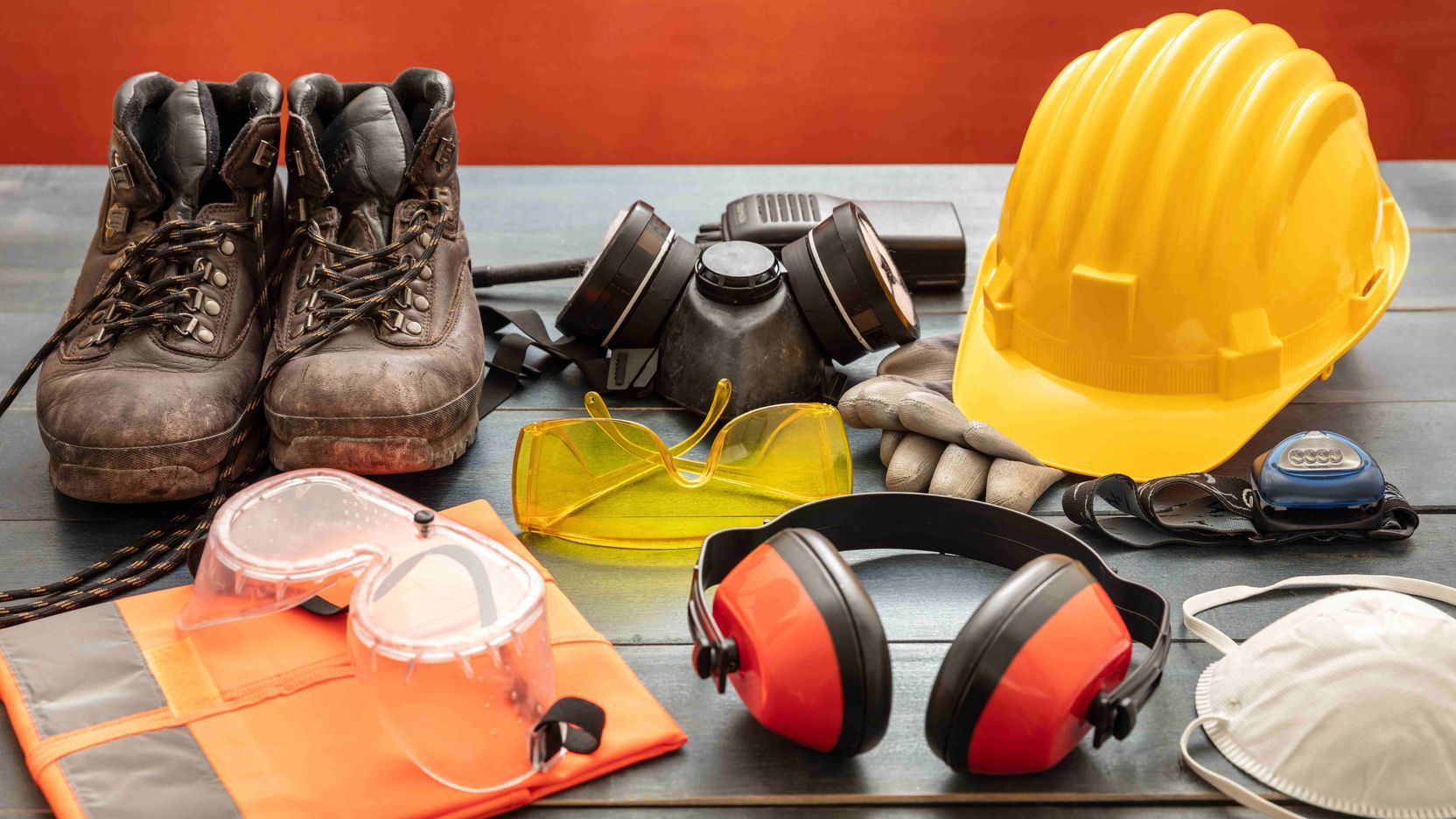
Unlike standard tools that support production, the sole function of necessary PPE is to protect human life and health. A standard PPE set can range from simple items like gloves, hard hats, goggles, and steel-toe boots to complex equipment such as respirators with integrated breathing apparatus or specialized heat-resistant suits. The key point in this definition is its personal nature—the equipment must fit the size and biological characteristics of each specific user to be fully effective.
2. The Role of PPE in the Risk Control System
In modern occupational safety management, risk control measures are arranged in an inverted pyramid model known as the Hierarchy of Controls. In this model, necessary PPE is positioned at the final level, following solutions like hazard elimination, engineering substitution, and administrative controls.
This principle is based on the fact that technical measures (such as installing guardrails, ventilation systems, or machine guarding) can eliminate hazards at the source, independent of human behavior. Conversely, PPE is only effective when the worker actively wears it correctly. For example, a fixed guardrail system can prevent the risk of falling from heights for everyone without any further action on their part, whereas a safety harness only protects one person and only if they anchor the lanyard correctly.
However, the role of PPE in workplace safety is irreplaceable when the aforementioned measures cannot completely eliminate the risk. When an incident occurs—such as falling material or chemical splashes—PPE plays the role of minimizing the severity of the injury from death or permanent disability to minor injury or no injury at all. Most fatalities or serious injuries occur because workers removed their PPE at the moment of danger or used equipment unsuitable for the nature of the work. Therefore, PPE does not replace other safety measures but is a mandatory supplement and the final barrier in a comprehensive risk control system.
3. HSE Standards for PPE Usage in Labor
HSE regulations on protective equipment require that the devices be absolutely compatible with the actual risks at each work position. A metal cutting and welding worker needs goggles capable of resisting arc rays and impacts, while a laboratory worker requires goggles resistant to chemical splashes and toxic vapors. For work at heights, the mandatory standard is a full-body harness with a shock absorber, rather than a simple waist belt which poses a risk of spinal injury during a fall.
In addition to the suitability of the type, the quality of the equipment is a vital factor. Businesses must ensure that all issued PPE meets quality inspection standards. Equipment that is expired, cracked, or of unverified origin is not considered valid protection. Intentionally issuing poor-quality PPE can lead to criminal liability for the employer if an accident occurs.
Regarding workers, the regulations clearly state the responsibility for compliance. Once fully trained and equipped, refusing to use the equipment or unilaterally altering its structure—such as cutting helmet brims or over-loosening safety harnesses—is considered a serious violation of labor discipline.
4. Guide to Correct PPE Usage by Specialized Protection Group
-
Head Protection (Hard Hat): Many mistakenly believe that simply placing the hat on the head ensures safety. In reality, the internal suspension system (harness) and the chin strap are the decisive factors. The strap must always be fastened and adjusted to fit snugly under the chin to ensure the hat does not fly off during a fall or a heavy impact. The gap between the shell and the head is intended to absorb shock; therefore, never stuff gloves, wallets, or personal items into this space. Hard hats also have a lifespan, typically 3–5 years depending on the manufacturer, and must be replaced immediately if the plastic shell ages (becomes brittle or discolored) or after it has sustained a heavy impact.
-
Eye Protection (Safety Goggles): Goggles must be selected based on the nature of the hazard. Standard safety glasses only protect against dust and frontal impacts and cannot replace chemical goggles or sealed goggles when working in environments with toxic vapors. When worn, goggles must fit closely to the face without large gaps to prevent debris from entering from the sides or bottom. If the lens surface is excessively scratched, it will scatter light, reduce visibility, and cause eye fatigue, increasing the risk of operational accidents; thus, they must be replaced promptly.
-
Hand Protection (Safety Gloves): This group is the most frequently misused. Ordinary cloth gloves cannot resist oil or chemicals and may even accumulate toxins that cause dermatitis. Cut-resistant gloves are graded from levels 1 to 5 (according to EN388 standards); workers must choose the correct level for the sharpness of the material. Wearing oversized gloves can lead to the risk of being caught in rotating machinery, causing crushing injuries to the hand.
-
Foot Protection (Safety Shoes): Safety shoes require not only a steel toe to prevent crushing but also anti-slip soles and puncture-resistant midsoles. Workers must check the sole treads regularly. When the treads are worn, the grip decreases significantly, and the anti-slip function is lost even if the steel toe remains intact. Shoelaces must be tied tightly and neatly to avoid tripping.
-
Fall Protection (Safety Harness): The anchor point is the most important element. The harness hook must be attached to certified structural load-bearing points, prioritizing positions higher than the user's head to minimize free-fall distance. Absolutely do not hook onto temporary railings, fire water pipes, or positions with sharp edges.
5. Inspection, Storage, and Replacement of PPE
Protective equipment does not have an infinite lifespan and is only effective when its technical features are intact. Therefore, inspecting the condition of the equipment before every shift is a mandatory safety requirement. Workers must be trained in the habit of thorough observation: looking for cracks in helmets, tears in safety harnesses, wear on shoe soles, or deformation of goggles. If any sign of damage is found, no matter how small, use must stop immediately and be reported to management for replacement. Temporary repairs with tape or string are never permitted.
On the corporate side, a tracking log must be established to manage the expiration dates of PPE. Especially for equipment made of synthetic materials like safety harnesses and plastic helmets, their lifespan is significantly affected by UV rays and the environment. Improper storage is the leading cause of rapid PPE degradation. Leaving helmets and harnesses in the sun, tossing them near chemical areas, or in damp environments will cause material aging and brittleness. PPE must be stored in a dry, clean, cool place away from direct sunlight when not in use.
Necessary PPE is a vital element in the worker protection system but only reaches its full potential when correctly selected, used, and managed. PPE regulations are not just a legal requirement but a practical measure to minimize injuries. Businesses must combine risk assessment, appropriate distribution, PPE safety training for employees, and regular inspections. Workers must clearly understand the role of PPE in occupational safety and comply with procedures every day.
Comments:
There are no comment for this news.

.png)
.png)