 Tiếng anh
 Vietnam
How to Periodically Check an AED Machine?
In modern safety strategies, installing AEDs (Automated External Defibrillators) is becoming an inevitable trend. However, many organizations focus only on installation without paying adequate attention to inspecting and maintaining the equipment. In reality, an AED only truly "saves lives" when it is always in a ready-to-operate state.
So, how should you periodically check an AED to ensure its effectiveness? The article below will help you clearly understand the process and suggest solutions from Wellbeing for optimal AED management and operation.
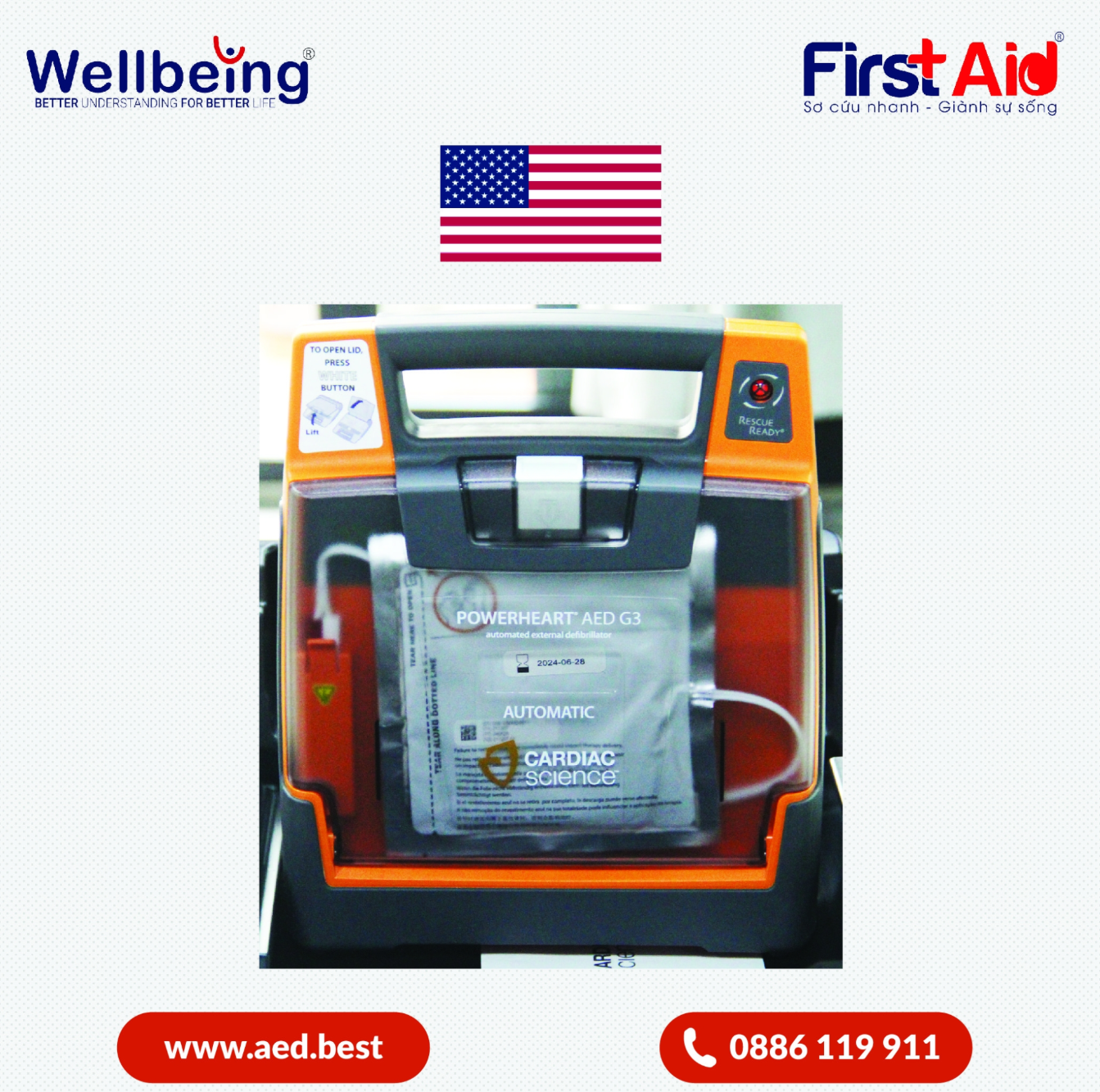
Periodic inspection of AED machines ensures the device is always ready to operate in emergency situations.
1. AED Maintenance: The Decisive Link in the Chain of Survival
In cardiac arrest emergencies, the concept of the "golden window" only lasts for the first few minutes. AEDs are designed to intervene exactly during this time frame, but if the device fails to operate, the entire emergency chain will be interrupted.
Therefore, after installing an AED, maintenance is no longer an auxiliary activity but becomes a decisive factor in life-saving effectiveness. A device that is not periodically checked may face risks such as:
-
Depleted or degraded batteries going undetected.
-
Expired electrode pads losing their conductive ability.
-
System errors not being warned of in a timely manner.
-
Physical damage due to the environment or impacts.
From a risk management perspective, this means the organization has invested but cannot control operational capabilities—a dangerous gap in the safety system.
2. AED Operating Mechanism and the Significance of Periodic Checks
Modern AEDs are integrated with a self-test system, allowing the device to automatically assess the condition of the battery, circuitry, and electrodes. The results are usually displayed via:
-
Status indicator lights (Green: Ready; Red or X mark: Error)
-
Warning sounds when an issue is detected
However, the self-test mechanism does not completely replace manual inspection. Common reasons include:
-
Self-tests cannot detect external physical damage.
-
They cannot control storage environmental conditions.
-
They do not replace checking the expiration dates of consumables.
Therefore, periodic inspection should be understood as a combination of automated technology and human monitoring procedures.
3. AED Machine Inspection Procedure
Each AED model will have a different periodic inspection schedule and maintenance guidelines from the manufacturer. Some high-end devices allow remote status monitoring via connected systems, helping to optimize inspections. Additionally, many safety standards require maintaining a maintenance log, not only for internal tracking but also for legal inspections and evaluating the safety system's quality.
Instead of viewing AED inspection as a list of disjointed actions, it should be approached with a systems thinking mindset, including three main layers of control:
3.1. Device Status Control Layer
This is the most basic layer, focusing on confirming whether the AED is "ready" or not:
-
Observe status indicator lights and warning signals.
-
Perform an overall check of the casing, cables, and connections.
-
Ensure the device shows no signs of damage or wear.
It is worth noting that many incidents stem not from complex technical faults, but from minor details like loose cables or cracked casings.
3.2. Consumables Control Layer
The battery and electrodes are the "operating heart" of the AED but have a limited lifespan:
-
Battery: 2 to 5 years.
-
Electrodes: 2 to 4 years, or replaced immediately after use.
The inspection should not stop at checking "expired or not," but must ensure:
-
Storage conditions have not degraded quality.
-
Electrode packaging remains intact.
-
The battery has not been affected by temperature or humidity.
This is a control layer easily overlooked but has a direct impact on the AED's life-saving capability.
3.3. Environmental and Accessibility Control Layer
A well-functioning AED placed in the wrong location can still become useless in an emergency. After installing an AED, ensure that:
-
The device is placed in a highly visible, easy-to-reach, and easy-to-use area.
-
It is not obstructed or locked away.
-
Temperature and humidity are within the manufacturer's recommended range.
-
There is clear signage for bystanders to recognize.
In reality, many delayed emergencies are not due to a lack of equipment, but the inability to find the equipment in time.
3.4. Inspection Frequency
A common recommendation is to check the AED at least once a month, but this number needs to be adjusted according to the context:
-
High-usage environments: Require more frequent inspections.
-
Areas with harsh environmental conditions: Require closer monitoring.
-
Organizations with multiple devices: Need a centralized management system.
Furthermore, many safety standards require keeping a maintenance log, not only for internal tracking but also for legal inspections.
4. Wellbeing - An Integrated Solution from AED Installation to Operation
Instead of separating "buying the equipment" and "operating the equipment," Wellbeing builds an integrated solution model, helping organizations deploy AED installations systematically and sustainably. Not stopping at product provision, Wellbeing accompanies clients from consultation to practical operation, ensuring the device always maximizes its effectiveness in emergency situations.
Specifically, Wellbeing provides standard consultation and installation, based on analyzing the space, usage density, and characteristics of each environment to propose optimal AED locations—a factor directly affecting accessibility and emergency effectiveness. In parallel, the unit also supports periodic inspection and maintenance, helping monitor device status and reminding about battery and electrode replacement schedules, thereby ensuring the AED machine is always in a ready-to-operate state.
Besides the equipment factor, Wellbeing pays special attention to the human element through highly practical first aid and AED usage training programs. Thanks to this, personnel in businesses or schools can confidently handle cardiac arrest situations, shorten response times, and contribute to increasing the victim's chance of survival. Additionally, Wellbeing provides an accompanying first aid equipment ecosystem such as first aid kits and necessary medical tools, helping to build a synchronized and effective emergency response system.
Comments:
There are no comment for this news.

.png)
.png)