 Tiếng anh
 Vietnam
Newborn Care Course - Important Skills Parents Need to Know Early On
Newborns have a weak immune system and an incomplete body, so even a small mistake in care can greatly affect their health. However, reality shows that the majority of parents today still care for their children based on word-of-mouth experience, lacking a scientific foundation and situational handling skills.
1. Why do modern parents need to participate in a newborn care course?
The early days of caring for a newborn are always a period filled with both happiness and pressure, especially for first-time parents. Newborns have a weak immune system and an incomplete body, so even a small mistake in care can greatly affect their health. However, reality shows that the majority of parents today still care for their children based on word-of-mouth experience, lacking a scientific foundation and situational handling skills.
This is exactly why newborn care courses are becoming increasingly necessary. Not only providing knowledge, these courses also help parents understand the root of the problem, knowing how to observe, assess, and handle each specific situation correctly. Especially in the context where emergency response time can be prolonged and accidents involving children happen rapidly, being equipped with skills early on is the "golden window" that helps protect the child.
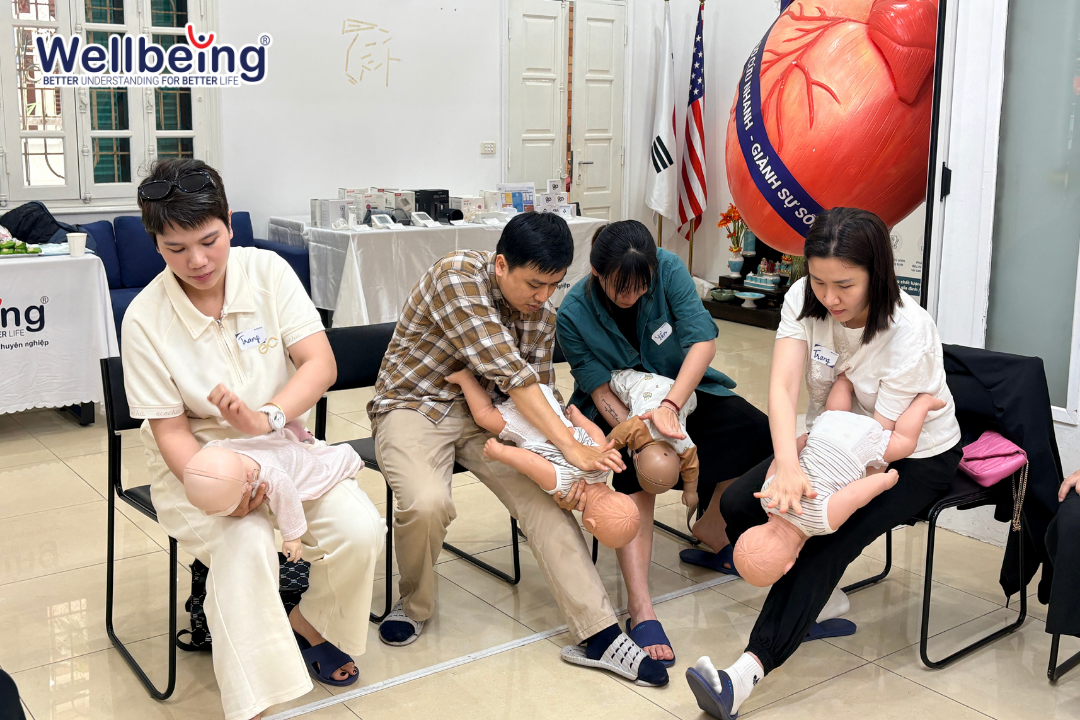
In emergency situations, knowledge can save a child's life, and that is the greatest value a course brings.
2. Important skills parents need to be equipped with early on
2.1. Basic yet decisive caregiving knowledge
One of the important foundations of a newborn care course is helping parents master basic principles such as keeping the baby warm, hygiene, health monitoring, and recognizing abnormal signs. These are seemingly simple skills but play a decisive role in preventing diseases for the child. Understanding the correct care methods not only helps the child develop stably but also minimizes the risk of incorrect handling, one of the common reasons that make a child's condition worse.
2.2. Practical skills: From baby bathing to newborn massage
Many parents feel anxious when bathing or holding a newborn for the first time for fear of hurting the baby or putting them in danger. Intensive courses often dedicate a significant amount of time to practical sections such as bathing, holding, hygiene, and massaging the baby. Newborn massage is not merely caregiving but also supports nervous system development, improves sleep, and increases the bond between parents and the child. When guided properly, parents will know how to adjust their hand pressure, observe the child's reactions, and create the safest environment for the baby.
2.3. Skills to recognize and handle emergency situations
This is the "core" content that differentiates a high-quality newborn care course. In reality, many dangerous situations like choking on a foreign object, apnea (stopping breathing), seizures, or high fevers can happen unexpectedly and progress very rapidly. Studies show:
-
After 5 minutes of oxygen deprivation, the brain begins to suffer irreversible damage.
-
After 10 minutes, the risk of death is extremely high.
The above facts mean that parents cannot rely entirely on the medical system but need to know how to provide proper initial first aid. Learning skills such as CPR (cardiopulmonary resuscitation), handling choking, and recognizing respiratory distress helps parents proactively protect their children during the "life-or-death window."
3. Benefits of participating in a newborn care course early on
Participating in a newborn care course right from the prenatal stage brings many clear benefits:
-
Reducing stress and anxiety when caring for a child for the first time.
-
Increasing the ability to recognize abnormal signs early.
-
Proactively handling dangerous situations.
-
Creating a long-term, scientific caregiving foundation.
-
Enhancing the bond between parents and child.
More importantly, this is a way for parents to invest in the comprehensive safety and development of their child right from the first days of life.
4. What makes the newborn care course at Wellbeing different?
4.1. Blended learning model: Combining theory and practice
A standout feature of the newborn care course at Wellbeing is the Blended First Aid learning method—combining online learning and hands-on practice.
-
Online learning: Helps parents access knowledge anytime, anywhere through engaging videos and real-life situations.
-
Hands-on practice: Guided hands-on by doctors, correcting mistakes immediately.
This approach not only saves time but also ensures learners understand deeply, remember longer, and execute correctly.
4.2. Practical content closely reflecting common situations
Unlike purely theoretical classes, Wellbeing builds its content based on real-life situations parents might encounter daily, such as:
-
Baby choking on milk or a foreign object.
-
High fever and seizures in babies.
-
Signs of respiratory distress.
-
Household accidents: burns, falls, insect bites.
Simulating incorrect situations in the lectures helps parents clearly understand the consequences of improper handling, thereby forming correct reflexes in reality.
4.3. Teaching staff comprised of doctors and first aid experts
The course is developed and taught by a team of highly experienced doctors and experts in pediatrics and first aid. This ensures the accuracy, scientific basis, and up-to-date nature of the content. Not just stopping at imparting knowledge, instructors also help learners understand the root of the issue, answer specific scenarios, and personalize care methods for each family.
4.4. Certification and long-term practical value
After completing the course, trainees will receive a nationwide valid first aid certificate. More importantly, the greatest value lies not in the certificate but in the confidence and ability to handle real-life situations correctly. This is the foundation that helps parents stop feeling confused and anxious, enabling them to proactively care for their child scientifically and safely.
A newborn care course is not merely a place to acquire knowledge, but also an important preparation step helping parents enter the journey of raising a child with confidence and proactivity. With modern training methods, practical content, and a team of experienced experts, Wellbeing provides a comprehensive solution helping parents not just "know how to care for their child" but "care for their child the right way."
Comments:
There are no comment for this news.

.png)
.png)