 Tiếng anh
 Vietnam
Principles of Chemical Exposure
In modern industries, from pharmaceutical manufacturing, textile dyeing, and food processing to research laboratories, chemicals are an indispensable element. The consequences of unsafe exposure can manifest immediately in the form of acute burns, asphyxiation, or skin irritation, or they can accumulate silently over many years, leading to dangerous chronic conditions such as cancer, organ damage, and infertility. Strict compliance with the principles of chemical exposure acts as a shield protecting workers' health and is a key factor in maintaining the sustainable production operations of an enterprise.

1. The Importance of Ensuring Safety During Chemical Exposure
Regularly working with these substances means workers face a high risk of exposure. Chemical exposure is not just about touching a solution; it also includes inhaling toxic vapors, getting splashed in the eyes, or even ingesting small amounts through the digestive tract due to poor hygiene habits.
Working with chemicals, whether directly or indirectly, makes it difficult to avoid chemical exposure and the risk of chronic poisoning. This means poisoning occurs gradually, a little each day, but at some point, the accumulated toxins exceed the body's self-elimination capacity and cause illness. This can lead to impaired respiratory and liver functions, skin inflammation and degeneration, cancer, etc. This is especially true when handling flammable chemicals like industrial alcohol, pharmaceutical alcohol, etc., during production and storage.
In other cases, risks or accidents during chemical exposure can occur in the form of splashes onto the skin, face, or eyes while working. To limit unnecessary risks, tasks such as weighing, measuring, grinding, mixing, packaging, conducting experiments, or testing must be performed with caution and strict adherence to certain principles, such as wearing protective clothing to prevent chemicals from splashing onto the body or clothes.
2. Legal Regulations on Chemical Safety
According to Circular No. 13/2016/TT-BLDTBXH of the Ministry of Labour, Invalids and Social Affairs, the list of jobs with strict requirements for occupational safety and hygiene related to chemical exposure stipulates: Those who directly produce, use, store, or transport dangerous and toxic chemicals as classified by the Globally Harmonized System of Classification and Labeling of Chemicals must participate in occupational safety and health training.
The regulations in Decree 113/2017/ND-CP also clearly state:
-
Organizations and individuals engaged in chemical activities are responsible for organizing chemical safety training or sending the subjects specified in Article 32 of this Decree to participate in training courses provided by chemical safety training organizations periodically every 2 years.
-
Chemical safety training activities can be organized separately or combined with other safety training activities prescribed by law.
-
Trained individuals must be retrained in the following cases: When there is a change in the type of chemical, technology, facilities, or production plan related to their working position; when the trained person changes their working position; after failing the examination twice; or when the 2-year period from the previous training expires.
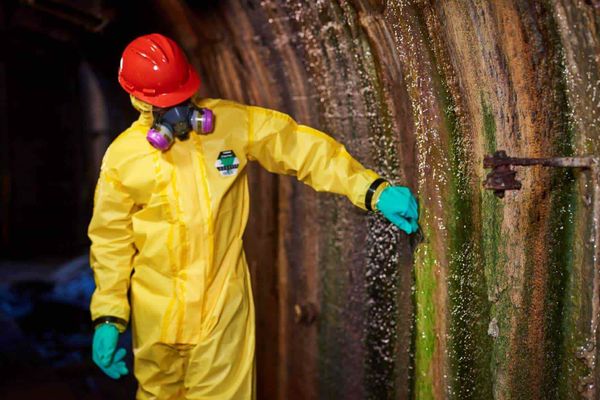
Workers need to be equipped with protective gear corresponding to their industry before working with chemicals.
3. Principles for Ensuring Safety During Chemical Exposure
Chemicals in different industries have varying degrees of toxicity. Therefore, workers must master safety principles when exposed to chemicals, especially toxic and flammable/explosive chemicals listed in state directories. The basic principles to ensure safety when working with chemicals include:
-
Principle 1: Fully equip yourself with appropriate personal protective equipment (PPE) to minimize risks during chemical exposure, such as chemical-resistant clothing, gloves, safety goggles, masks, or respirators. Before each shift, check the condition of this equipment and immediately discard or replace any torn, damaged, or unprotective gear.
-
Principle 2: Strictly adhere to safety procedures and rules, and correctly perform the trained technical operations throughout the chemical exposure process. Workers must not arbitrarily change procedures, skip steps, or work outside their assigned scope.
-
Principle 3: Before handling chemicals, carefully read the labels, user manuals, and Material Safety Data Sheets (MSDS) to clearly understand the hazardous properties, toxicity levels, flammability/explosiveness, routes of entry into the body, as well as prevention and incident handling measures.
-
Principle 4: Use chemicals for their intended purpose, at the correct concentration and dosage according to technical regulations. Do not arbitrarily mix different chemicals, as this increases risks during exposure. Do not use chemicals for personal purposes without permission from the responsible person.
-
Principle 5: All chemical containers, bottles, and tanks must be fully and clearly labeled with the chemical name, hazard level, date of receipt, and safety warnings. Do not use chemicals from leaking, deformed, or unreadable/blurred containers; report immediately to the manager for handling and replacement.
-
Principle 6: Chemicals must be stored in specialized, dry, well-ventilated areas, away from direct sunlight and heat sources, and substances that can react with each other or easily cause fires/explosions must be kept separately in accordance with storage regulations.
-
Principle 7: The work area must be kept clean, and surfaces, floors, and equipment must be regularly wiped down to limit chemical residues and reduce the risk of dispersion and cross-contamination.
-
Principle 8: During chemical exposure, absolutely do not eat, drink, smoke, apply makeup, or touch your face, eyes, or mouth with chemically contaminated hands to prevent chemicals from entering the body through the digestive and respiratory tracts.
-
Principle 9: After finishing a shift or after chemical exposure, workers must wash their hands, bathe with soap, change out of protective clothing, and wash work clothes separately to completely remove chemicals adhering to the skin and clothing.
-
Principle 10: Workers need to be trained in and master emergency response procedures, including how to sound alarms, evacuate, use firefighting equipment, handle leaks/spills, and perform first aid when someone is exposed or an accident occurs.
Chemical exposure is an unavoidable characteristic in many production and research fields, and it harbors many risks that severely affect workers' health and safety. Fully complying with chemical safety principles, equipping protective gear, and following proper storage and usage procedures contribute to preventing risks, limiting occupational accidents, and protecting the work environment, aiming to build a safe, sustainable working environment compliant with current legal regulations.
References:
-
Thư viện pháp luật (Law Library), Circular 13/2016/TT-BLDTBXH issuing the List of jobs with strict requirements for occupational safety and hygiene, accessed at: https://thuvienphapluat.vn/van-ban/Lao-dong-Tien-luong/Thong-tu-13-2016-TT-BLDTBXH-danh-muc-cong-viec-yeu-cau-nghiem-ngat-an-toan-ve-sinh-lao-dong-316652.aspx
-
Thư viện pháp luật (Law Library), Decree No. 113/2017/ND-CP detailing and guiding the implementation of a number of articles of the Chemical Law, accessed at: https://thuvienphapluat.vn/van-ban/Tai-nguyen-Moi-truong/Nghi-dinh-113-2017-ND-CP-huong-dan-Luat-hoa-chat-346246.aspx
-
Vietnam Cleaner Production Centre Co., Ltd. (VNCPC), Safety principles to remember when exposed to chemicals, accessed at: https://vncpc.org/cac-nguyen-tac-an-toan-can-nho-khi-tiep-xuc-voi-hoa-chat/
Comments:
There are no comment for this news.

.png)
.png)