 Tiếng anh
 Vietnam
Recognizing and Treating Allergies in Young Children
Allergies in young children are a common condition but can become dangerous if not recognized and handled correctly. Clearly understanding the causes, signs, and treatments will help parents minimize risks and protect their children's health.
1. What are allergies in young children?
Allergies in young children are an overreaction of the immune system when the body comes into contact with normally harmless allergens such as food, pollen, house dust, or animal dander. At that time, the child's immune system "mistakes" these agents as dangerous and produces IgE antibodies, triggering the release of Histamine and various other inflammatory mediators. It is this reaction that causes a series of symptoms on the skin, respiratory tract, digestive tract, or systemically throughout the body.
Allergies not only cause discomfort, affecting sleep and daily activities, but in some severe cases like anaphylaxis, they can be life-threatening if not handled promptly. Notably, allergies tend to be hereditary. Children with parents or relatives who suffer from allergic conditions will have a higher risk.
Proactively acquiring knowledge, especially practical skills, is the key to helping parents feel more secure in their journey of caring for and raising their children.
2. Causes of allergies in young children
The agents that cause allergies in young children are highly diverse and can appear in the daily living environment. The most common include pollen, house dust, mold, animal dander, food (milk, eggs, seafood, soybeans, etc.), medications, insect bites, and certain chemicals.
Upon contact with these allergens, the child's immune system reacts strongly, releasing inflammatory substances. Specifically, allergic reactions can recur multiple times if the child continues to be exposed to the same agent.
Additionally, environmental factors such as air pollution, weather changes, or unhygienic living conditions also increase the risk of allergies.
3. Signs to recognize allergies in young children
Symptoms of allergies in young children can appear in various organs, and their severity is also very diverse, ranging from mild to severe.
Mild level: The child may experience itchy skin, rashes, hives, runny nose, sneezing, itchy eyes, or red eyes. Some children exhibit prolonged nasal congestion, affecting their sleep and daily activities.
Severe level: The child may experience shortness of breath, wheezing, swelling of the lips or tongue, abdominal pain, vomiting, or even dizziness or fainting. These can be signs of a severe allergic reaction (anaphylactic shock) requiring immediate emergency care.
Early recognition of these signs plays a crucial role in timely treatment and limiting complications.
4. Common allergic diseases in young children
4.1. Atopic dermatitis (Eczema)
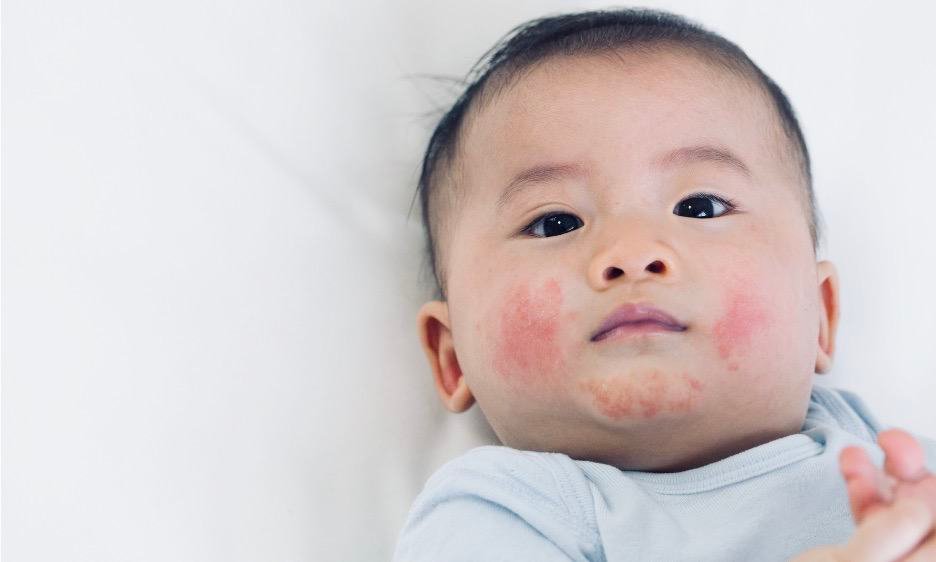
This is one of the most common types of allergies in young children, characterized by dry, red, itchy skin and the appearance of small blisters. This condition frequently occurs on the face, limbs, or spreads over the entire body. If not properly cared for, the skin is prone to infection when the blisters break. Treatment mainly focuses on moisturizing, avoiding irritation, and using anti-inflammatory medications as prescribed.
4.2. Bronchial asthma
Asthma is a chronic inflammatory disease of the airways, often triggered by allergies to dust, pollen, animal dander, or respiratory infections. The child may experience prolonged coughing, wheezing, shortness of breath, or recurrent chest tightness. If not well controlled, asthma can significantly affect the child's daily activities, sleep, and development.
4.3. Allergic rhinitis and allergic conjunctivitis
Children with allergic rhinitis frequently sneeze, have a runny nose, itchy nose, and nasal congestion. When accompanied by allergic conjunctivitis, the child will experience itchy eyes, watery eyes, and constant eye rubbing. This condition can occur seasonally or year-round, depending on the allergen the child is exposed to.
4.4. Food allergies
Food allergy is a type of allergy in young children that requires special vigilance because it can cause rapid and severe reactions. A child may experience an itchy mouth, rash, abdominal pain, diarrhea, or vomiting after eating. In severe cases, the child may have difficulty breathing, a drop in blood pressure, and a loss of consciousness—these are signs of anaphylaxis requiring emergency intervention.
4.5. Acute and chronic hives (Urticaria)
Hives manifest as itchy, red welts appearing on the skin. The acute form usually appears quickly and disappears within a short time, while the chronic form can last for over 6 weeks and recur multiple times.
5. How to properly treat allergies in young children
Treating allergies in young children depends on the severity of the symptoms. For mild symptoms, parents need to immediately remove the suspected allergen, wash the child's body, and monitor them closely. Antihistamines or topical medications can be used as prescribed by a doctor to reduce symptoms.
In cases where the child shows severe signs such as shortness of breath, swelling of the lips, cyanosis (bluish discoloration), or lethargy, it is necessary to lay the child still, prevent them from moving, and call an ambulance immediately. If the child has been previously diagnosed with severe allergies, an epinephrine auto-injector (if available) should be used according to the doctor's instructions. The important thing is not to self-medicate or delay taking the child to a medical facility when abnormal signs appear.
6. When to take the child to the doctor?
A child needs to be examined when experiencing prolonged or recurrent allergic signs such as hives, wheezing cough, continuous runny nose, unexplained abdominal pain, or diarrhea. In particular, signs like shortness of breath, lip swelling, cyanosis, or loss of consciousness constitute a medical emergency requiring immediate action.
At the hospital, the doctor will perform tests such as allergen testing or blood tests to determine the cause and develop an appropriate treatment regimen.
7. Preventing allergies in young children
To reduce the risk of allergies in young children, parents need to keep the living environment clean and limit dust, mold, and allergens. Concurrently, it is necessary to monitor the child's reaction to new foods, build a reasonable diet, and ensure the child's personal hygiene. Periodic follow-up visits and adhering to the doctor's instructions also play a vital role in long-term allergy control.
8. Enhancing allergy management skills with Wellbeing
In reality, many parents get confused when their children exhibit allergic reactions, especially in emergency situations like anaphylaxis. Therefore, equipping oneself with practical knowledge and skills is absolutely essential.
Wellbeing's young childcare first aid class helps parents clearly understand the nature of allergies in young children, recognize dangerous signs early, and practice standard first-aid steps such as handling severe allergic reactions or building a response plan when the child is at high risk. Not stopping at theory, the program also focuses on practical skills so parents can confidently act in real-life situations.
This is a practical solution that helps parents proactively protect their children against health risks that can happen at any time.
Allergies in young children are a common condition but can become dangerous if not recognized and handled correctly. Clearly understanding the causes, signs, and treatments will help parents minimize risks and protect their children's health.
Comments:
There are no comment for this news.

.png)
.png)