 Tiếng anh
 Vietnam
Regulations on Installing Anti-Shock Electrical Devices
In modern daily life and production, electrical energy is an indispensable power source, yet it harbors the risk of particularly serious accidents. Incidents of electrical leakage, contact with equipment casings, degraded insulation, or wet environments can all lead to electric shock accidents, causing severe injuries or death. Strict compliance with the regulations on installing anti-shock electrical devices is not only a technical requirement but also a legal obligation to ensure electrical safety in civil and industrial environments.

1. The Importance of Anti-Shock Electrical Devices
Anti-shock electrical devices (overload and earth leakage circuit breakers) are crucial circuit breakers in both civil and industrial electrical systems, ensuring user safety and effectively preventing short circuits and fires. These devices have the function of checking and identifying leakage currents and immediately disconnecting the electrical circuit to protect the system. They are commonly found in industrial plants, manufacturing workshops, farms, office buildings, apartments, and household electrical systems. Designed with electromagnetic relays, they are highly sensitive to leakage currents, automatically breaking the circuit very quickly to effectively prevent fires and explosions, while also limiting damage to electrical equipment caused by leakage currents.
Anti-shock, overload, and earth leakage circuit breakers are divided into 3 main groups: RCCB, RCBO, and ELCB. These are essential anti-shock devices in current electrical accident prevention systems.
-
RCCB (Residual Current Circuit Breaker): A pure anti-shock circuit breaker designed to detect and prevent leakage current incidents in the electrical system. RCCBs are connected in series right after the main circuit breaker or directly to electrical appliances to increase anti-shock effectiveness at the point of use.
-
RCBO (Residual Current Breaker with Overcurrent): An anti-shock circuit breaker that prevents both overcurrent incidents and electrical leaks. This is a multi-functional anti-shock device widely applied in both civil and industrial electrical accident prevention systems. Some RCBOs are equipped with a test button to check the anti-shock effectiveness during operation.
-
ELCB (Earth Leakage Circuit Breaker): A molded-case anti-shock circuit breaker integrating overload protection, detecting leakage current by comparing the outgoing and incoming currents. It is usually installed at the main electrical circuit, room circuits, and water heaters.
The installation of anti-shock circuit breakers has many outstanding and important functions:
-
They protect human safety, limiting electric shock accidents during short circuits or power leaks, playing an essential role in electrical accident prevention systems.
-
RCBO anti-shock circuit breakers can cut off the current of the entire system when an overload or short circuit occurs in any appliance, such as electric fans, motors, water heaters, or other household and office electrical equipment, enhancing anti-shock effectiveness and fire prevention.
-
In some cases, heat generation and electrical leaks can be transmitted to the ground. When this happens, earth leakage circuit breakers will automatically break the circuit, protecting the user, preventing electric shock risks, and effectively supporting electrical accident prevention efforts.
As devices that enhance the safety of electrical systems, earth leakage circuit breakers are widely used in many applications:
-
Household Electricity: Protects electrical appliances, prevents current leakage to switches and sockets, reduces the risk of electric shock accidents, and increases the effectiveness of preventing electric shocks in daily life.
-
Construction Electricity: Enhances occupational safety, proactively cuts off power when a leak or overload occurs, especially in wet, stormy environments where the risk of electric shock is very high.
-
Industrial Electricity: Provides individual protection for critical equipment, ensures worker safety, limits fires, explosions, electrical leaks, and other dangerous incidents, contributing to stable production operations and the effective implementation of electrical accident prevention in workshops.

Illustration: Application of residual current protection devices in residential electrical systems
2. Regulations on Installing Anti-Shock Electrical Devices
2.1. Choosing the Right Circuit Breaker
Selecting the appropriate anti-shock circuit breaker is the first and extremely important step in preventing electrical accidents. To ensure protective effectiveness, it must be based on technical parameters such as rated current, leakage current, number of phases, and the type of circuit breaker. The rated current must match the load of the electrical circuit to avoid overloading or unstable operation. The leakage current needs to be selected to meet safety protection requirements, usually specified in technical standards for electric shock prevention. The number of phases of the circuit breaker must correspond to a single-phase or three-phase electrical system.
-
In a 1-phase 220V system, anti-shock circuit breakers are used in households, shops, hotels, restaurants, etc., to protect users from electric shock risks and limit leakage currents spreading to electrical devices, contributing to daily accident prevention.
-
In a 3-phase 380V system, they are used in industrial zones, export processing zones, manufacturing plants, workshops, commercial centers, airports, seaports, etc., to prevent operators from electric shock risks and stop leakage currents from damaging components like electrical panels, equipment, and operating machinery.
To protect humans from electric shock due to direct or indirect contact, regulations mandate the use of anti-shock devices with a rated leakage current not exceeding 30mA. As a general rule, a leakage current under 30mA is safe for humans and is a common parameter for anti-shock devices. A leakage current under 30mA, although causing a tingling sensation, is usually not enough to cause ventricular fibrillation or cardiac arrest leading to death.
Additionally, levels of 10mA, 100mA, or higher depend on the practical application of each device:
-
For particularly sensitive and wet environments like bathrooms, hot tubs, saunas, and medical facilities, safety standards require devices with a 10mA sensitivity to ensure power is cut off immediately upon the appearance of a minor leak.
-
At main electrical panels or the main power supply for an entire building, devices with larger leakage currents such as 100mA, 300mA, or 500mA are often installed to detect large thermal leakage currents that risk melting insulation and causing fires.
2.2. Installation Instructions
Installing anti-shock circuit breakers with the correct technique is a decisive factor in their operational effectiveness. They should be installed in locations that are easy to observe and operate, avoiding wet and flammable areas to ensure long-term safety requirements. Wiring connections must be secure, properly specified, and ensure good contact. Below is the sequence of steps to install an anti-shock circuit breaker at home:
-
Step 1: Disconnect the power source and electrical system to ensure safety during installation.
-
Step 2: Screw the anti-shock circuit breaker firmly into the electrical panel or board, which should have a cover. Fasten the screws securely and carefully so it does not become loose during use. Place the "Line" terminals at the top and the "Load" terminals at the bottom.
-
Step 3: Connect the electrical wires to the breaker: AC power is attached to the "Line" terminals, and the output is attached to the load at the "Load" terminals. Do not wire it backward to avoid short circuits and reduced effectiveness. Connect the hot wire to the L terminal and the neutral wire to the N terminal. Note: anti-shock breakers without overload protection must be installed in series after an MCB or MCCB to ensure safety for the whole system in case of an overload or overvoltage.
-
Step 4: Complete the installation and test the operation of the device before putting it into official use.
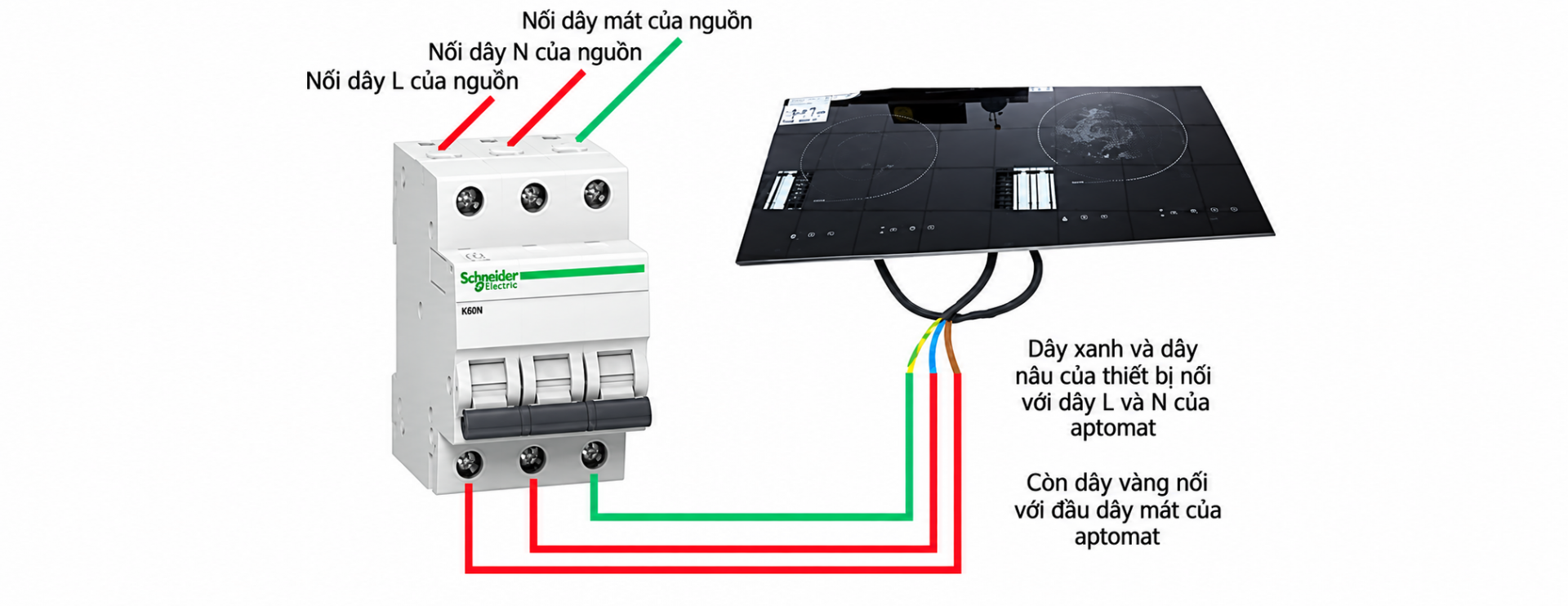
How to wire a residual current circuit breaker (RCCB/RCBO). Image: Internet
2.3. Locations Requiring Installation
To build a comprehensive electrical accident prevention system, current regulations recommend tiered protection and the installation of anti-shock devices at critical locations. The top priority is at branch circuits supplying wet areas. Specifically, hot water heaters are strictly required to be protected by a separate anti-shock circuit breaker (usually an RCBO combining overload protection), regardless of whether the heater already has a built-in anti-shock device. This creates a dual layer of protection, eliminating the risk if the built-in device fails. Similarly, electrical sockets in bathrooms, kitchen areas near sinks, or outdoor sockets serving water pumps and construction tools also fall into the mandatory installation category, as wet environments lower the body's contact resistance, making electrical accidents exponentially more dangerous.
Besides small branches, installing an anti-shock device at the main electrical panel of an apartment or building floor is also strongly encouraged. This device will protect the entire concealed wiring system inside the walls, preventing leakage risks due to damp walls, wires chewed by mice, or aging over time. However, to avoid nuisance tripping causing whole-house power outages due to the combined natural leakage current of multiple electronic devices, at this main position, people often prefer using a breaker with a time delay or a rated leakage current slightly higher than the branch circuits to ensure operational selectivity.
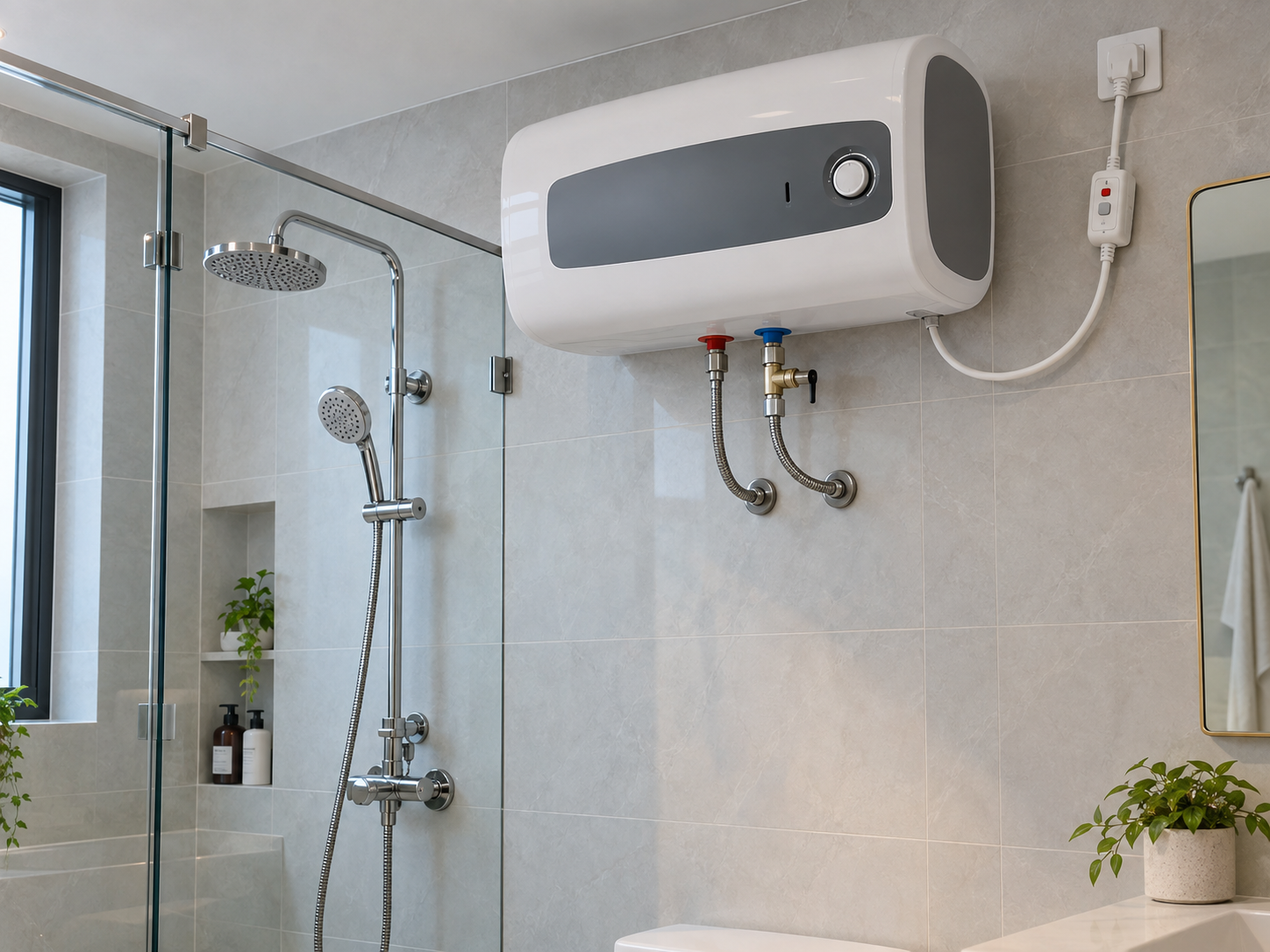
Image: Water heater with an ELCB integrated into the power cord
2.4. Periodic Inspection and Maintenance
During use, users must note not to arbitrarily disassemble or repair the circuit breaker. When the breaker shows signs of abnormal operation, such as unusual heating, disconnect the power supply immediately... and contact technical personnel for inspection and repair. Despite being durably designed, anti-shock electrical devices are still electronic components subject to environmental impacts and time. Therefore, safe operating regulations require users to form a habit of periodic testing, at least once a month. In addition, the circuit breaker also needs periodic cleaning to remove dust and ensure good contact between the terminals.
Anti-shock electrical devices are vital shields protecting human life and property against the risk of electrical accidents. Proper installation according to regulations and technical standards, along with regular inspection and maintenance, not only helps the electrical system operate stably but also minimizes the risks of fires, explosions, and electric shocks in daily life and production. Complying with installation regulations for anti-shock devices means adhering to safety discipline, contributing to building a safe and sustainable living and working environment.
References:
-
BTB Electric, Anti-shock circuit breaker: Structure, operating principles, and applications, accessed at: https://btb-electric.com/vi/aptomat-chong-giat-la-gi/
-
Bao An Technical Service Joint Stock Company, Earth leakage and anti-shock circuit breakers and installation notes, accessed at: https://baoanjsc.com.vn/du-an/aptomat-chong-ro-chong-giat-va-nhung-luu-y-khi-lap-dat_2_1_31472_vn.aspx
Comments:
There are no comment for this news.

.png)
.png)