 Tiếng anh
 Vietnam
Safe School Evaluation Criteria
In the context where school injuries and accidents still occur at many educational levels, building a safe school environment does not stop at physical facilities but is closely linked to emergency response capabilities. According to Circular 18/2023/TT-BGDDT, safe school evaluation criteria are clearly defined in the appendix, focusing on preventing injuries and accidents through the physical facility system, safety equipment, and situational handling capabilities. In that context, equipping safety equipment in schools such as AED machines and organizing first aid training become necessary contents to fully meet these criteria.
1. Criteria for a Safe School Environment and Requirements for Equipping Safety Equipment
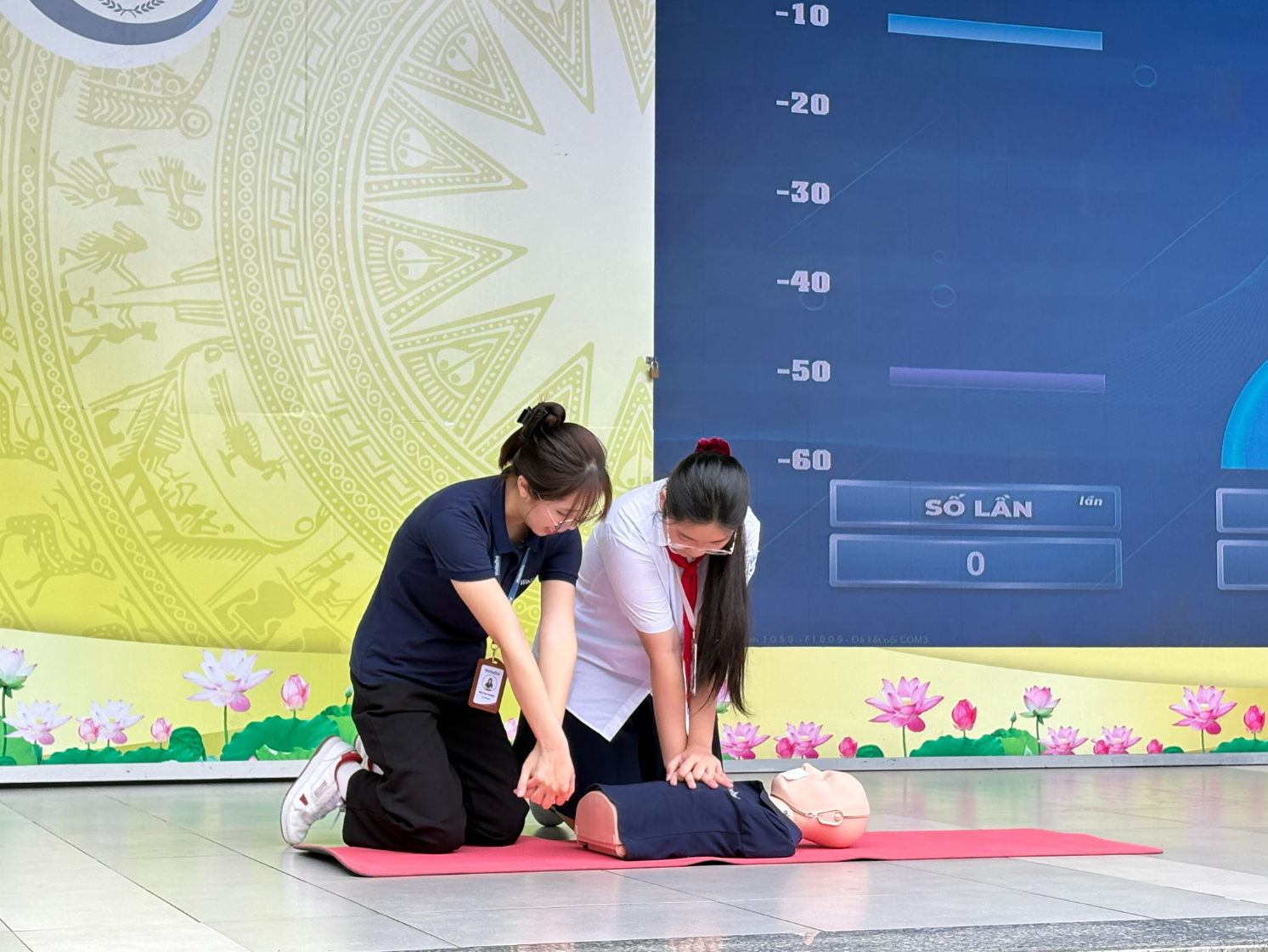
In the context where school injuries and accidents still occur at many educational levels, building a safe school environment is closely linked to emergency response capabilities.
According to the appendix of Circular 18/2023/TT-BGDDT on building safe schools and preventing injuries and accidents in general education and continuing education institutions, a group of safe school evaluation criteria focuses on ensuring that the physical environment does not harbor hidden risks of causing injuries and accidents.
Schools need to organize periodic inspections of all usable spaces, including classrooms, corridors, stairs, restrooms, playgrounds, physical education areas, and functional areas. Each area has its own specific risk characteristics that need to be specifically identified to have an appropriate control plan. Corridors and stairs often pose slip hazards, physical education fields are prone to collisions, and electrical areas harbor safety risks if not shielded according to standards. Inspection activities must be maintained regularly and linked to immediate handling upon discovering unsafe factors, without delaying until periodic evaluation milestones.
Equipping safety equipment in schools is a mandatory requirement in this criteria group. The basic list includes medicine cabinets, first aid kits, fire extinguishers, and warning signs. Equipment must be arranged in easily accessible locations, accompanied by clear usage instructions to ensure usability in real-life situations.
The AED machine is identified as important safety equipment in schools, supporting the handling of sudden cardiac arrest that can occur during physical education classes or extracurricular activities. The risk applies to both students and teachers, requiring a timely response plan. The device has the function of analyzing the heart rhythm and guiding electric shocks when necessary; the intervention time directly affects the victim's chance of survival. Placing the machine in the medical room, physical education area, or central area helps shorten access time.
According to the safe school evaluation criteria, the AED machine meets the requirements for on-site emergency support equipment. Its effectiveness depends on deployment conditions and practical accessibility. The installation location must ensure it is easily visible, with clear directional signs. The device must not be placed in restricted access areas; people in the school need to know its specific location to use it when necessary.
The operating condition of the AED machine also needs to be checked periodically. Batteries and electrodes have an expiration date and must be replaced at the right time. The inspection process needs to be specifically established and implemented according to plan. Teachers and students need to grasp the basic functions of the AED machine to ensure effective use when an incident occurs.
The safety equipment system in schools needs to be arranged synchronously. Medicine cabinets must be fully stocked with first aid supplies, fire extinguishers must be within their expiration dates, and warning signs must be clear and easy to understand. Safe school evaluation criteria require continuous maintenance during operation. Facilities can degrade, equipment can break down, and new risks can arise over time. Therefore, periodic inspection is a mandatory content, and inspection results must be accompanied by specific remedial measures. Avoid doing it as a mere formality that creates no practical effectiveness.
The criteria group on a safe school environment plays a foundational role in preventing injuries and accidents. When school safety equipment is fully equipped and maintained in the right condition, the likelihood of incidents is minimized. The AED machine contributes to improving the effectiveness of handling cardiovascular-related emergencies within the school premises.
2. Criteria for Organizing School Medical Activities and First Aid Training
The appendix of Circular 18/2023/TT-BGDDT clearly defines the requirements for organizing school medical activities in the safe school evaluation criteria. The school needs to have a dedicated force in charge of medical work, develop a student healthcare plan, and ensure the ability to handle emergency situations.
First aid training is the central content in this criteria group. Teachers and staff need to be trained in basic skills such as cardiopulmonary resuscitation (CPR), handling airway foreign bodies, stopping bleeding, and trauma first aid. These skills help reduce the severity of accidents before transferring to a medical facility.
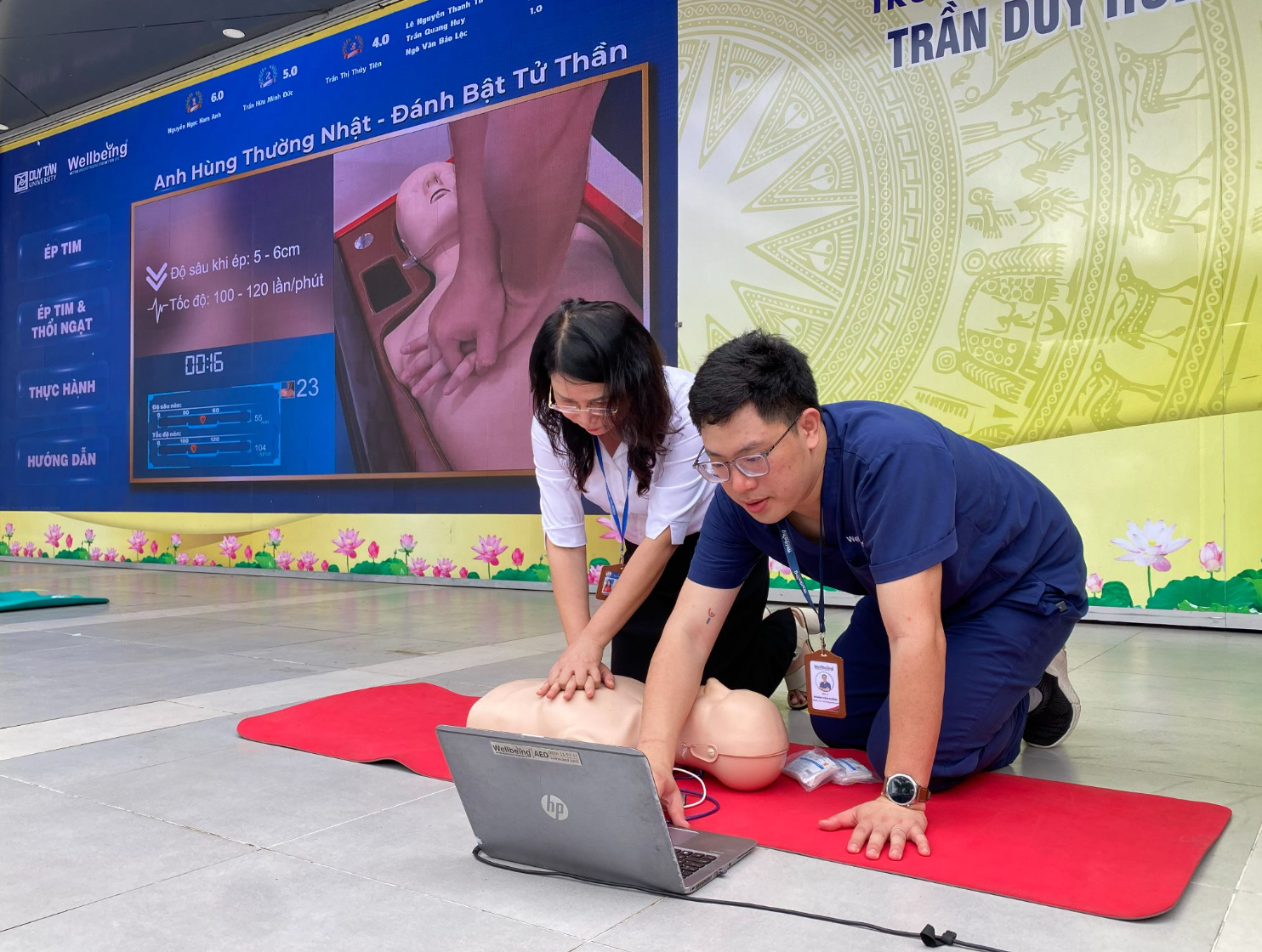
Teachers and staff need to be trained in basic skills such as cardiopulmonary resuscitation, handling airway foreign bodies, stopping bleeding, and trauma first aid.
The training process needs to be linked with practice to ensure applicability in reality. Training sessions should simulate specific situations so participants can practice directly. When schools are equipped with AED machines, the content on using this device needs to be included in the first aid training program. The AED has voice instructions, but users still need to grasp the basic procedures to operate it quickly and accurately.
The combination of external chest compression techniques and the use of an AED machine helps increase emergency effectiveness in the first few minutes. This is a decisive time frame for cardiac arrest cases.
The criteria also encourage expanding first aid training to students, especially at the secondary school level. When many people in the school have the skills, the ability to support in emergency situations will be enhanced. The criteria group on school medical activities aims to build a team with practical capabilities, ensuring a fast and accurate response when injuries and accidents occur.
3. Criteria for Inspecting, Monitoring, and Maintaining a Safe School
According to the appendix of Circular 18/2023/TT-BGDDT, safe school evaluation criteria require maintenance through regular inspection and monitoring activities. The school needs to build a periodic inspection plan for safety-related factors.
Regarding school safety equipment, inspection activities must ensure that the equipment is always in a ready state. Medicine cabinets must be fully replenished, and fire extinguishers must be within their expiration dates and working well. AED machines need to be checked periodically regarding batteries, electrodes, and the operating system.
Parallel to the equipment, the first aid capability of the staff needs to be evaluated regularly. The school can organize situational drills and test skills post-training to ensure knowledge is maintained and used proficiently.
The criteria also mention the coordination between the school and medical facilities. When an incident occurs, the process of contacting emergency services, providing professional support, and transporting the victim needs to be carried out quickly. While waiting for professional forces, on-site first aid plays an important role, especially with the support of an AED machine.
Maintaining a safe school environment is a continuous process, requiring inspection, updates, and adjustments according to reality. When criteria are implemented fully and regularly, the safety system will always be in a ready state.
Full text of Circular 18/2023/TT-BGDDT on building safe schools, preventing, and combating injuries and accidents in general education and continuing education institutions:
4. Conclusion
Safe school evaluation criteria according to the appendix of Circular 18/2023/TT-BGDDT include the physical environment, medical activities, and monitoring mechanisms. Equipping school safety equipment and first aid training are two pervasive contents throughout the entire criteria system. When implementing the criteria synchronously, a safe school environment is formed with effective prevention and response capabilities, contributing to protecting the health and lives of students and teachers within the school.
Comments:
There are no comment for this news.

.png)
.png)