 Tiếng anh
 Vietnam
Top 5 Medical Equipments Resorts/Hotels Need to have according to Safety Regulations
Medical equipment for resorts is not only a legal requirement but also a key factor in ensuring the safety of hundreds of guests every day. In resort and vacation environments, where guests frequently engage in swimming, water sports, mountain climbing, or simply relaxing by the pool, the risk of cardiovascular incidents, injuries, burns, drowning, or strokes can arise at any moment. Proper and fully compliant equipping helps resorts handle emergencies promptly, minimize serious consequences, and enhance brand reputation.
According to the hotel rating standard TCVN 4391:2015 (currently still applicable), all star ratings from 1 to 5 must have medical equipment for resorts. For high-end resorts or those with private beaches, regulations are even stricter regarding medical services and emergency equipment. Below are the Top 5 medical equipments for resorts that are mandatory or highly recommended according to current regulations and operational practices.
1. First Aid Cabinet and Basic First Aid Kit
This is a mandatory item among medical equipment for resorts. The medicine cabinet must be located at the reception, pool area, restaurant, spa, and sports area, remaining easily accessible 24/7. The basic first aid kit must contain: sterile gauze pads, antiseptics, painkillers, antihistamines, burn ointment, scissors, medical gloves, masks, and hemostatic tools.
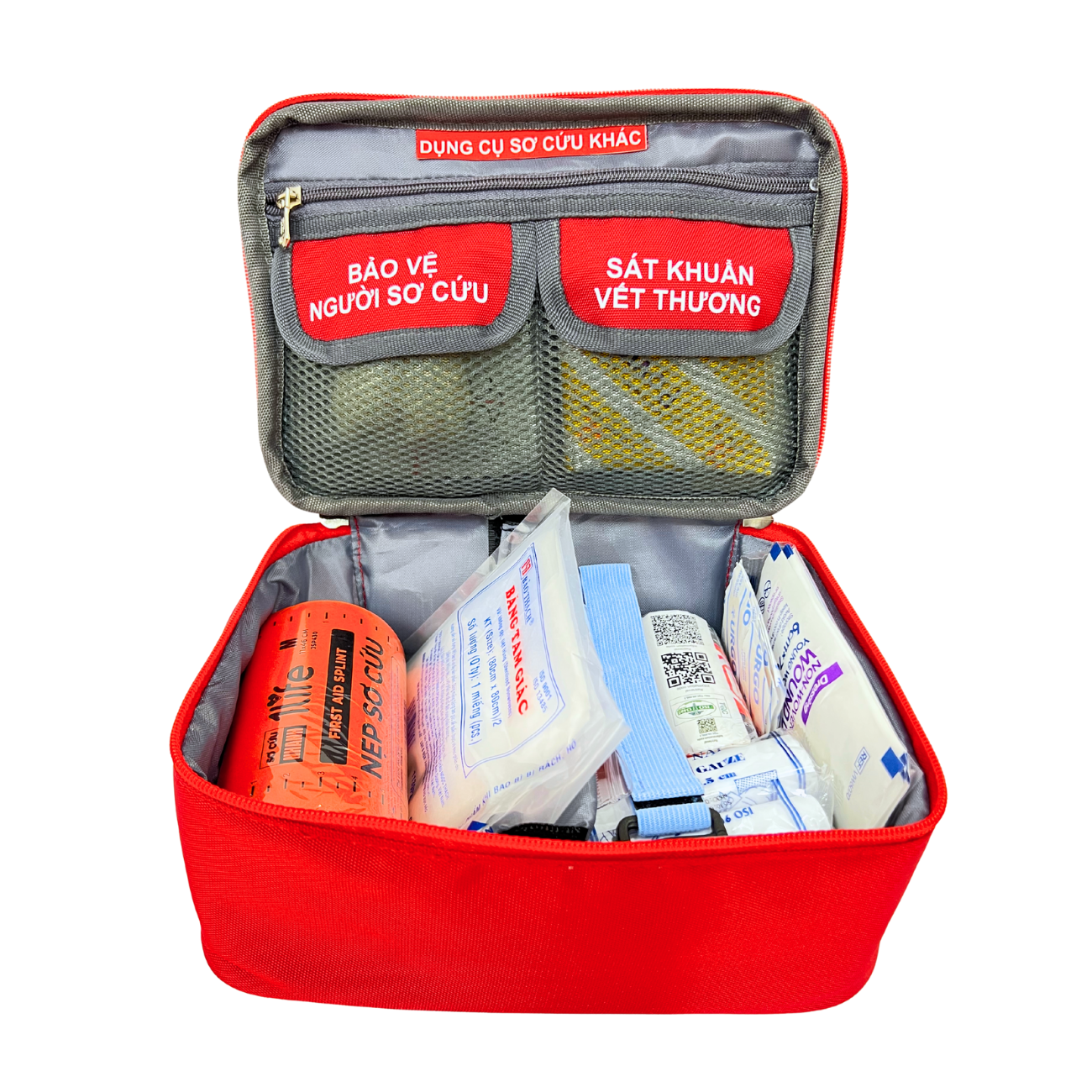
Basic medical equipment for resorts
According to the Ministry of Health's guidelines, the medicine cabinet must be checked periodically every month, expired medicines replaced, and clearly recorded. In actual resort operations, many minor incidents such as scratches, sunburns, or seafood allergies can be handled on the spot if the medicine cabinet is fully equipped and the staff knows how to use it. A lack of medical equipment for resorts not only violates the star-rating standards but also causes the resort to lose significant points in tourism safety assessments.
2. Vital Signs Monitoring Equipment (Blood Pressure Monitor, SpO2, Thermometer, Blood Glucose Meter)
Resorts need to be equipped with an electronic blood pressure monitor, SpO2 oximeter (to measure blood oxygen saturation), thermometer, and blood glucose meter. This medical equipment for resorts helps medical staff or receptionists quickly assess a guest's condition when there are abnormal signs such as dizziness, shortness of breath, chest pain, or high fever.
In reality, many cases of elderly guests experiencing sudden high blood pressure or lack of oxygen due to travel fatigue can be handled promptly thanks to this equipment. According to the Ministry of Health's first aid guidelines, measuring vital signs is a mandatory step before deciding to call emergency services (115) or take the guest to the hospital.
3. Emergency Trolley and Ambulance Stretcher
For large-scale resorts or those located far from medical centers, an emergency stretcher is an indispensable device. The stretcher must have flexible wheels, the ability to secure the victim, and come with an inflatable pillow and safety belts. Many 5-star resorts also equip trolleys with oxygen tanks and IV poles to support moving victims while waiting for an ambulance to arrive.
This equipment is particularly important when accidents such as drowning, falls from heights, or strokes occur—helping to transport safely without worsening the condition.
4. Automated External Defibrillator (AED)
This is one of the most important medical equipments for resorts. An AED is an emergency medical device capable of automatically analyzing the heart rhythm and delivering an electric shock to save someone experiencing sudden cardiac arrest. In resorts and hotels, where elderly guests or those participating in strenuous physical activities are frequently present, the risk of sudden cardiac arrest (SCA) is very high—especially when swimming, playing golf, or overeating.
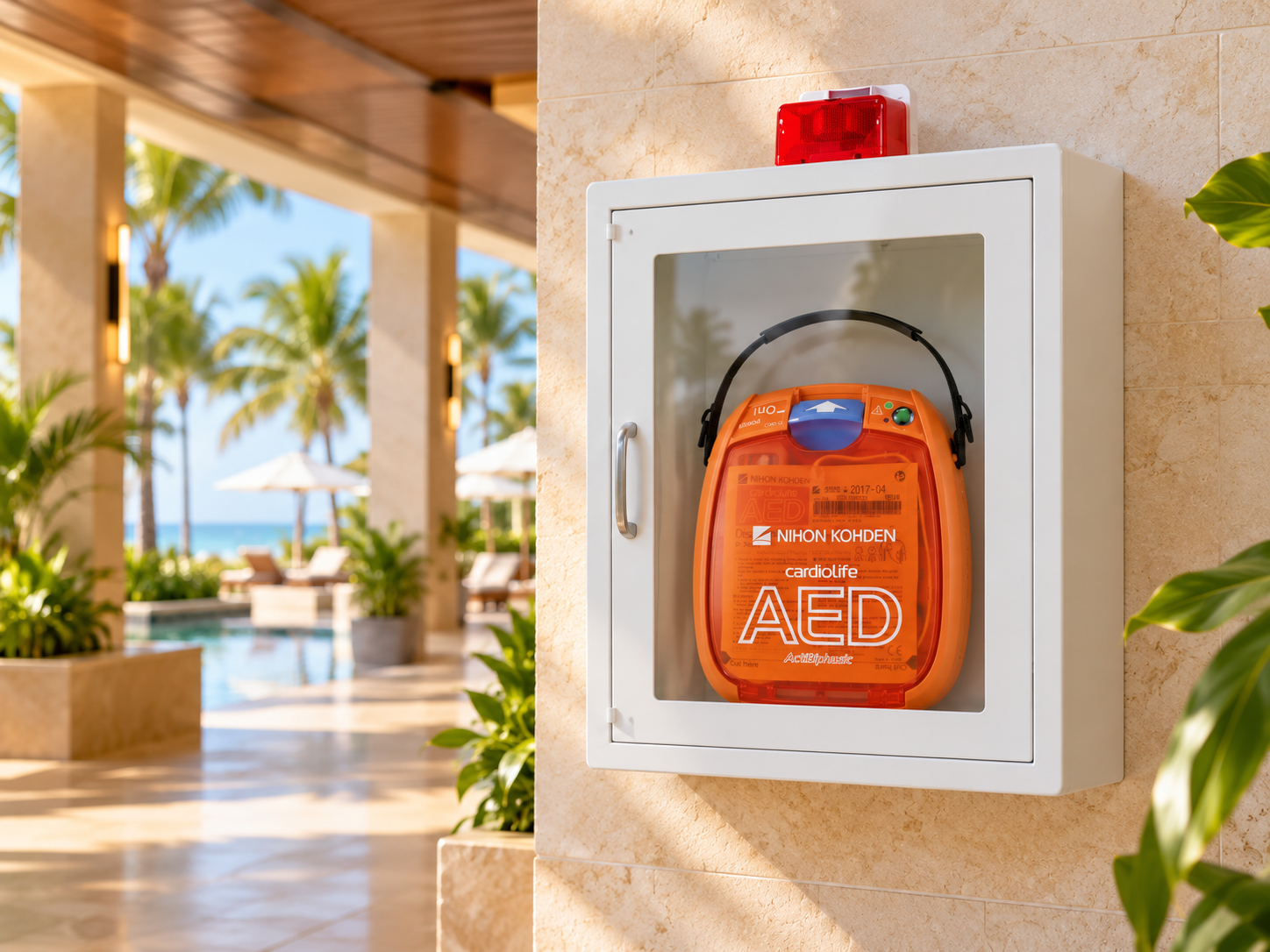
Automated External Defibrillator - AED
Currently, although Vietnamese law does not strictly mandate it, many international guidelines and recommendations from the Vietnam Resuscitation Council emphasize that 4-5 star resorts and large holiday complexes should equip at least 1-2 AEDs in crowded public areas (pools, main lobbies, gyms). Modern AEDs such as ZOLL or Philips feature voice prompts in Vietnamese, making them easy to use even for untrained individuals. The golden time to save a life is within the first 3-5 minutes—every minute of delay reduces the chance of survival by 10%.
Many resorts in Da Nang, Phu Quoc, and Nha Trang have equipped AEDs and combined staff training to meet international safety standards. This is the differentiator that helps a resort affirm its commitment to customer protection.
5. Specialized First Aid Kits for Common Resort Risks
In addition to the basic medicine cabinet, resorts need specialized kits among their medical equipment: burn treatment kits (burn cream, hydrogel dressings), marine wound first aid kits (antiseptics, waterproof bandages), and allergy first aid kits (auto-injectable adrenaline for anaphylaxis). Especially for resorts with beaches, pools, or children's play areas, lifebuoys, rescue ropes, and drowning first aid instruction boards are required.
Based on experience from first aid training courses for resorts, having fully equipped specialized kits helps staff quickly handle 80-90% of common incidents without having to wait for an ambulance.
6. Why do resorts need to train staff to use medical equipment?
Equipping the devices alone is not enough—staff must know how to properly use that medical equipment for resorts. Many resorts in Da Nang are choosing specialized first aid courses so their staff can master CPR and AED skills, as well as handle burns, strokes, and injuries. These courses typically last 4-8 hours, combining theory and practice on mannequins, helping staff confidently handle real-life situations.
Possessing adequate medical equipment for resorts according to regulations not only helps comply with star-rating standards but also brings clear business benefits: minimizing legal risks, increasing customer peace of mind, and enhancing the "safe and professional" brand image.
If your resort is looking for a comprehensive solution for medical equipment equipping and first aid skills training, contact reputable units immediately for advice tailored to the scale and specifics of your operations. A good emergency medical system is the best "insurance" for the safety of guests and the sustainable development of the resort.
As a reputable first aid training unit delivering high-quality first aid courses, Wellbeing Health Education Organization designs first aid programs to help you and your organization equip effective emergency response skills. Join our first aid course today to protect yourself and your loved ones.
Comments:
There are no comment for this news.

.png)
.png)