 Tiếng anh
 Vietnam
What are the steps of a standard HSE Lockout - Tagout procedure?
In industrial environments, accidents caused by unintended machine startup or residual energy are among the leading causes of serious injury. There are many cases where workers suffer from crushed hands, electric shocks, thermal burns, or injuries due to hydraulic, pneumatic, or electrical systems being activated during maintenance. The Lockout - Tagout (LOTO) procedure is established as a mandatory control measure within the HSE system to ensure the complete isolation of energy sources before equipment repair and maintenance.
1. What is the Lockout - Tagout (LOTO) procedure and when is it applied?
Lockout - Tagout is a procedure for controlling hazardous energy to prevent unauthorized equipment startup during maintenance. It is also a common requirement in safety management systems under ISO 45001 and internal safety regulations of manufacturing, oil and gas, energy, construction, and logistics enterprises.
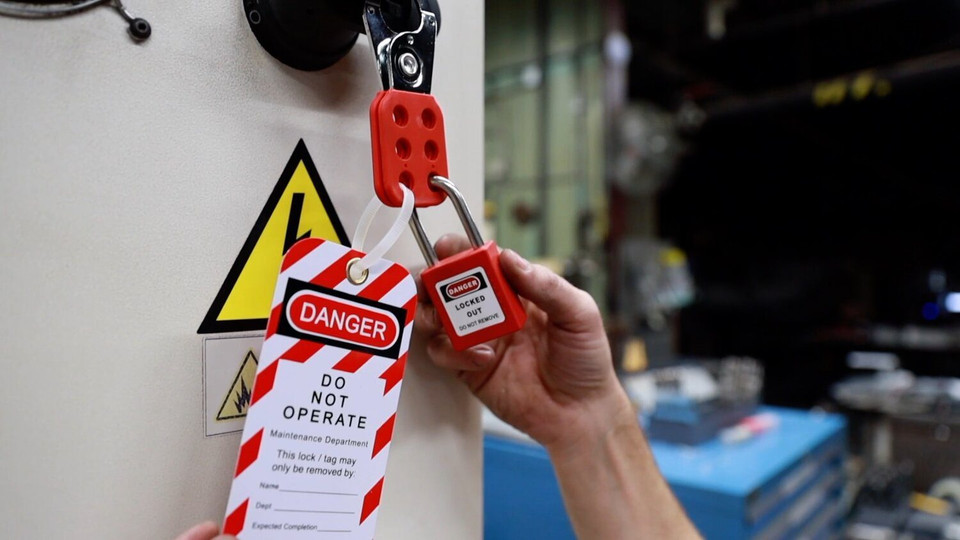
The Lockout - Tagout (LOTO) procedure is a method of isolating and controlling all energy sources of machinery or equipment before performing repairs, cleaning, or maintenance. This process consists of two main components: Lockout (disconnecting the source and locking it) and Tagout (attaching warning tags). The Lockout - Tagout (LOTO) procedure is applied when:
-
Maintaining or repairing electrical equipment
-
Working with hydraulic or pneumatic systems
-
Replacing components in a production line
-
Cleaning machinery with a risk of automatic startup
-
Working in confined spaces with mechanical systems
Lockout - Tagout safety regulations require enterprises to clearly identify energy sources including electrical, mechanical, hydraulic, pneumatic, thermal, chemical, and gravity. Any energy source with the potential to cause danger must be controlled before technical intervention.
2. HSE Standard Lockout - Tagout (LOTO) Procedure
Step 1: Preparation and Energy Source Survey
Before turning off any switch, the authorized person—usually a maintenance worker—must fully understand the machinery system they are about to intervene in. Subjectivity at this stage is the cause of most subsequent errors. This phase requires the technician to survey and accurately identify the types of energy the machine uses. An industrial device may use multiple energy sources simultaneously; for example, a plastic injection molding machine uses electricity for the heating system, hydraulics for the pressing force, and compressed air for auxiliary mechanisms. The executor needs to locate all energy isolation points such as circuit breakers and valves, and assess potential risks. Omitting any energy source can lead to serious consequences if an auxiliary system unexpectedly activates.
Step 2: Notifying Affected Parties
Industrial safety is not an isolated activity but a collective coordination. The LOTO procedure requires clear communication between the maintenance executor and those who operate the machine or work in the affected area. Notification must be made before shutting down the machine. The notification content should include the reason for stopping the machine for maintenance, repair, or cleaning, the estimated completion time, and the areas that will have restricted access. The purpose of this step is to ensure no one is surprised when the machine stops operating, while also preventing operators from attempting to restart the machine when they see it off without knowing someone is repairing it.
Step 3: Machine Shutdown According to Operating Procedures
After preparation and notification, the next step is to shut down the equipment. However, the shutdown must follow the standard operating procedures of the manufacturer or the factory's internal regulations. The executor is not allowed to pull circuit breakers or unplug cables abruptly while the machine is running under high load, as this can damage equipment, create electrical arcs, or destabilize the system. Machinery needs to be brought to a safe stop state via control buttons, selector switches, or the display control interface. Ensure that all moving parts have stopped completely and the machine has finished its work cycle before proceeding to the next isolation steps.
Step 4: Isolating Energy Sources
This is the step that transitions the machine state from "off by control" to "physically disconnected." Energy isolation means completely separating the device from its energy supply. In this step, the executor will directly act on the energy isolation devices. For electricity, this means disconnecting the main circuit breaker or fuse, not just turning off a light switch or button. For fluids and compressed air, it means closing the block valves on the main pipelines. The goal is to create a physical gap or barrier that prevents the flow of energy into the work zone. Note that automatic control valves or solenoid valves are not considered safe energy isolation devices in the LOTO procedure because they can reopen due to control signal errors or short circuits.
Step 5: Locking and Hanging Warning Tags
Once the energy sources are isolated, applying locks and tags is the key measure to maintain that isolated state. The golden rule here is "one person, one lock, one key." Every employee involved in the maintenance work must use their own dedicated safety padlock to lock the isolation device. This ensures that no one else can unlock and re-energize the system before they have finished their work. If multiple people are working on one device, a multi-hole lockout hasp must be used so that everyone can attach their lock.
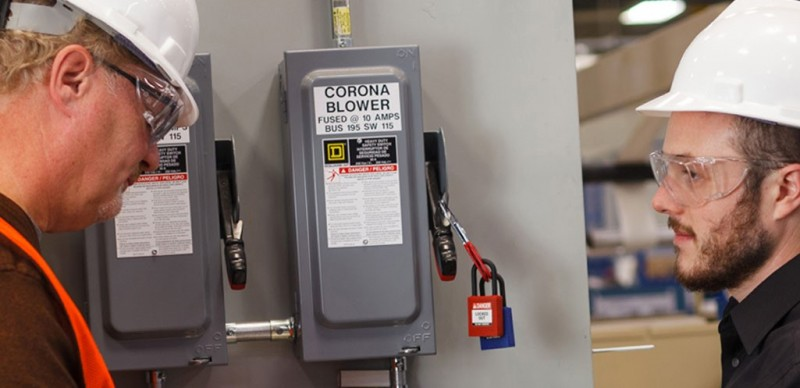
HSE Standard Lockout - Tagout (LOTO) Procedure.
Simultaneously with the lock, a warning tag must be hung right at the lockout position. The tag must provide full information about the name of the executor, the department, the start time of the lockout, the reason for the lockout, and an emergency contact phone number. The warning tag acts as a powerful visual reminder strictly prohibiting anyone from acting on the device.
Step 6: Controlling and Dissipating Residual Energy
A common fatal mistake is assuming that after disconnecting the power and locking the breaker, the machine is absolutely safe. In reality, machinery often contains extremely dangerous forms of residual energy. The HSE standard LOTO procedure requires the removal or control of these energy sources. For electricity, capacitors in inverters or power supplies still hold high-voltage charges after disconnection and must be discharged via dedicated resistors or grounding. For pressure, remaining compressed air or hydraulic oil in pipelines and cylinders must be fully bled through pressure relief valves. For mechanical energy, suspended machine parts, compressed or stretched springs, and flywheels spinning by inertia all contain energy. They must be braced, lowered to the floor, or waited upon until they stop completely. For thermal energy, hot surfaces and steam pipes need time to cool down or must be insulated to prevent burns.
Step 7: Verification and Trial Startup
The final step before officially starting repairs is to re-check the entire system to ensure the LOTO procedure has been truly effective. The executor needs to ensure no one is standing in the danger zone, then attempt to press the start button or operating switches to see if the machine functions. Simultaneously, use measuring devices such as voltmeters or pressure gauges to confirm that energy has returned to zero levels. If the machine does not start and the measurements are safe, the isolation process is successful.

HSE Standard Lockout - Tagout (LOTO) Procedure.
An extremely important note in a safe LOTO procedure is that after the trial startup is finished, the control buttons must be returned to the "Off" position. This prevents the machine from unexpectedly operating as soon as energy is restored after maintenance is complete.
3. Procedure for Restoring Operations After Maintenance
After the work is complete, removing LOTO locks and returning the machine to operation must follow an equally strict procedure. First, inventory all tools and screws to ensure nothing is left inside the machine. Next, reinstall all safety guards that were removed. The executor must notify those nearby to stay away from the danger zone. Then, only the person who hung the lock has the right to remove it. Absolutely do not ask others to remove it or cut the lock except in special emergencies under management supervision. Finally, reconnect the energy sources and perform a test run to hand over the machine.
4. Lockout - Tagout Safety Regulations in Corporate HSE Systems
For the LOTO procedure to be effective, enterprises must issue specific regulations and train employees periodically. According to international occupational safety management standards, a LOTO system must include:
-
Detailed written procedures for each type of equipment
-
An inventory of energy sources
-
A list of personnel authorized to perform LOTO
-
Training records and periodic inspections
Additionally, internal compliance audits must be performed regularly to detect errors. In high-risk industries such as oil and gas, chemicals, and heavy manufacturing, Lockout-Tagout control is considered a mandatory safety barrier. Common errors when performing the LOTO procedure include:
-
Failure to identify all energy sources
-
Failure to dissipate residual energy
-
Using a shared lock for multiple people
-
Failing to attach warning tags
-
Skipping the verification step
These errors can invalidate the entire LOTO procedure and lead to serious accidents. The Lockout - Tagout (LOTO) procedure is one of the most important risk control measures in modern HSE systems. Fully complying with safe LOTO guidelines, correctly implementing HSE standard LOTO methods, and strictly applying Lockout - Tagout safety regulations help enterprises meet legal requirements and directly protect the lives of workers.
Comments:
There are no comment for this news.

.png)
.png)