 Tiếng anh
 Vietnam
What to Do When a Child Has a High Fever with Seizures? A Guide to Proper First Aid for Parents
A febrile seizure is the body's reaction when a child's body temperature rises suddenly, exceeding the central nervous system's control threshold. This condition typically occurs in children aged 6 months to 5 years because their brains are not yet fully developed and are easily stimulated by rapid temperature changes. When a fever reaches over 38–39°C, and especially above 39.5°C, the risk of seizures increases significantly.
1. What is a febrile seizure in children?
A febrile seizure is the body's reaction when a child's body temperature rises suddenly, exceeding the central nervous system's control threshold. This condition typically occurs in children aged 6 months to 5 years because their brains are not yet fully developed and are easily stimulated by rapid temperature changes. When a fever reaches over 38–39°C, and especially above 39.5°C, the risk of seizures increases significantly.
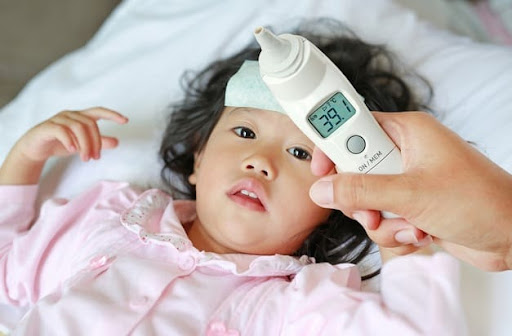 Although it is not epilepsy, if not handled correctly, febrile seizures can still negatively impact the child's brain and long-term health.
2. Causes of high fever leading to seizures in children
Fever in young children often stems from various causes, such as viral or bacterial infections, respiratory tract infections, otitis media (middle ear infection), teething, or reactions after vaccination. When the body is infected with pathogens, the immune system reacts by raising the body temperature to destroy them. However, if the temperature rises too quickly or exceeds the body's regulatory threshold, the brain will be strongly stimulated, leading to seizures. Additionally, a child's constitution plays an important role, as some children are naturally more prone to seizures when they have a fever.
3. Signs to recognize a child having a febrile seizure
Parents need to pay special attention to the following signs to promptly apply first aid when a child experiences a febrile seizure:
-
Sudden loss of consciousness.
-
Continuous twitching or stiffening of the limbs.
-
Rolling eyes, foaming at the mouth.
-
Tightly clenched jaw.
-
Possible cessation of breathing for a few seconds.
-
Vomiting or involuntary urination.
Normally, a simple seizure lasts less than 15 minutes and leaves no sequelae. However, if it lasts longer or repeats multiple times a day, parents must be especially vigilant, as it could be a complex type of seizure.
4. How to properly administer first aid when a child has a febrile seizure
Understanding and correctly executing first aid when a child has a febrile seizure is a decisive factor in protecting the child's safety during an emergency:
-
First and foremost, parents need to stay calm and place the child on their side on a flat, cool surface to ensure the airway remains clear and to prevent choking if the child vomits.
-
Loosen their clothing. Do not cover them with blankets or bundle them up, as this will cause their body temperature to rise even higher.
-
While the child is having a seizure, absolutely do not put anything into their mouth, including water or medicine, as it can easily cause choking and airway obstruction. If the child tightly clenches their jaw, you can gently place a soft gauze pad between their teeth to prevent tongue injury, but this must be done carefully, without using hard objects.
-
Parents should use rectal suppository fever reducers with an appropriate dosage based on the child's weight (10-15 mg/kg), as this is a safe method when the child cannot swallow medicine.
-
This can be combined with sponge bathing using warm water (about 34-35°C) on areas such as the forehead, armpits, and groin to help the body dissipate heat gradually.
-
After the seizure ends, quickly take the child to a medical facility for an examination and to determine the underlying cause, avoiding self-treatment at home.
5. Things absolutely not to do
While applying first aid for a febrile seizure, parents must avoid common mistakes that can endanger the child:
-
Do not use ice water or alcohol to reduce the fever, as it can cause thermal shock and vasoconstriction.
-
Do not try to hold the child's limbs tightly during a seizure, as this can easily cause joint or bone injuries.
-
Do not pry the child's mouth open or put your fingers inside, as this can cause injury and is highly unhygienic.
-
Arbitrarily using antibiotics or combining multiple medications without a doctor's prescription must also be strictly avoided.
6. How to prevent febrile seizures in children
To reduce the risk of seizures, parents should monitor their child's body temperature regularly when a fever occurs. Keeping a thermometer and fever-reducing medicine readily available in the family medicine cabinet is essential for timely intervention. When a child has a fever, ensure they drink plenty of water, feed them liquid and easy-to-digest food, and dress them in cool, breathable clothing. Particularly for children with a history of febrile seizures, the risk of recurrence is quite high; therefore, they need to be monitored more closely during subsequent fever episodes and taken to the doctor early to determine the cause.
7. When to take the child to the hospital immediately?
Parents must take their child to a medical facility immediately if the seizure lasts from 5 to 15 minutes, occurs multiple times a day, or happens to a child under 6 months old. Furthermore, if the child remains lethargic, difficult to wake up, or shows other abnormal signs after the seizure, timely emergency care is absolutely necessary to avoid dangerous complications.
8. Wellbeing's childcare course - A solution for modern parents
Clearly understanding how to administer first aid when a child has a febrile seizure not only helps parents respond correctly in an emergency but also builds confidence in the overall childcare process. Wellbeing's first aid class for young children is designed to provide practical medical knowledge, accurate first aid skills, and the ability to respond to common dangerous situations involving infants and children. With guidance from experts, parents can proactively protect their child's health and safety right from the basics.
Febrile seizures are not an uncommon condition, but they are entirely controllable if parents grasp the necessary knowledge and skills. Applying proper first aid when a child has a febrile seizure, combined with a calm approach, will help minimize risks and keep the child safe. Proactively learning and equipping oneself with these skills is the best way for parents to accompany their children through unexpected situations.
Comments:
There are no comment for this news.

.png)
.png)