 Tiếng anh
 Vietnam
Do You Need a Certificate to Perform First Aid?
Learning first aid is a crucial life skill that everyone should be equipped with. In daily life, accidents and medical emergencies can happen at any time: a child choking on food, a loved one bleeding heavily from a motorbike accident, or a colleague suffering a sudden cardiac arrest at the workplace.
Learning first aid not only gives you the confidence to handle emergencies but can also save the lives of your loved ones, colleagues, or even yourself. In this context, courses from professional organizations like the Wellbeing Health Education Organization (socapcuu.vn) have become a top choice, helping hundreds of thousands of Vietnamese people equip themselves with life-saving skills.
1. What is First Aid and Why Should Everyone Learn It?
First aid refers to the initial, timely interventions to maintain life, prevent the condition from worsening, and minimize injury to the victim before specialized medical help arrives. It is not medical treatment; rather, first aid focuses on the "golden window"—the critical first few minutes that often dictate life or death.
In Vietnam, learning first aid is especially vital due to the high frequency of traffic accidents, occupational hazards, drownings, and daily injuries. According to health organizations, over 30,000 people die from injuries in Vietnam each year, accounting for 7% of total deaths from all causes. This translates to more than 80 people dying from injuries every single day. Traffic accidents, drownings, and workplace incidents are the leading causes that highlight the absolute necessity of first aid training.
According to Wellbeing's training programs, learning first aid is not solely for medical personnel; it is suitable for all ages: parents, teachers, workers, and even first-grade students. Blended first aid courses (combining online theory with in-person practice led by doctors) help learners approach the knowledge scientifically, from 365-day video lectures to hands-on sessions using specialized manikins.
2. Legal Regulations on First Aid and Certification in Vietnam
Vietnamese law clearly regulates workplace first aid and emergency response through Circular 19/2016/TT-BYT issued by the Ministry of Health (guidelines on occupational hygiene and worker health management). This circular requires production and business facilities to organize a first aid team, equip first aid kits, and conduct periodic training for employees.
Specifically:
-
Target Audience for Training: Employees (unless they already possess an Occupational Health and Safety Training Certificate) and personnel designated to the first aid and emergency response team. This includes construction workers, drivers, teachers, and tourism staff—professions with high accident risks.
-
Training Duration: The initial training is 4 hours for regular employees and 16 hours (2 days) for the designated first aid team. Annual refresher training is 2 hours and 8 hours, respectively.
-
Training Content: Basic principles of on-site first aid; wound bandaging techniques; temporary bleeding control; temporary fracture immobilization; Cardiopulmonary Resuscitation (CPR), and handling other emergencies.
A first aid certificate (or training certificate) is a document issued by a qualified training facility after learners complete the course and pass an assessment. The certificate is generally valid for 1 year (some Wellbeing programs offer up to 2 years of validity), meets the standards of the Ministry of Health and the Ministry of Labor, Invalids and Social Affairs, and is even available in English.
However, the certificate is not a "license" required to be allowed to perform first aid. The law does not prohibit any citizen from performing first aid within their capabilities when witnessing an accident (in the spirit of the Law on Medical Examination and Treatment and emergency assistance regulations). Conversely, timely action is highly encouraged as it saves lives. The certificate is simply a tool proving you have been systematically trained, giving you confidence and ensuring legal compliance in the workplace.
3. Is a Certificate Required to Perform First Aid?
The short answer is: There is no legal requirement for an individual to hold a certificate to perform first aid in everyday life. Anyone has the right and responsibility to provide first aid if they see someone in danger, provided they act within their capabilities and do not cause further harm.
However, in the workplace or within specific industries, a certificate becomes a mandatory requirement to ensure compliance with Circular 19/2016/TT-BYT. Businesses that fail to organize training can face administrative fines under labor regulations.
The practical benefits of holding a certificate go far beyond administrative compliance:
-
Confidence and Reduced Errors: Certified individuals know the exact procedures because of their formal training.
-
Career Advantage: Many companies, schools, and tourism facilities require a first aid certificate during recruitment or when assigning specific duties.
-
Legal Protection: A first aid certificate proves you have been systematically trained and acted according to standard medical guidelines.
Wellbeing emphasizes that a certificate is not just a piece of paper; it is a "proof of competency" that transforms you into someone capable of saving a family member at home or a colleague at the office.
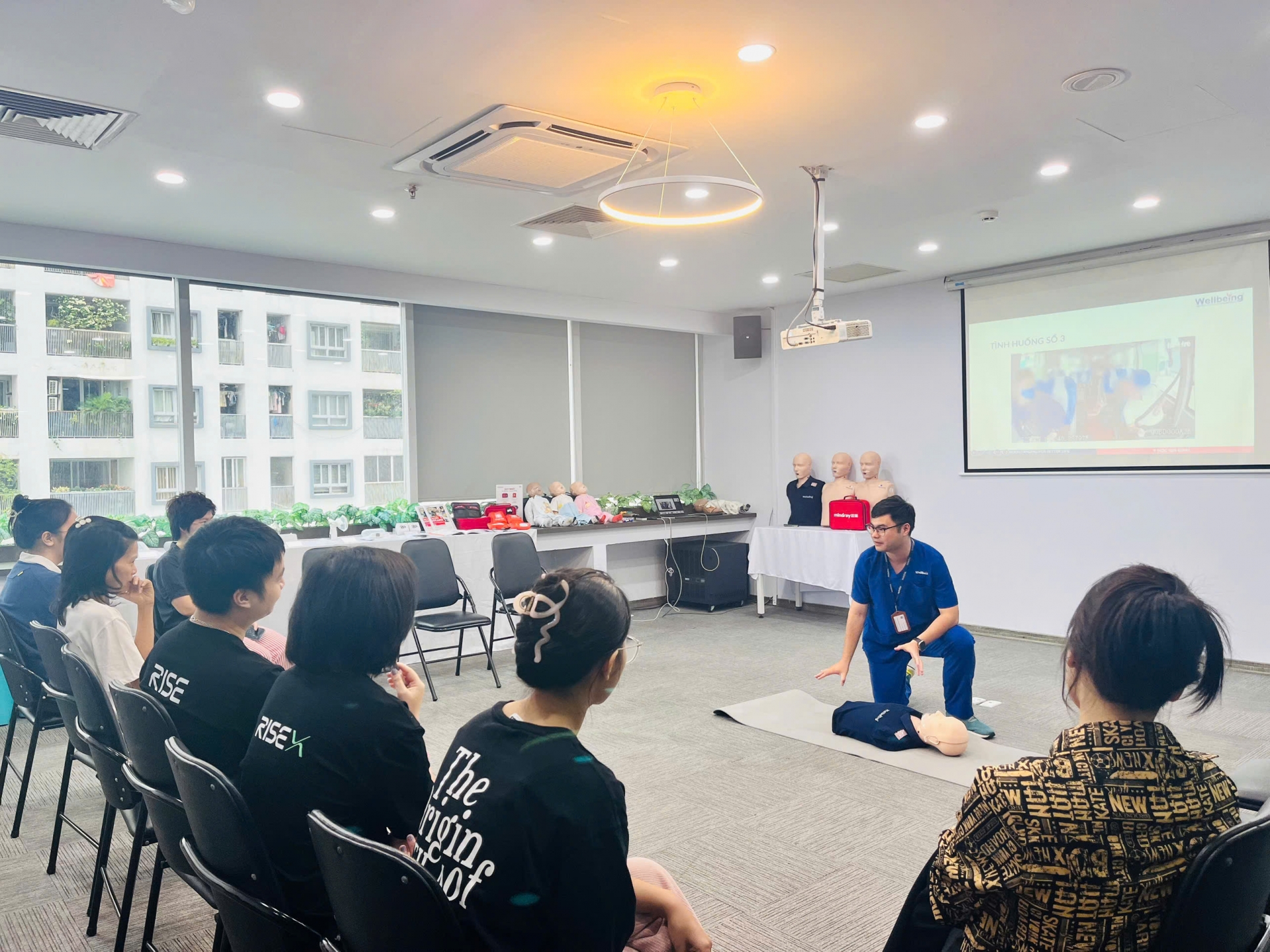
Do you need a certificate to provide first aid?
4. Practical Benefits of Learning First Aid
Learning first aid brings outstanding value to individuals, families, and communities. According to Wellbeing, only 0.7% of Vietnamese people know basic CPR, whereas this rate is tens of times higher in developed countries. A quality first aid course helps you:
-
Quickly handle common emergencies: Cardiac arrest, strokes, severe bleeding, bone fractures, choking, and drownings.
-
Significantly increase survival chances: For example, timely CPR and AED use can save up to 90% of sudden cardiac arrest cases.
-
Build a safe environment: Businesses minimize occupational accident risks, families protect their children, and schools enhance student safety.
Wellbeing’s courses also integrate long-term support: video calls with doctors, complimentary first aid kits, and periodic knowledge updates. The cost is highly reasonable (starting from just a few hundred thousand VND) but delivers an "invaluable" return—a lifelong skill to save lives.
5. Basic First Aid Measures – Core Knowledge to Master
Based on the standard training content under Circular 19/2016/TT-BYT and guidance from Wellbeing doctors, below are the critical techniques covered in first aid training. Note: Always ensure scene safety before approaching the victim, and call emergency services (115) immediately if possible.
1. Basic Principles (ABC – Airway, Breathing, Circulation):
-
Airway: Lay the victim flat on their back, tilt the head back, and lift the chin (if no spinal injury is suspected).
-
Breathing: Observe chest rise and fall, and listen for breath sounds.
-
Circulation: Feel for the carotid or femoral pulse. If the victim is not breathing and has no pulse, switch to CPR immediately.
2. Cardiopulmonary Resuscitation (CPR): For adults: Perform 30 chest compressions (5-6 cm deep, at a rate of 100-120 compressions/minute) alternating with 2 rescue breaths (if you are trained to do so). For children and infants, use lighter compression force. Wellbeing’s first aid courses also teach how to use an AED (Automated External Defibrillator)—a device that drastically increases survival rates.
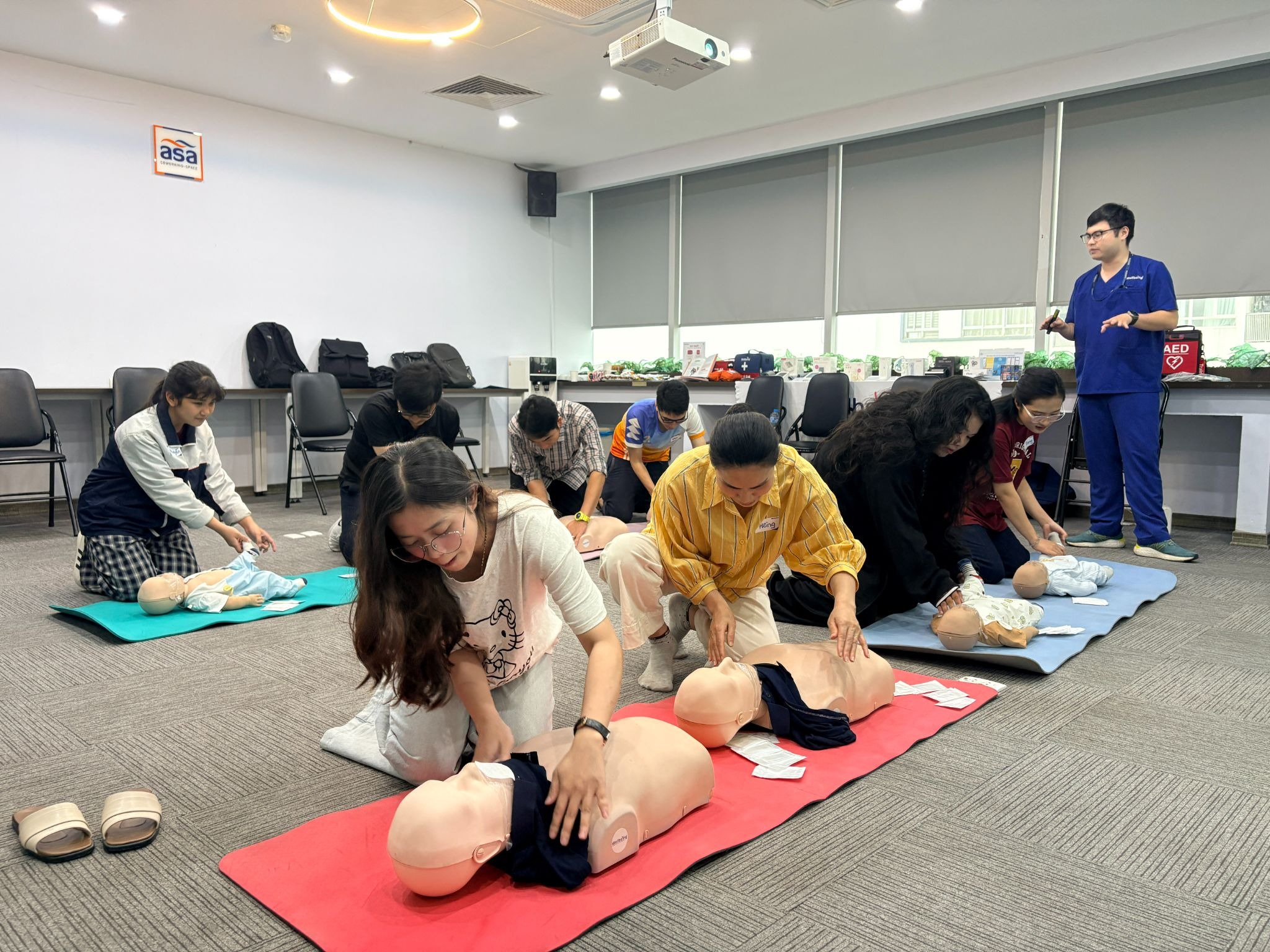
Participants practice cardiopulmonary resuscitation (CPR) under the guidance of Wellbeing doctors.
3. Bleeding Control: Apply direct pressure to the wound using clean gauze and elevate the limb if possible. Use a temporary tourniquet only for severe arterial bleeding, ensuring you record the application time and release it after 1-2 hours. Do not pull out impaled objects, as this can worsen the bleeding.
4. Fracture Immobilization: Keep the injured limb immobile using a splint (cloth, wood, or rolled newspaper). Do not attempt to realign the bone on-site. Combine with bandaging and elevation to reduce swelling.
5. Choking:
-
Conscious Adults: Encourage forceful coughing. If they cannot cough, perform the Heimlich maneuver (stand behind the victim and apply sudden abdominal thrusts).
-
Small Children/Infants: Perform standard back blows and chest thrusts.
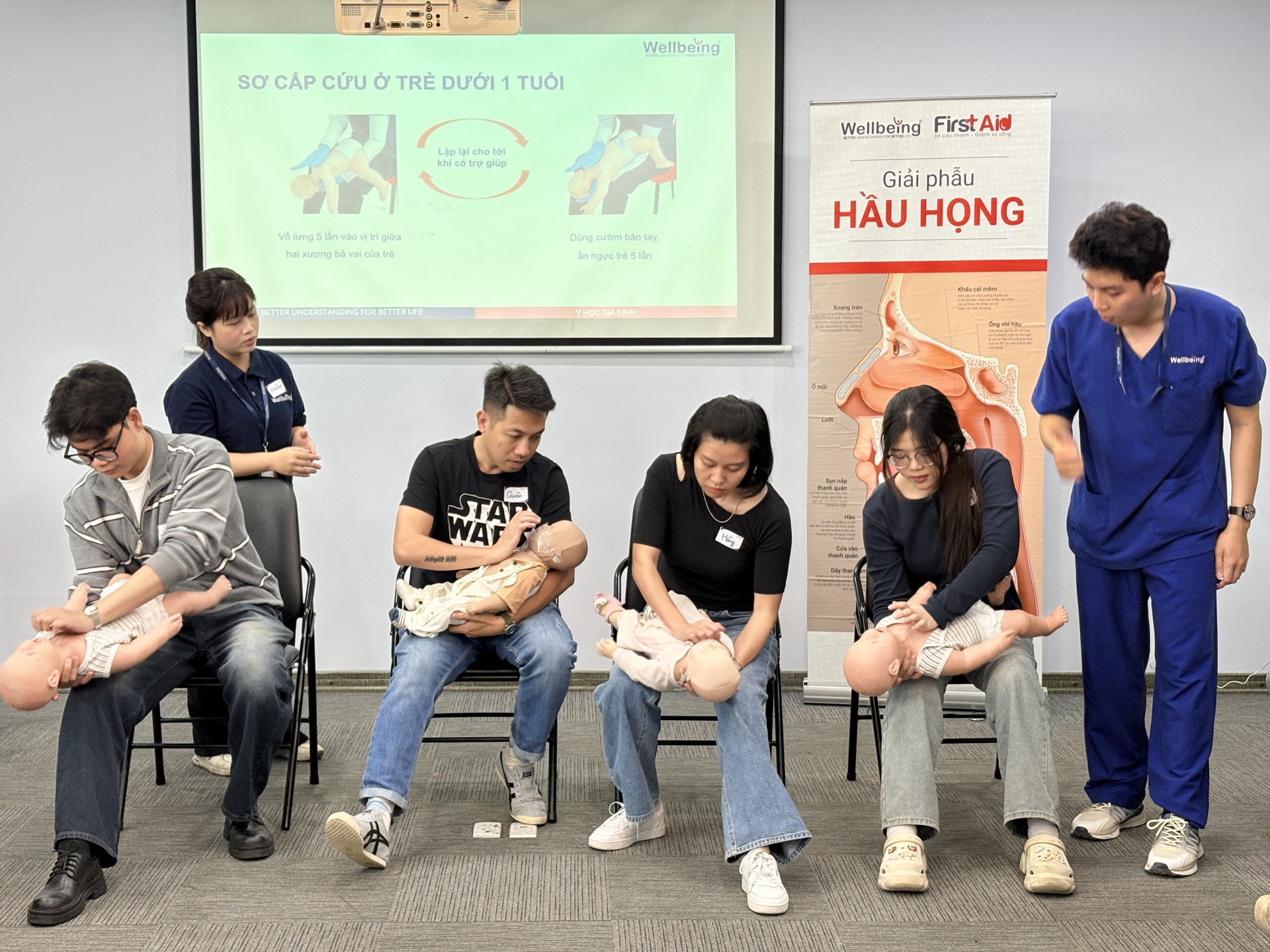
Participants practice managing choking caused by a foreign-body airway obstruction in young children
during a Wellbeing first aid training session.
6. Other Scenarios:
-
Fainting: Lay the person flat, elevate their legs, and ensure good ventilation.
-
Stroke: Recognize the FAST rule (Face drooping, Arm weakness, Slurred speech, Time to call) and call for an ambulance immediately.
-
Drowning: Clear the airway and begin CPR if breathing has stopped.
These techniques are thoroughly taught by Wellbeing, with 70% of the course time dedicated to hands-on practice with manikins, helping learners "practice for real, to save real lives."
Comments:
There are no comment for this news.

.png)
.png)