 Tiếng anh
 Vietnam
Stroke First Aid Class: A Survival Skill You Shouldn't Ignore
Stroke is currently one of the leading causes of death and disability. What is alarming is that this condition can happen suddenly to anyone, including young people or those with no clear medical history. During the "golden hour"—the time from the onset of symptoms to medical intervention—proper stroke first aid can determine the victim's survival and level of recovery.
Therefore, participating in a stroke first aid class is not just about equipping a skill, but also a proactive way to protect yourself and those around you.
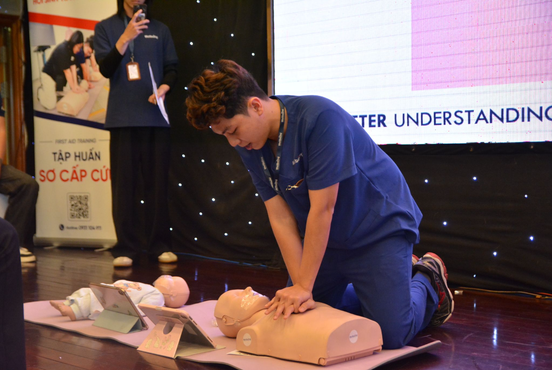
Trainees will be guided by Wellbeing experts on stroke first aid skills and early recognition of danger signs.
1. Why do we need to learn stroke first aid?
A stroke is not only a medical emergency but also a "race against time." When blood flow to the brain is interrupted, brain cells begin to suffer damage after just a few minutes, and this damage is often completely irreversible. Therefore, stroke first aid is not merely initial support; it is a deciding factor in the patient's chance of survival and the severity of their sequelae.
According to the World Health Organization (WHO), about 15 million people globally suffer a stroke each year; of these, 5 million die, and 5 million survive but are left with long-term disabilities. In Vietnam, there are an estimated 200,000 cases annually, with up to 70% resulting in death or disability. These statistics show that stroke is no longer just a personal issue but has become a public health burden, requiring citizens to step up by equipping themselves with stroke first aid skills.
1.1. Stroke first aid - the deciding factor in the "golden hour"
In stroke emergencies, the "golden hour" is typically defined as the first 3 to 4.5 hours from the onset of symptoms. If the patient is brought to a medical facility promptly within this timeframe, the chances of effective treatment and recovery increase significantly. However, reality shows that many cases arrive at the hospital too late due to a failure to recognize early signs or improper initial handling.
This is exactly why stroke first aid training in the community is especially important. When equipped with knowledge, people can quickly recognize typical signs such as facial drooping, weakness or paralysis on one side of the body, and slurred or difficult speech. Early recognition shortens response time—a vital element in stroke treatment.
Beyond recognition, stroke first aid helps the responder know how to handle the situation correctly: keeping the victim in a safe position, withholding food and drink, monitoring breathing, and calling for emergency help promptly. These seemingly simple actions have profound significance in limiting brain damage and preventing complications.
1.2. Improving emergency effectiveness and minimizing sequelae
One of the most important benefits of stroke first aid training is increasing emergency effectiveness right from the community level. When more people possess the knowledge and skills, the ability to assist a victim in the first few minutes will improve significantly.
Reality shows that for every minute that passes without intervention, millions of brain cells are lost. This means the patient is at a high risk of paralysis, loss of language abilities, or cognitive decline. Conversely, with proper stroke first aid and early hospital admission, the patient can significantly reduce the risk of disability and improve their future quality of life.
1.3. Positive impact on awareness and prevention
Stroke first aid training not only helps manage incidents when they occur but also contributes to raising awareness about disease prevention. By clearly understanding the causes and risk factors—such as high blood pressure, diabetes, smoking, or a sedentary lifestyle—learners tend to proactively change their habits to protect their health. This creates a dual impact: reducing the risk of a stroke occurring while increasing the ability to respond if it does.
1.4. Reducing the burden on the healthcare system
When stroke first aid skills are widely popularized, the number of patients admitted to the hospital in critical condition can drop significantly. Patients receiving early support will have better prognoses, shorter treatment times, and optimized medical costs. In the long run, this eases the pressure on the healthcare system, especially as the number of stroke cases continues to rise and trend younger.
2. Stroke first aid - an essential skill for every family
Unlike many other diseases, a stroke can happen anytime and anywhere: at home, at work, or in public places. Therefore, equipping stroke first aid skills should not be limited to medical personnel but must be popularized to every individual and every family.
Particularly in families with elderly members or individuals with underlying health conditions, learning stroke first aid becomes even more necessary. It acts as the first "shield" helping to protect loved ones before professional medical intervention arrives.
3. What makes the stroke first aid class at Wellbeing special?
Among current training programs, Wellbeing stands out with a practical training model that combines medical knowledge with applied skills. The stroke first aid class at Wellbeing is built upon the "Family Medicine" program—a comprehensive health protection solution for individuals and families.
The biggest differentiator is that learning stroke first aid at Wellbeing does not stop at theory; trainees learn online via a video lecture system available for 365 days, while also participating in hands-on practice directly with doctors. This approach ensures learners both master the knowledge and become proficient in practical skills.
3.1. Intensive stroke first aid training content
In the class, stroke first aid skills are integrated into a group of common emergency situations, especially those affecting adults and the elderly. Trainees will be guided on:
-
Early recognition of stroke signs using the FAST principles.
-
How to assess the victim's condition and ensure safety.
-
The initial handling procedure before calling for emergency services.
-
Dangerous mistakes to avoid during stroke first aid.
Beyond theory, trainees practice on international standard mannequins, helping to closely simulate real-life situations. This is particularly crucial because, in an emergency, reflexes and confidence play a decisive role.
3.2. Flexible programs suitable for multiple audiences
Wellbeing designs various learning packages tailored to different needs, from individuals and families to businesses and schools. The courses range from 2–4 intensive practical sessions (4 to 7 hours), combined with a rich online lecture system.
For families, especially those with elderly relatives, learning stroke first aid helps minimize risks in daily life. For businesses, it is an important part of building a safe and professional work environment. Additionally, Wellbeing offers training programs at home or at the corporate office, helping to save time and optimize the learning experience.
3.3. Teaching staff and post-course certification
The stroke first aid classes at Wellbeing are taught by a team of doctors who graduated from top medical universities in Vietnam, highly experienced in both training and clinical practice.
Upon completing the course, trainees will receive a valid certificate in accordance with Ministry of Health and Ministry of Home Affairs regulations, valid for one year. This is not only proof of skill but also helps elevate personal and organizational prestige.
4. Benefits of participating in the Stroke First Aid Training Service
Participating in a stroke first aid course brings practical value to both personal life and the work environment.
-
For individuals: Being equipped with stroke first aid skills helps you recognize early danger signs—such as facial drooping, limb weakness, or speech disorders—allowing you to react quickly and correctly during the "golden window." This contributes to minimizing brain damage and increasing the patient's chance of survival. It is not just a medical skill but an essential life skill.
-
For businesses and organizations: Stroke first aid training enhances the capacity to respond to workplace emergencies, minimizes risks, and builds a safe, professional environment.
In modern society, where cardiovascular diseases and strokes are becoming increasingly complex, proactively learning stroke first aid is a necessary investment. Choosing a reputable training provider like Wellbeing ensures trainees not only master the knowledge but also become proficient in practical skills, confident enough to act during emergencies. This is not just personal preparation; it is a way for each person to contribute to building a safer and more humane community.
Comments:
There are no comment for this news.

.png)
.png)