 Tiếng anh
 Vietnam
Who Can Use an AED/Defibrillator? Suitable Users in Reality
An Automated External Defibrillator (AED) is a medical device used to treat dangerous cardiac arrhythmias such as ventricular fibrillation or pulseless ventricular tachycardia—common causes of sudden cardiac arrest.
1. What is an AED and Why is it Important?
An Automated External Defibrillator (AED) is a medical device used to treat dangerous cardiac arrhythmias such as ventricular fibrillation or pulseless ventricular tachycardia—common causes of sudden cardiac arrest. In this state, the heart no longer contracts effectively to pump blood throughout the body, causing the brain to quickly lack oxygen. Without intervention within 6–8 minutes, the victim may die or suffer irreversible brain damage.
An AED works by analyzing the victim's heart rhythm and delivering an electrical shock when necessary, helping to restore a normal heartbeat. Thanks to automatic analysis and voice or visual guidance, the device is designed to be easy to use even for those without medical expertise. Therefore, AEDs are suitable for a wide range of people in the community, not just doctors or emergency personnel.
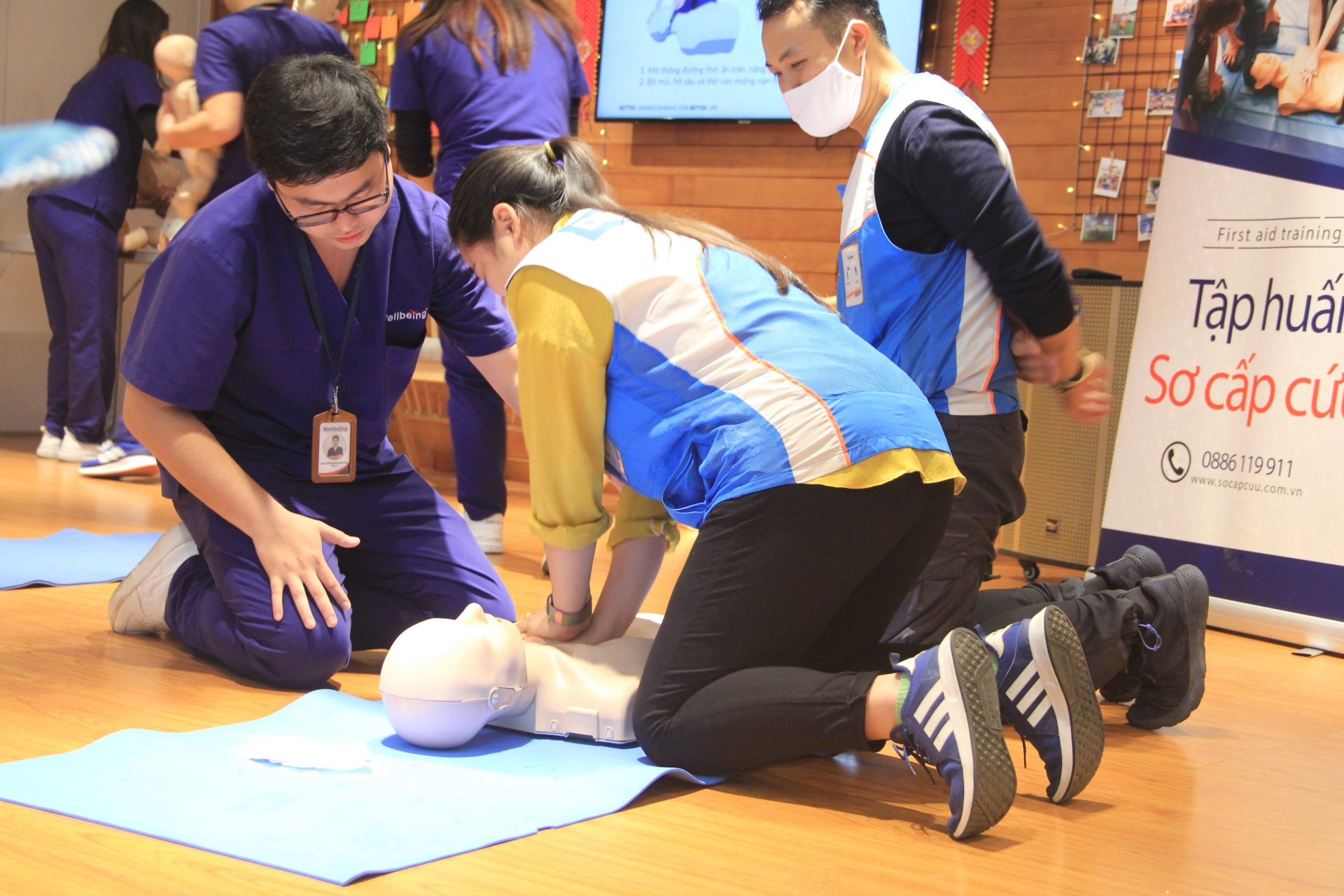 Cardiopulmonary resuscitation (CPR) practice in a first aid training course - a crucial skill for using an AED effectively during sudden cardiac arrest.
One of the standout features of an automated external defibrillator is its user-friendliness. Most modern AEDs feature a step-by-step audio and visual guidance system, helping users perform the correct actions even in emergencies. Thus, AEDs are suitable for various groups, from medical personnel to ordinary citizens.
2.1. Medical Personnel and Emergency Forces
These are individuals with specialized knowledge of cardiovascular emergencies and CPR. In hospital or pre-hospital emergency settings, AEDs are used to quickly defibrillate before applying more intensive treatments. However, this does not mean the device is exclusive to the medical field.
2.2. Security Guards, Receptionists, Building Managers, or Service Staff in Crowded Areas (Hotels, Malls, Airports, Tourist Sites)
These individuals are often trained in basic first aid to handle emergencies before professional medical teams arrive. Placing AEDs in these areas increases access to the device during the "golden window"—the critical time determining the victim's survival.
2.3. Teachers and School Staff
Schools are crowded environments with many physical activities. In many developed countries, AED and CPR skills have been integrated into training programs for teachers and even students. This increases the ability to respond quickly to cardiovascular incidents in schools.
2.4. Corporate Environments (Especially Industrial Parks or Large Offices)
Here, AEDs are increasingly being equipped. Occupational safety officers, internal emergency response teams, or HSE personnel are usually trained to use this device. Thus, AEDs are suitable for corporate personnel, contributing to elevated safety and health care standards for employees.
2.5. AEDs Are Suitable for Everyone
One of the reasons AED installation is widely encouraged is that they are suitable for almost everyone. Modern AEDs are designed so that untrained individuals can use them safely in emergencies. The devices typically integrate voice prompts, on-screen illustrations, and clear warning signals, helping users perform each step accurately. Upon turning on the device, the AED automatically guides the user through necessary steps such as attaching electrodes, keeping a distance for rhythm analysis, and delivering a shock if needed. The machine automatically analyzes the victim's heart rhythm and only issues a pulse when a dangerous arrhythmia is detected, minimizing the risk of misuse.
2.6. Note: Can AEDs be Used on Young Children?
A common question is whether AEDs are suitable for young children. In reality, most modern AEDs are designed for both adults and children. According to medical recommendations, standard AEDs can be used on children aged 1 year and older. For infants from 50 days to under 1 year old, using an AED can still be considered if specialized pediatric electrode pads are available, which adjust the shock energy to a safe level. Thanks to advancements in medical technology, many modern devices allow switching between adult and pediatric modes.
3. When is an AED Needed?
An automated external defibrillator is used when a victim is suspected of sudden cardiac arrest. This condition usually occurs due to ventricular fibrillation—when heart muscle fibers contract chaotically, preventing effective blood pumping. In this case, an electric shock is the only measure to restore a normal heartbeat.
Rescuers can identify a victim needing an AED through clear signs. The victim is usually unconscious and unresponsive when called or gently shaken by the shoulders. Simultaneously, they are not breathing or are only gasping, indicating respiratory arrest. When checking the pulse at the neck or wrist, a heartbeat may not be felt.
In this situation, rescuers must quickly call emergency services, perform CPR, and use an AED as soon as possible. According to medical studies, if defibrillation is performed within the first 3-5 minutes, the survival rate can reach 50-70%. Conversely, every minute that passes without defibrillation reduces the chance of survival by about 10%.
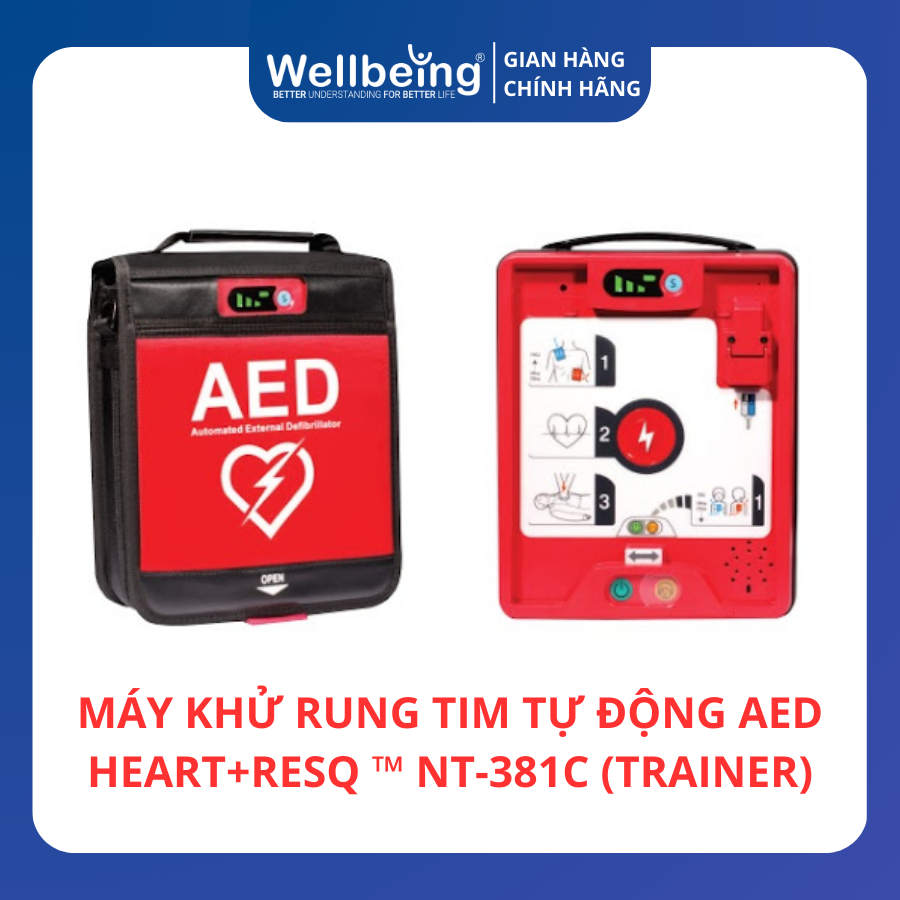
AEDs are designed to be compact, easy to use, and suitable even for those without medical expertise.
4. Guide to Using an AED in an Emergency
Using an AED in an emergency follows a simple procedure:
-
First, the rescuer must turn on the AED and remove the electrode pads from their sealed package.
-
Then, clothing on the victim's chest must be removed or cut away to ensure direct skin contact with the electrodes. If the chest is sweaty, it must be dried.
-
Next, place the pads on the victim's chest as instructed. The first pad is placed on the upper right chest, just below the collarbone, while the second is placed on the lower left chest, just below the armpit.
-
Once the electrodes are correctly placed, the AED will automatically analyze the heart rhythm. Ensure no one touches the victim to avoid skewing the analysis.
-
If a dangerous, shockable rhythm is detected, the machine will instruct the rescuer to deliver a shock.
5. Important Precautions When Using an AED
Although the device is simple and user-friendly, using an AED still requires adhering to safety rules. The most crucial is ensuring no one touches the victim while the machine is analyzing the rhythm or delivering a shock, as this can skew the results and pose an electric shock risk to bystanders.
Additionally, do not turn off the AED or remove the electrodes even if the victim shows signs of recovery, as arrhythmias can recur, and the machine needs to continue monitoring. Another factor to consider is clothing and physical obstructions. Remove or cut away clothing, especially items with metal like underwire bras. If the victim has thick chest hair preventing skin contact, it should be shaved.
6. External Factors and Medical Conditions to Consider
-
Water/Sweat: Water or sweat on the chest can reduce the electrical current's efficiency, so the chest must be dried before applying pads. If the victim was just rescued from water, drying the skin is a vital step.
-
Implanted Devices & Patches: In some cases, the victim may have a pacemaker or an implantable cardioverter-defibrillator. Avoid placing the pad directly over the implanted device. If there is a medication patch (like a nitroglycerin patch) on the chest, remove it before placing the electrode.
-
Pregnancy: For pregnant women, using an AED is still considered safe with no contraindications. However, because breast size may change during pregnancy, adjust pad placement to avoid putting it directly on the breast, placing it on the outer chest area instead.
7. The Importance of First Aid Training When Using an AED
Despite the device's simple design, participating in a first aid training course remains highly important. These courses help participants understand how to recognize signs of cardiac arrest, practice CPR, and use an AED correctly. Through training, learners practice realistic simulated scenarios, increasing their confidence. Many experts recommend annual refresher training every 12 months. Popularizing first aid training in the community maximizes the AED's effectiveness, as the device is only truly valuable when people know how to use it properly.
8. Conclusion
Automated external defibrillators are among the most critical life-saving devices for sudden cardiac arrest. Thanks to their smart and user-friendly design, AEDs are suitable for a wide range of users, from medical staff and corporate employees to teachers and community members. Equipping AEDs in public places, combined with first aid skills training, helps shorten response times during the "golden window," thereby significantly increasing victim survival rates. This is a major step toward building a safe, supportive community ready for emergencies.
Comments:
There are no comment for this news.

.png)
.png)