
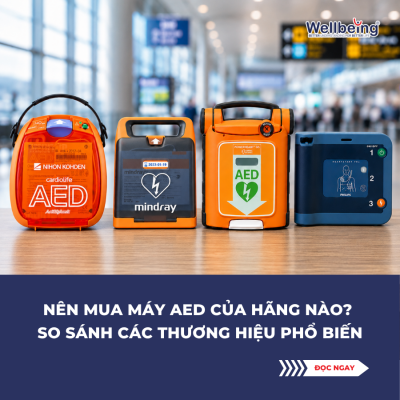
Each AED brand has its own strengths. When considering which AED brand is best, buyers may look at Nanoomtech for its simplicity and ease of use; Mindray for its ability to deliver the first defibrillation shock in the shortest possible time; and ZOLL for its technology that provides real-time CPR quality guidance and feedback. AED prices also vary depending on features, integrated technologies, and associated operating costs, rather than brand alone. Therefore, businesses should choose an AED based on their intended operating environment, required features, and long-term budget.
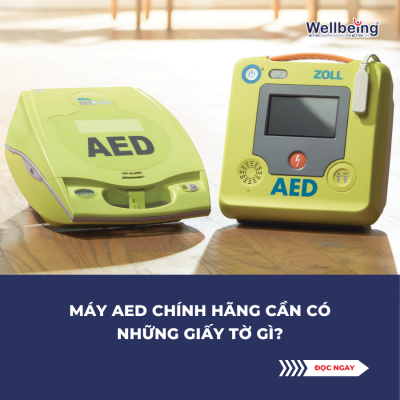
A genuine Automated External Defibrillator (AED) must have a valid medical device registration number, an original label and a supplementary label in Vietnamese, a warranty certificate with a serial number matching the device, a VAT invoice, and a Certificate of Origin (C/O) and Certificate of Quality (C/Q) issued by the manufacturer. Among these, the labels provide information that can be checked directly on the device to verify its origin and the mandatory information required by regulations. Thoroughly checking all documentation helps buyers minimize the risk of purchasing devices of unknown origin and makes it easier to obtain warranty services, conduct inspections, or verify the device's quality when necessary.

Buyers of Automated External Defibrillators (AEDs) should prioritize suppliers officially authorized by medical device manufacturers, with documented eligibility to provide manufacturer-backed warranty services and compliance with applicable price disclosure regulations. In addition, buyers should verify the supplier’s business registration, technical support network, qualified advisory team, and contractually guaranteed response times for technical issues. These eight essential criteria help businesses evaluate AED suppliers before making a purchasing decision while minimizing risks related to product authenticity, after-sales service, and technical support.

Purchasing an Automated External Defibrillator (AED) should not be based solely on brand reputation or price. Buyers should carefully evaluate seven essential criteria: valid medical device registration in Vietnam, the seller’s legal authorization, electrode pad and battery expiration dates, warranty policies, user training, documentation verifying the product’s origin and authenticity, and after-sales support. These factors are critical to ensuring that the AED remains reliable, fully functional, and ready for use when an emergency occurs.
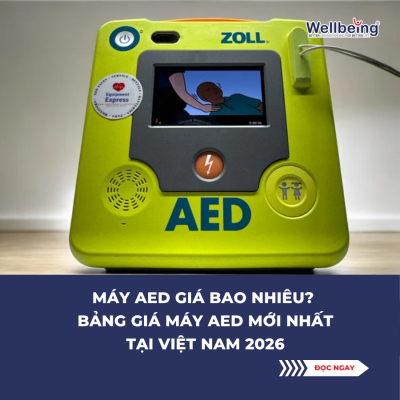
In Vietnam, AED prices in 2026 typically range from approximately VND 50 million to over VND 90 million per unit, depending on the brand, features, and whether the device is semi-automatic or fully automatic. This price range primarily applies to Automated External Defibrillators (AEDs) designed for public access use and does not include the costs of replacing AED electrode pads and batteries throughout the device's service life, typically every 4–5 years. To make an informed purchasing decision, businesses and organizations should consider not only the initial purchase price but also the total cost of ownership (TCO) over the device's operational lifespan.
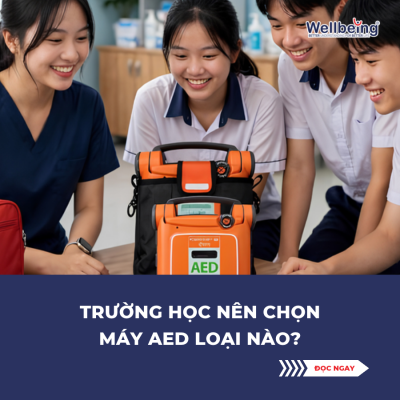
Schools should prioritize Public Access AEDs designed for use by non-medical personnel in emergency situations. AEDs for schools should provide clear voice instructions and support pediatric use through pediatric AED pads or an appropriate reduced-energy shock mode. In addition, schools should select AEDs with automatic self-testing capabilities, long-lasting batteries and electrode pads, compliance with recognized safety standards and regulatory requirements, such as FDA approval or CE marking, and valid medical device registration in Vietnam.
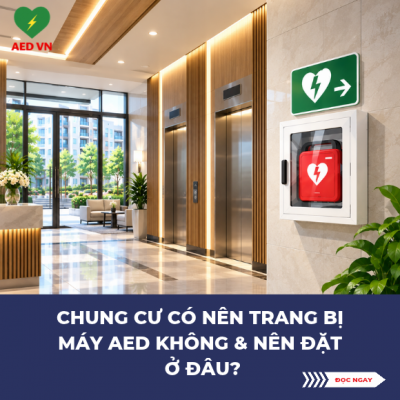
Should apartment buildings have AEDs? Learn where to install them, how many are needed, and how CPR and AED training improve resident safety.
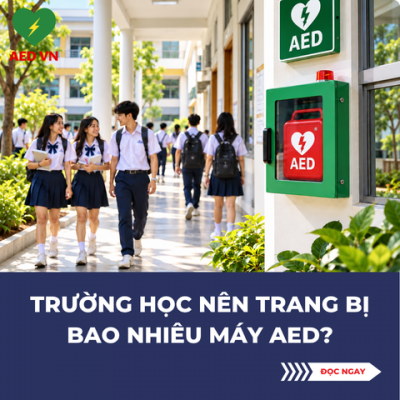
How many AEDs does a school need? Learn how to determine the right number and placement of AEDs based on campus layout to ensure quick access during an emergency.
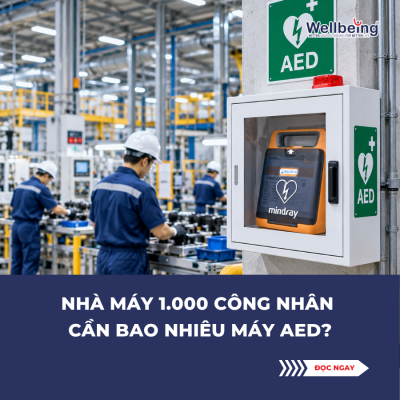
How many AEDs does a factory with 1,000 workers need? Learn how to determine the right number and placement of AEDs to ensure quick access during an emergency.
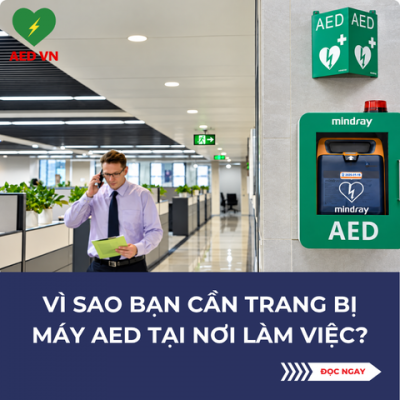
Does a 100-employee office need an AED? Explore key factors for AED placement, device quantity, CPR/AED training, and workplace cardiac arrest response.
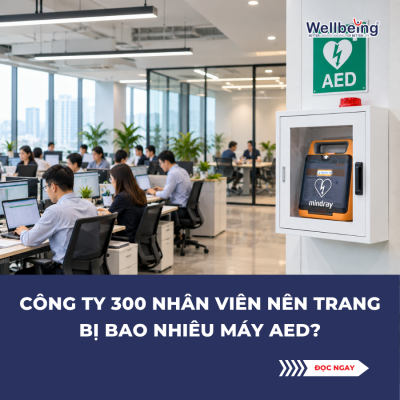
How many AEDs should a company with 300 employees have? Discover how to determine the right number of AEDs based on facility size, response time, and workplace layout.
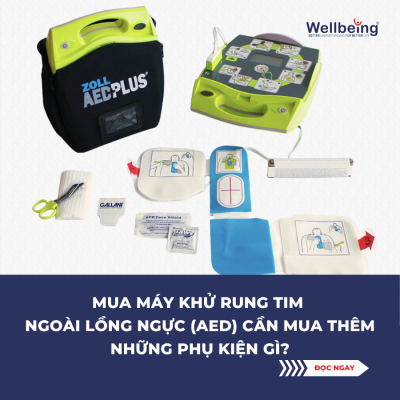
Purchasing an AED is not just about the device itself. An AED also requires compatible electrode pads, batteries, and proper storage solutions. Learn how to choose the right accessories and follow the recommended inspection schedule to keep your AED ready for use at all times.

Tránh hỏng hóc và tiết kiệm chi phí sửa chữa với hướng dẫn bảo quản mô hình CPR đúng cách để kéo dài tuổi thọ. Tìm hiểu bí quyết vệ sinh ngay!

A sudden cardiac arrest can happen at any time — in the office, at a factory, or during daily work activities. In those critical first minutes, early recognition, prompt cardiopulmonary resuscitation (CPR), and the correct use of an Automated External Defibrillator (AED) can make a crucial difference.
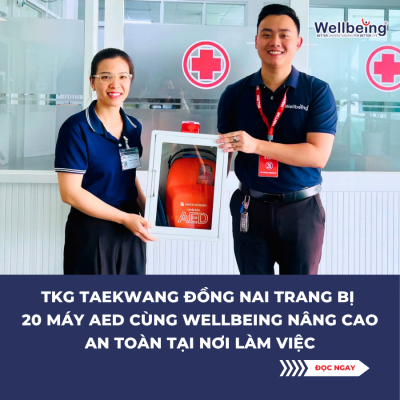
In large workplaces where hundreds or even thousands of employees work every day, preparing effective solutions for medical emergency response is no longer simply an option. It has become an important part of a company’s overall workplace health and safety strategy.
 Tiếng anh
 Vietnam

.png)
.png)