
Noise and Vibration in industrial manufacturing are prevalent occupational hazards that can severely impact workers' health if not effectively controlled. In the context of Vietnam's rapid industrialization, managing noise and vibration not only mitigates occupational diseases but also enhances labor productivity and ensures legal compliance.

Industrial lighting plays a vital role in ensuring production efficiency, occupational safety, and workers' health in factories and manufacturing plants. In the context of Vietnam's modernization and industrialization, complying with industrial lighting equipment requirements not only helps enterprises boost productivity but also minimizes the risk of accidents and operational costs.
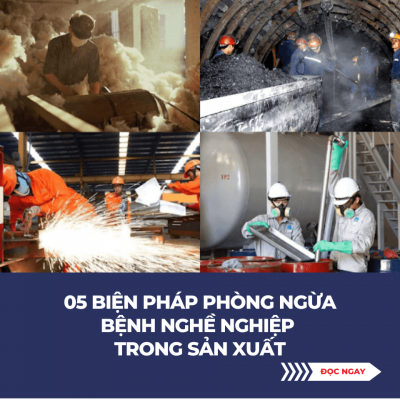
Occupational diseases differ fundamentally from common illnesses in that a direct correlation must be proven between the pathology and occupational exposure during the labor process. Under Vietnamese law, an illness is only classified as an occupational disease if it arises from an employee's prolonged and frequent exposure to hazardous factors in the workplace, subject to the conclusive assessment of a specialized medical agency.

Occupational exposure refers to situations where employees, particularly healthcare workers, come into direct contact with blood, bodily fluids, or excretions (excluding sweat) containing pathogens while performing their professional duties, thereby increasing the risk of contracting dangerous infectious diseases. Proper identification, prevention, and management of occupational exposure play a crucial role in protecting workers' health.

Occupational Environment Assessment (or Workplace Environmental Monitoring) is a mandatory activity under Vietnamese law aimed at determining employees' exposure levels to hazardous and harmful factors in the workplace. This assessment serves as the foundation for implementing control measures, preventing occupational diseases, and ensuring Occupational Safety and Health (OSH). It also acts as the legal basis for enterprises to comply with current standards and regulations during their production operations.

Periodic health examinations are one of the crucial obligations that employers must fulfill under Vietnamese law to ensure the rights and well-being of employees throughout their employment.

Occupational environmental monitoring is the process of collecting, analyzing, and evaluating measurement data of environmental factors at the workplace to implement measures that minimize health hazards and prevent occupational diseases.

Working at heights is one of the activities with a high risk of accidents in many industries, especially in construction, building maintenance, outdoor equipment installation, and industrial cleaning. This is a category of work that strictly requires the application of rigorous safety measures due to the potential risk of severe occupational accidents. Given the reality that falls from heights still occur at many construction sites and workplaces, mastering the safety regulations for working at heights in accordance with current legal standards is a mandatory requirement for both businesses and workers.

Medical waste management is one of the crucial legal requirements promulgated by the Ministry of Health to ensure environmental safety, as well as the health and safety of patients, medical staff, and the community. Proper classification of medical waste and the application of appropriate medical waste treatment regulations are mandatory legal obligations for all healthcare facilities. This aims to protect the environment, control the risk of infection, support standardized medical waste treatment systems, and reduce the risk of pathogen dispersion into the community.

In modern industries, from pharmaceutical manufacturing, textile dyeing, and food processing to research laboratories, chemicals are an indispensable element. The consequences of unsafe exposure can manifest immediately in the form of acute burns, asphyxiation, or skin irritation, or they can accumulate silently over many years, leading to dangerous chronic conditions such as cancer, organ damage, and infertility. Strict compliance with the principles of chemical exposure acts as a shield protecting workers' health and is a key factor in maintaining the sustainable production operations of an enterprise.

Chemical spills in the workplace can pose serious risks to human health, occupational safety, and the surrounding environment. Developing and strictly adhering to chemical spill response procedures in accordance with regulations is a mandatory requirement in chemical safety management, as well as a key factor in minimizing damage when a chemical spill occurs and ensuring the ability to respond to emergency chemical incidents in a timely and effective manner.

In modern daily life and production, electrical energy is an indispensable power source, yet it harbors the risk of particularly serious accidents. Incidents of electrical leakage, contact with equipment casings, degraded insulation, or wet environments can all lead to electric shock accidents, causing severe injuries or death. Strict compliance with the regulations on installing anti-shock electrical devices is not only a technical requirement but also a legal obligation to ensure electrical safety in civil and industrial environments.

Electrical safety requires workers to undergo training, be issued safety cards, fully utilize personal protective equipment (PPE), and strictly follow operating procedures that include technical safety measures (power disconnection, voltage testing, grounding, shielding, and posting warning signs). Additionally, it requires the use of equipment that meets technical standards, as well as the regular inspection and maintenance of electrical systems and devices. At the same time, users must possess basic knowledge to prevent electric shock accidents and fire hazards.
 Tiếng anh
 Vietnam

.png)
.png)